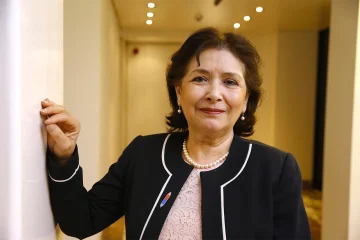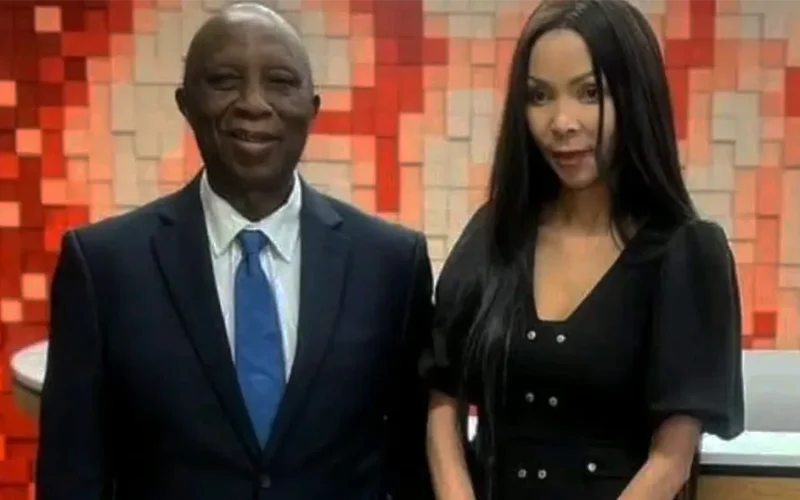
ON the morning of 12 March 2026, Ntombikayise Innocentia Khumalo — known to her peers as Toni, and to her Amantungwa/Nguni lineage as their Queen — was found unconscious on the floor of her marital bedroom in Sinkor, Monrovia. Her husband, economist and political commentator Samuel P. Jackson, told police he had just returned home from a television talk show engagement and found her in that state. She was rushed first to St. Joseph Catholic Hospital, then transferred to the John F. Kennedy Memorial Hospital, where surgeons performed emergency brain surgery. She never woke up.
Within hours, Liberian police who attended the scene noted what their public affairs spokesman, Deputy Commissioner Sam Collins, described as a “deep laceration on the crown of the head” and visible bruising on her body. The manner of those injuries — inconsistent with a simple domestic fall — prompted authorities to open what Collins publicly characterised as an “active homicide investigation.” Samuel Jackson was immediately declared a person of interest.
By Saturday, 15 March, he had been elevated to prime suspect. His travel documents have since been surrendered to the police. His home has been declared a crime scene. An autopsy was conducted on 16 March at St. Moses Funeral Parlours despite the strenuous objections of his legal team — led by the controversial Cllr Sayma Syrenius Cephus, a lawyer previously sanctioned by the United States government for corruption — who argued they had been given insufficient notice to prepare an independent pathologist.
WHO WAS NTOMBI TONI KHUMALO JACKSON?
To understand the weight of this death, one must understand the exceptional life it extinguished. Ntombi Toni Khumalo Jackson was not simply a South African woman who died abroad. She was, in the truest sense, a daughter of the continent who had forged herself into an instrument of both law and public life.
Born in Gauteng, she graduated from the University of Pretoria with a Bachelor of Laws (LLB), a Bachelor of Commerce in Law, and two Master of Science degrees. She was admitted as an Attorney of the High Court of South Africa and founded NK Attorneys — later Toni Khumalo Attorneys Inc. — a Johannesburg-based firm specialising in commercial litigation and corporate advisory work. She was, in every formal and professional sense, a legal eagle.
Her political chapter arrived unexpectedly. When Gauteng DA MP Cameron Mackenzie died from COVID-19 complications in July 2021, the Democratic Alliance appointed Khumalo to fill his seat. She was sworn into the National Assembly on 10 November 2021 by then-Speaker Nosiviwe Mapisa-Nqakula — one of the few Black women in the DA caucus to serve as an MP during that parliament. She did not return to Parliament after the 2024 elections.
Beyond the law and politics, Khumalo held the traditional title of Queen within the Amantungwa/Nguni cultural structure — a dignity conferred not by election but by lineage, one that carries the weight of community and ancestral accountability. She was, in every dimension of African public life, someone who mattered.
“May your brutally slain soul, so far away from your home soil — thinking you’re with someone who’ll love and protect you — find eternal rest.”
A close friend, writing on social media alongside graphic images of Khumalo’s injuries
THE NIGHT IN QUESTION
Samuel Jackson’s version of events is straightforward: he returned home from a TV appearance to find his wife semi-conscious. He says he immediately summoned household staff and sought medical assistance. His legal team insists he has been fully cooperative — surrendering his phone, his wife’s phone, and his laptop — and that his behaviour reflects the transparency of an innocent man.
Police tell a different story at key junctures. According to The Liberian Investigator, investigators initially invited Jackson to voluntarily come to headquarters for questioning, but allege he refused. Officers subsequently requested access to the marital residence to examine the scene, but were also initially denied entry before Jackson eventually relented. The residence has since been barricaded and declared a crime scene; the driver, chef, and security personnel have all been detained as persons of interest while investigators reconstruct a timeline.
The forensic autopsy, conducted over the defence team’s objection, is now the central instrument of the investigation. Its results — not yet publicly released — will in all likelihood determine whether Samuel Jackson faces a formal murder charge or is released pending further inquiry. Under Liberian law, authorities had 48 hours from the time of his formal designation as a suspect to either charge him or release him.
As of the time of publication, Jackson has been released into the custody of his legal team while police have retained his travel documents — a common measure to prevent flight risk while an investigation continues. The Ministry of Justice is involved, and the South African Embassy in Monrovia has been engaged throughout.
A HISTORY OF ALLEGED ABUSE — AND A FAMILY’S COUNTER-NARRATIVE
The case has drawn a second layer of scrutiny from social media and civil society: allegations of a sustained pattern of domestic violence. Rufus S. Berry II, a Liberian based in the United States who describes himself as a close family friend, filed a statement with Inspector General Gregory O.W. Coleman claiming he personally witnessed two separate incidents in which Khumalo appeared with severe bruising she attributed to physical violence by Jackson. Berry says he confronted Jackson directly on one occasion.
Jackson’s public response to the domestic violence allegations has been remarkable in its candour — and its tone. Speaking to reporters outside his residence, he said: “Don’t couples fight?” — a statement that has since circulated widely on African social media as an emblem of precisely the cultural normalisation of intimate partner violence that gender justice advocates have long fought to dismantle.
His family has issued a lengthy counter-statement, urging the public to allow due process and raising Khumalo’s medical history as contextual evidence. They disclosed a 2023 fall in Monrovia that resulted in a serious nasal injury; a July 2025 emergency call from the couple’s home in Georgia, United States, following another fall; a medical emergency aboard a United Airlines flight in December 2025 that forced an emergency landing in New York; and a further incident on 9 March 2026 — just three days before her death — in which Khumalo was reportedly found semi-conscious at home by household staff but declined further medical care. The family insists this pattern of medical episodes provides an alternative explanation for her fatal injuries.
Critics and legal analysts have noted that the repeated invocation of a victim’s health history as an explanation for fatal head injuries is a well-documented feature of domestic violence cases before courts — one that shifts scrutiny from perpetrator to victim. The forensic autopsy will speak to whether these injuries are consistent with an accidental fall or with applied blunt force trauma.
Jackson’s response to the domestic abuse allegations — “Don’t couples fight?” — has since echoed across African social media as an emblem of the normalisation of intimate partner violence that gender justice advocates have spent decades fighting to dismantle.
WHO IS SAMUEL JACKSON?
Samuel P. Jackson is not an obscure figure in Liberian public life. He is a widely known economist, author, and political commentator whose book Rich Land, Poor Country diagnoses the structural roots of Liberia’s underdevelopment. He served as Chief Economist for the National Economic Dialogue convened by the Liberian government in 2019. He has appeared regularly on Liberian television — including, notably, on the very night his wife was found dying in their bedroom.
His political affiliations have shifted considerably over the years. He once worked as Minister of State for Economic and Financial Affairs under Charles Taylor’s regime — the warlord-turned-president whose government was credibly accused of war crimes and crimes against humanity during Liberia’s brutal civil wars. He has since reinvented himself as an independent commentator, variously supporting and opposing subsequent administrations. That complex political history will form part of the backdrop against which Liberian public opinion is evaluating this case.
His defence is led by Cllr Sayma Syrenius Cephus — a prominent Liberian attorney who was sanctioned by the United States government for corruption. Cephus has declared his client innocent and stated he welcomes the crime scene reconstruction. A second member of the defence team, Jeremiah Samuel Dugbo, has emphasised Jackson’s voluntary surrender of personal devices as evidence of cooperation.
A CONTINENT’S GRIEF — AND ITS QUESTIONS
The death of Ntombi Toni Khumalo Jackson has generated remarkable outrage across the African continent, particularly in South Africa, where her career was known and her political service remembered. Graphic photographs allegedly showing her bruised body — reportedly shared by a close friend — circulated widely on social media platforms, accompanied by expressions of grief and demands for justice that have placed the Liberian investigation under unusual international scrutiny.
Her family in Gauteng has been in meetings and is reportedly preparing to travel to Monrovia. The South African Embassy has been present at key junctures of the investigation, including the preliminary inspection of Khumalo’s body at the hospital — a diplomatically significant intervention that signals Pretoria’s close monitoring of a case involving the death of one of its nationals in suspicious circumstances.
The case has also reignited broader continental conversations about gender-based violence, femicide, and the specific vulnerability of African professional women who cross borders in pursuit of love or livelihood, only to find themselves far from the protective networks of family, law, and community that might, in other circumstances, have intervened. Khumalo was a High Court attorney. She was a Queen. She was a parliamentarian. And she died, allegedly, from injuries sustained in her own home.
Whether Samuel Jackson is ultimately charged and convicted is a matter that now rests with Liberian forensic science, prosecutorial judgment, and judicial process. The African Mirror will continue to follow the case closely. But the questions this tragedy forces upon all of us — about how African societies treat their women, about impunity and powerful men, about what justice looks like across borders — cannot wait for the autopsy report.
KEY FACTS AT A GLANCE
■ Ntombi Toni Khumalo Jackson died on 12 March 2026 at the John F. Kennedy Memorial Hospital in Monrovia, Liberia, following emergency brain surgery.
■ She had sustained a deep laceration to the crown of her head and visible bruising on her body, according to Liberian police.
■ Her husband, economist and political commentator Samuel P. Jackson, has been formally designated the prime suspect.
■ Jackson’s travel documents have been surrendered to police; he has been released into his legal team’s custody pending further investigation.
■ A forensic autopsy was conducted on 16 March 2026 despite defence objections. Results are pending.
■ Household staff — including the driver, chef and security personnel — remain detained as persons of interest.
■ Khumalo was a former DA Member of Parliament (2021–2024), a High Court attorney, and held the traditional title of Queen in the Amantungwa/Nguni cultural lineage.
■ The South African Embassy in Monrovia has been actively engaged throughout the investigation.
■ Jackson’s legal team is led by Cllr Sayma Syrenius Cephus, previously sanctioned by the United States government for corruption.
■ A Liberian-based family friend, Rufus S. Berry II, has alleged a pattern of domestic violence and reported the matter to the police.