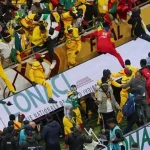
WHEN the dust settled on one of the most tumultuous Africa Cup of Nations finals in recent memory, Morocco found itself at a crossroads. The dramatic scenes at Prince Moulay Abdellah Stadium – Senegalese players walking off in protest, fans clashing with security, a continent watching in disbelief – had opened wounds that threatened to unravel years of carefully cultivated diplomatic capital.
Then, as is customary in African tradition, the King spoke. And when the King speaks, silence follows.
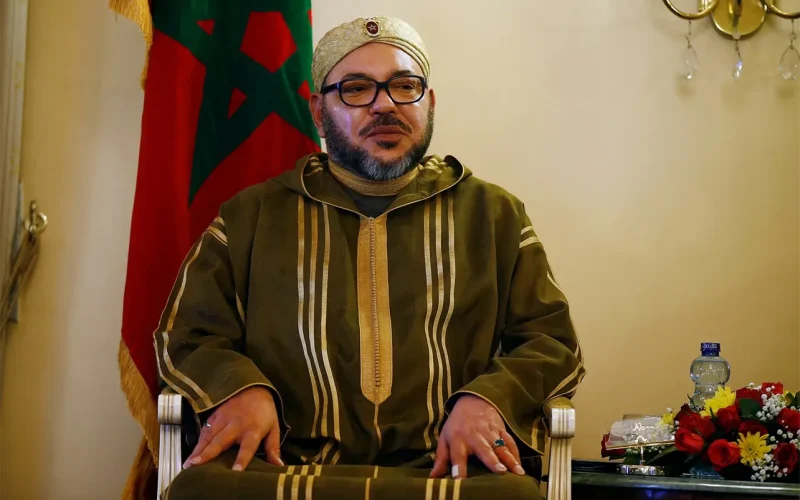
King Mohammed VI’s intervention this Thursday was more than mere damage control. It was a calculated assertion of Morocco’s vision for itself as a continental leader, delivered at a moment when that very claim hangs in the balance. His words – acknowledging “regrettable incidents” and “deplorable behaviour” while insisting that “inter-African fraternity will naturally prevail” – carry the weight of both apology and warning.
But the real test lies not in what was said, but in what must now be done.
The Reckoning
Make no mistake: Morocco’s relationship with the rest of Africa has reached a critical juncture. The scenes from Sunday’s final – security forces confronting Senegalese supporters, social media erupting in recrimination, a VAR decision that became a flashpoint for deeper grievances – have crystallised longstanding tensions about Morocco’s place on the continent.
For years, Morocco has pursued an aggressive strategy of economic expansion and diplomatic influence across sub-Saharan Africa. Moroccan banks, telecoms, and construction firms have become ubiquitous from Dakar to Nairobi. The kingdom’s return to the African Union in 2017, after a 33-year absence over Western Sahara disputes, was heralded as a new chapter of engagement.
Yet influence built on investment is fragile when perceptions of hospitality collapse in real time, broadcast to millions.
The World Cup Imperative
The stakes could not be higher. Morocco is set to co-host the 2030 FIFA World Cup—only the second African nation to do so, after South Africa in 2010. That tournament will bring not just European and South American visitors, but fans from across Africa, many of whom will have watched the AFCON final chaos and wondered: Will we be welcome there?
This is Morocco’s challenge now: to demonstrate, concretely and convincingly, that the “close ties forged over the centuries between our African peoples” that the King invoked are not merely rhetorical flourishes, but lived realities.
Words from the palace are a start. But actions—how visiting fans are treated, how security protocols are reformed, how grievances are addressed—will write the real narrative.
Beyond Brotherhood
The King’s statement strategically framed the tournament itself as “a success for all of Africa,” showcasing Morocco’s development as a continental achievement. It’s a deft pivot, attempting to transform a PR disaster into evidence of shared progress.
Yet the very need for such framing reveals the depth of the problem. When your relationship with a “closest ally” – as Senegal has long been described – can be so rapidly undermined by ninety minutes of football, the foundation may not be as solid as imagined.
The Confederation of African Football has promised “appropriate action.” FIFA President Gianni Infantino has condemned Senegal’s conduct. But institutional reprimands will not repair what has been damaged here.
The Last Word?
In traditional African protocol, once the King speaks, no one else offers a word. But in the age of social media, satellite television, and continental scrutiny, silence is impossible. The conversation about Morocco’s relationship with Africa will continue – in Dakar’s streets, in CAF boardrooms, in stadium stands across the continent.
Morocco has had its say. Now it must prove it meant what it said.
As the 2030 World Cup approaches, the kingdom in the desert faces a question that transcends football: Can investment buy belonging? Can infrastructure create intimacy? Can a nation simultaneously dominate and embrace?
The King has spoken. Africa is listening. And in four years’ time, when the world’s biggest sporting event comes to North African soil, we will have our answer.