THE missiles striking Iran have not landed on African soil. But their shockwaves are moving fast – through fuel queues in Nairobi, cancelled flights out of Addis Ababa, and the quiet repositioning of US military assets across the Horn. For a continent that had no vote in this conflict and no seat at the table where it was decided, Africa is absorbing consequences that are immediate, structural and deepening.
The most direct hit is economic, and it lands hardest on ordinary people.
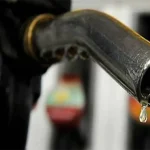
Oil prices have spiked sharply in the wake of US-Israeli strikes on Iran. For import-dependent African economies – South Africa, Kenya, Nigeria, Ethiopia, among them — that means higher fuel prices, which then cascade into every corner of daily life: taxi fares, food transport, electricity generation, basic goods. In South Africa, where most households depend on road transport and where poverty leaves little cushion, even a modest sustained fuel price rise erodes disposable income fast. Small businesses – spaza shops, street vendors, micro-manufacturers – face a brutal choice: absorb the cost and lose margin, or raise prices and lose customers.
This is not a new vulnerability. Staple food prices across sub-Saharan Africa rose nearly 24% between 2020 and 2022. In countries like Malawi, Mozambique and Zimbabwe, food inflation has repeatedly hit double or triple digits. Food already accounts for 40–60% of household budgets for many African families. Another inflationary shock, layered on top of existing cost-of-living crises, is not an abstraction. It means smaller portions, cheaper and less nutritious food, and more debt just to survive.
Red Sea Rerouting: A Trade Shock With Two Faces
The Red Sea is not just a crisis in the Middle East – it is Africa’s commercial artery. Houthi attacks, now intensified in the context of the broader Iran conflict, have already pushed shipping away from the Suez Canal and around the Cape of Good Hope, adding 10–14 days and substantially higher insurance and fuel costs per voyage.
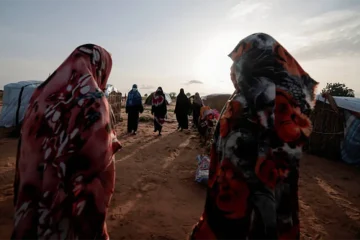
For port cities like Djibouti, Berbera and Mogadishu, there is a sliver of opportunity – redirected cargo, fleeting transit booms. But for the broader Horn of Africa, the arithmetic is punishing. Ethiopia and Somalia depend on Red Sea routes for wheat, cooking oil, fertiliser and refined fuel. Longer routes mean delayed deliveries and higher prices. In fragile, drought-affected economies already teetering on food insecurity, those delays don’t just raise costs — they cost lives.
For African exporters, flower farmers in Kenya, livestock traders in the Horn, agro-processors across the continent, higher freight charges and cancelled bookings mean lost contracts and shrinking returns in markets they fought hard to enter.
Political Squeeze: Caught Between Blocs
The war is forcing an impossible calculation on African governments. The African Union has called for restraint and dialogue, reflecting genuine public sentiment that Palestine is a moral cause and that great-power conflict should not be exported to the Global South. But many African states are deeply entangled with both sides.
Kenya, Ethiopia and Rwanda have cultivated close security and economic ties with Washington and Tel Aviv. Others have quietly deepened relations with Iran through BRICS membership, energy agreements and technology partnerships. In this environment, every public statement is a tightrope walk: align too visibly with the US-Israel axis and alienate populations that see Palestinian rights as a non-negotiable moral position; lean too openly toward Iran and invite Western financial and diplomatic pressure.
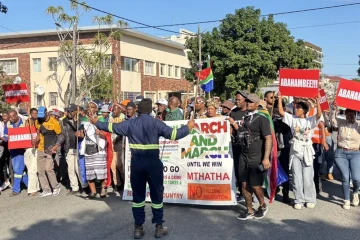
The likely outcome, in many capitals, is silence — and then repression. Governments may tighten information controls, frame anti-war dissent as foreign-agent sympathy, and use the war as cover for expanding internal surveillance under the banner of “stability.” Civic space, already shrinking across much of the continent, could contract further.
Military Footprint: When “Partnership” Becomes Entanglement
The US already operates roughly 29 known military facilities across 15 African countries — drone bases, surveillance hubs, logistics nodes in Djibouti, Kenya, Niger, Somalia. As the Iran conflict intensifies, these bases risk being repurposed as staging points for regional operations, especially along the Red Sea and around the Horn.
Local populations in places like Manda Bay in Kenya and Djibouti already live under the shadow of military operations framed as “security cooperation.” A prolonged Israel-Iran war raises the stakes considerably: African states could find themselves hosting assets that attract retaliatory strikes or proxy attacks, turning ports and airfields into flashpoints they did not choose and cannot control.
The irony is sharp. The same foreign military presence marketed as protection could, in this scenario, become a liability — drawing countries into a conflict their citizens oppose, on behalf of alliances their governments cannot publicly name.
The Bottom Line
Africa is not a bystander in this war. It is an unelected participant — paying in fuel costs, food prices, disrupted trade, narrowed political space, and accelerating militarisation.
A narrow class of actors will gain: rerouting ports, logistics opportunists, elites who leverage the crisis to tighten domestic control. Everyone else — the commuter paying more for a taxi, the farmer watching export contracts evaporate, the family switching to cheaper food — absorbs the loss.
The fundamental question the war raises for the continent is not one of geopolitics. It is simpler and more urgent: who pays the price of other people’s wars? Right now, across Africa, the answer is already clear.