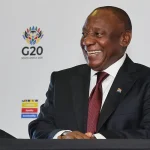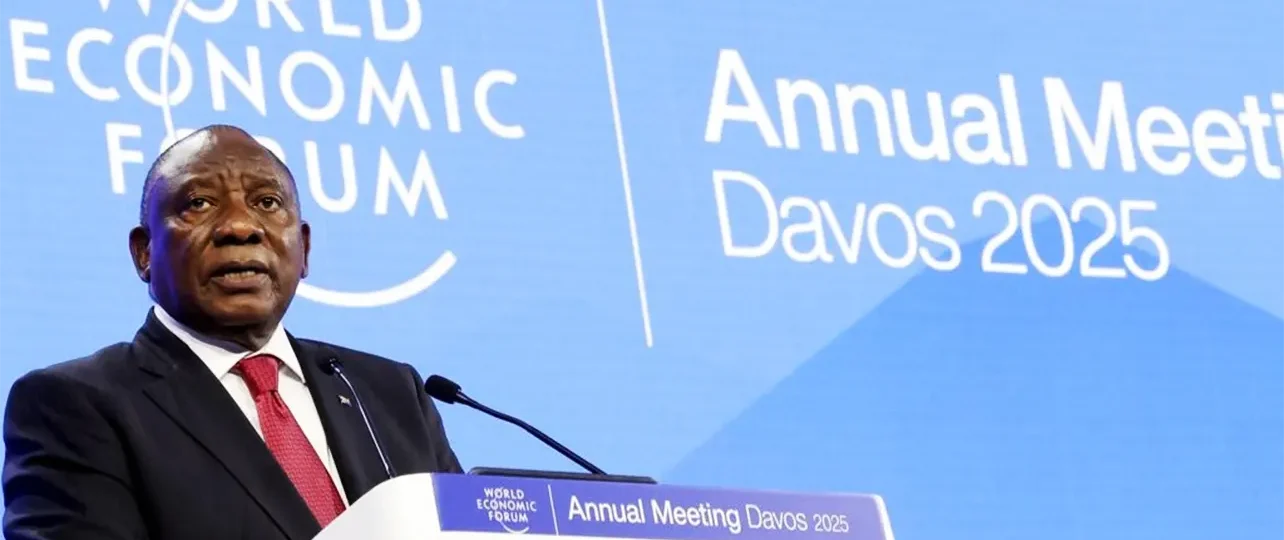

IN the shadow of Table Mountain, where ancient traders once bartered goods from distant shores, South Africa stands ready to write a new chapter in global history. For the first time since the G20’s inception, the torch of leadership has passed to African soil, as South Africa assumed the presidency of this powerful economic forum in 2025.
“This is a moment of great significance for South Africa, the African continent and the world. It was in Africa where humans developed the capacity and the impulse for cooperation,” declares President Cyril Ramaphosa in a special address to the World Economic Forum in Davos, Switzerland.
The story begins not in the gleaming conference halls of Johannesburg, but in the cradle of humankind itself. Here, amidst the ancient landscapes where our ancestors first learned to cooperate, South Africa prepares to host the world’s most influential economies. “Cooperation,” Ramaphosa reminded delegates to the WEF, “is the bedrock of human civilisation.”
In a world fracturing under mounting pressures, his message carries particular urgency: “This is a time of rising geopolitical tensions, unilateralism, nationalism, protectionism, isolationism, rising debt levels affecting poor countries in the world and a declining sense of common purpose.” Yet rather than surrender to these forces, South Africa calls for renewed unity: “This is a moment when we should be standing together as a global community.”
South Africa’s narrative for the G20 is woven from three powerful threads: solidarity, equality, and sustainable development. As Ramaphosa puts it plainly: “For nations to flourish, equality and prosperity must be available to everyone – regardless of gender, race, religious beliefs or economic status.”
The stakes could not be higher. “We are called upon by the exigency of the moment to act together with greater urgency to halt the destruction of our planet,” Ramaphosa declares. His vision encompasses both environmental and economic justice: “As minerals extraction accelerates to match the needs of the energy transition, the countries and local communities endowed with these resources must be the ones to benefit the most.”
The timing is crucial. “Many agree that Africa is the next frontier of global growth and productivity,” Ramaphosa notes. “The African continent has an unrivalled natural resource endowment, with the youngest population of all continents.”
His vision draws strength from South Africa’s own recent experience: “The Government of National Unity, made up of ten political parties, has been vital to stability and inclusive governance, and has contributed to greater interest among investors in South Africa’s economic prospects.”
The president’s closing words resound with both invitation and challenge: “Acting together we should build an inclusive, just and equal world in which all may prosper, leaving no one and no country behind.”
As November 2025 approaches, when world leaders will gather in Johannesburg, Ramaphosa’s call to action echoes across continents: “We intend that the G20 in Johannesburg this year should be a forum where cooperation and collaboration amongst the leading economies in the world will be taken to a higher level.”
In this historic moment, Africa stands ready not just to host, but to lead. As Ramaphosa reminds us, invoking the wisdom of Nelson Mandela: “Our interdependence, bringing us together into a common global home, across the oceans and the continents, demands that we all combine to launch a global offensive for development, prosperity and human survival.”