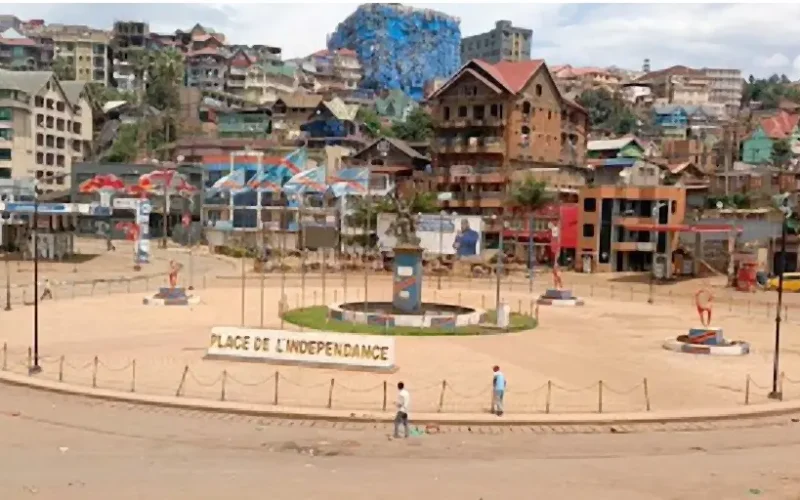
THE afternoon sun cast long shadows over Bukavu as people gathered in the town square. None suspected that death lurked among them, waiting to transform a political rally into a scene of carnage.
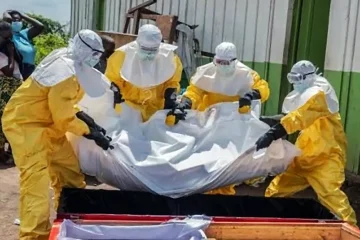
The explosion came without warning. A deafening crack split the air, followed by screams that echoed through the narrow streets. Bodies lay scattered across the dusty ground, blood pooling beneath them. Eleven souls extinguished in an instant, sixty-five more writhing in pain, their flesh torn by shrapnel.
This was just the latest chapter in eastern Congo’s brutal saga.
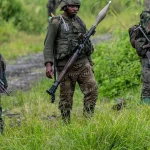
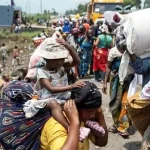
The M23 rebels had been steadily claiming territory across North Kivu province, their fighters advancing through jungle paths and mountain roads to seize the jewels of the east—Goma and Bukavu. Behind them trailed a wake of displaced civilians, frightened families clutching what few possessions they could carry as they fled the advancing shadows of war.
“This atrocity was committed by a foreign army illegally present on Congolese soil,” President Tshisekedi declared from Kinshasa, his words heavy with unspoken accusations toward Rwanda. His eyes burned with fury as he addressed the nation, though the capital seemed a world away from the eastern conflict.
Meanwhile, in a rebel camp hidden among the volcanic hills, M23 commanders huddled around radio sets. “The government planted these bombs,” they claimed, their voices sharp with anger. “The killers were among those killed.”
The truth, like so much in this conflict, remained buried beneath layers of competing narratives.
Across the border in Kigali, Rwandan officials maintained their practised denials. “We act only in self-defence,” they insisted, even as Western intelligence suggested otherwise. New American and British sanctions targeted those feeding the conflict’s flames, but Rwanda remained defiant, calling these measures “unjustified” and “punitive.”
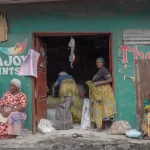
In the villages and displacement camps dotting North Kivu’s lush landscape, ordinary people told different stories. Old women with tired eyes spoke of children taken to become soldiers, and young girls whispered of night raids and violations by armed men. A generation raised in the shadow of machetes now faced a future shaped by Kalashnikovs and artillery.
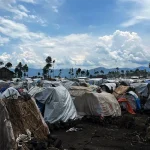
“Seven thousand dead since January,” an aid worker murmured, her voice breaking as she surveyed a crowded displacement camp. “Half a million people forced from their homes.” The numbers, staggering as they were, failed to capture the individual tragedies unfolding across the region—each life a universe of memories and hopes extinguished or damaged beyond repair.
As night fell over the Great Lakes region, diplomatic cables hummed with urgent messages between capitals. The African Union called for restraint, the United Nations Security Council passed resolutions, and foreign ministers issued statements of “deep concern.” But in eastern Congo, these words meant little to those digging fresh graves or sleeping under plastic tarps, far from the homes they once knew.
The bombing in Bukavu was not an isolated incident but another crack in the foundation of an increasingly fragile peace. With each new attack, each accusation and counter-accusation, the spectre of a wider regional conflict loomed larger, threatening to pull neighbouring countries into its destructive orbit.
And still, beneath the volcanic soil of North Kivu, the blood of innocents seeped deeper, feeding the roots of a conflict with no end in sight.