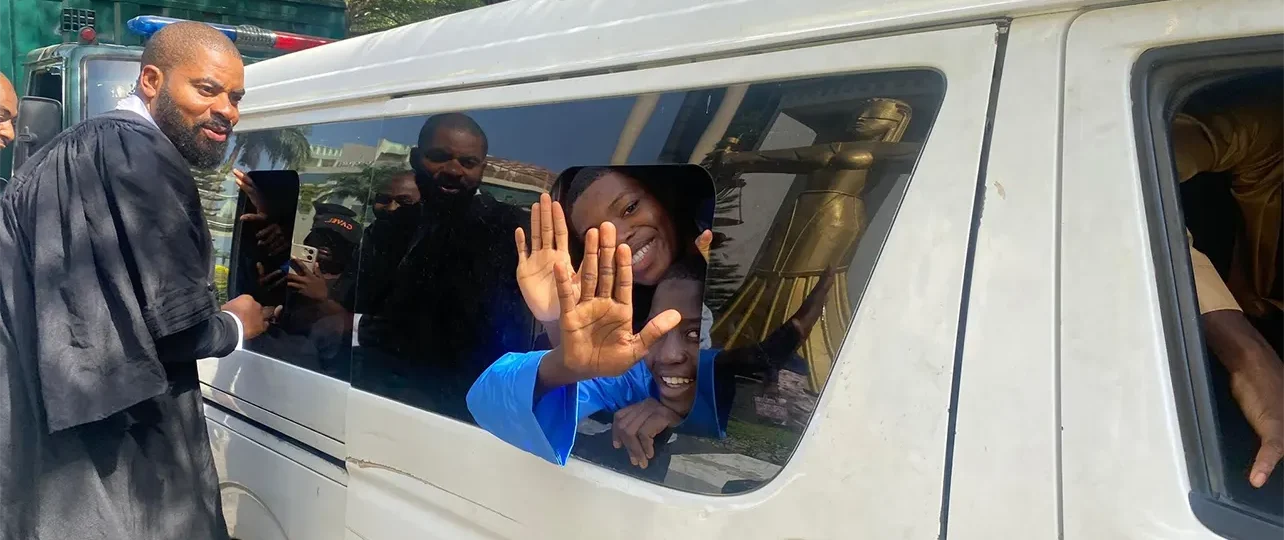

CROWDS erupted in cheers and celebration outside a Nigerian courthouse on Tuesday as news spread that 119 protesters, including minors, had been freed after authorities dropped charges against them. The decision sparked an outpouring of relief and joy both inside and outside the courtroom.
As the judge announced the charges were being struck down, families of the accused broke down in tears, overcome with emotion at the unexpected turn of events. People embraced and cheered, expressions of joy and disbelief etched across their faces.
Outside, the news quickly spread through the streets. Supporters who had gathered to show solidarity with the protesters erupted into applause and song, waving placards and banners in celebration of the triumph of justice.
“We are overjoyed that our loved ones have been freed,” said Amina Ibrahim, whose 17-year-old son was among those released. “This is a victory not just for them, but for all Nigerians who dare to raise their voices against injustice.”
The protesters had previously faced charges including treason and inciting a military coup, with some charges carrying the death penalty. However, on Tuesday, the court ordered their immediate release.
Deji Adeyanju, the counsel for the protesters, hailed the court’s decision as a significant step forward. “The case has been struck out and the 119 protesters have been released,” he told reporters, adding that the next step is to seek rehabilitation and compensation for the detainees from the government.
The development came after Nigerian President Bola Tinubu ordered the release of all minors detained during the August protests against economic hardship. The attorney general also took over the case from the police and dropped the charges, bringing the matter forward from its scheduled January hearing.
As the freed protesters reunited with their families and celebrated their newfound freedom, a sense of cautious optimism filled the air. Many hope this ruling will set a precedent for the protection of the right to peaceful protest in Nigeria, and help to address the underlying issues that led to the demonstrations in the first place.