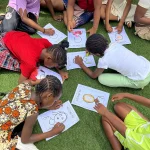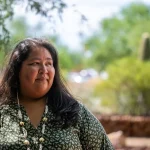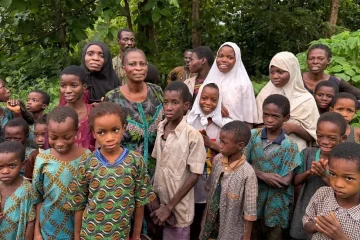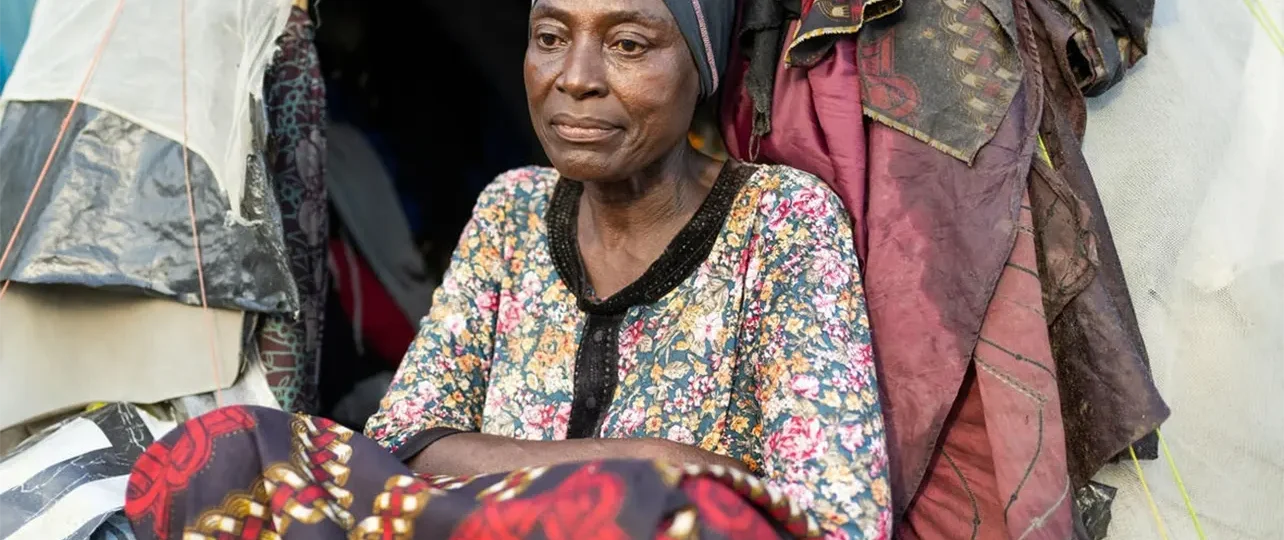

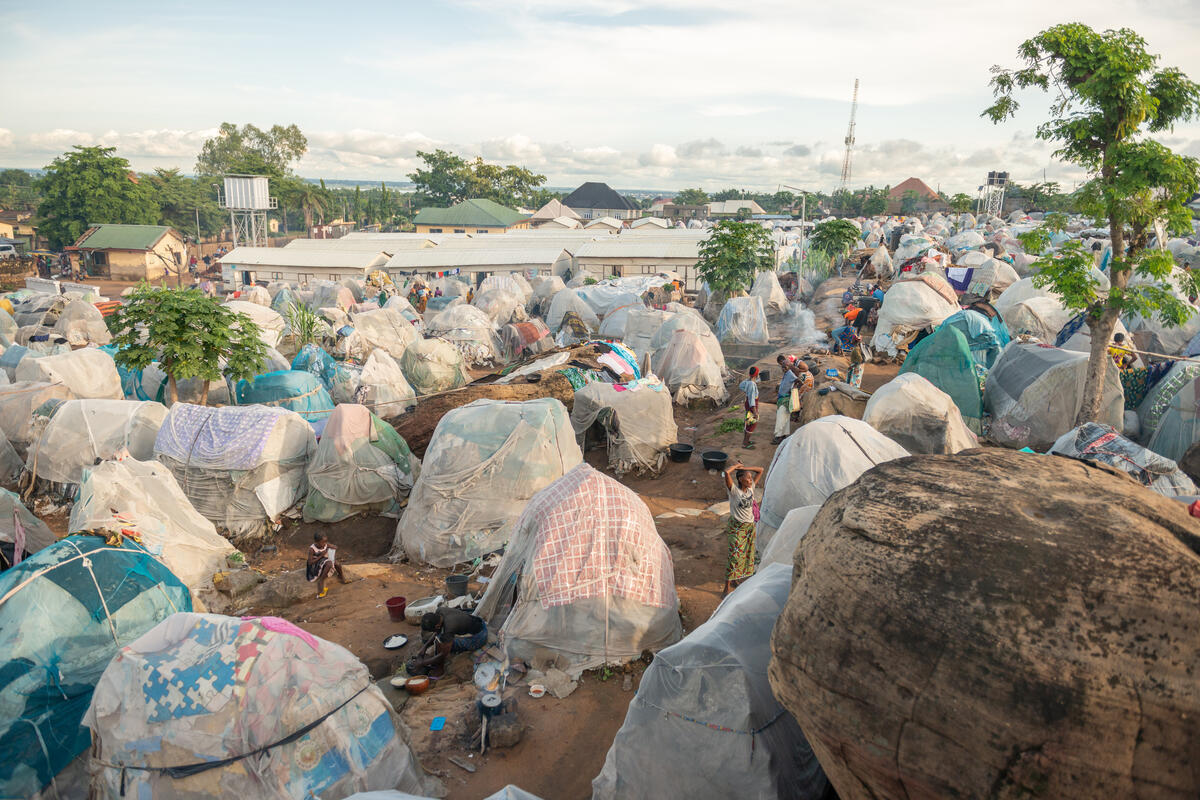
At Ichwa camp for internally displaced people near Makurdi in Nigeria’s central Benue State, Mimi Kiva is leading a class of young children in a song accompanied by lots of giggle-inducing jumping and clapping. Despite having no formal teaching qualifications, the 47-year-old is a natural – passionate and caring, with seemingly endless reserves of energy.
Even before this classroom was built last year and Mimi was recruited as a volunteer teaching assistant, she was gathering children in the camp together for outdoor classes. “I tell them stories about things that were happening in our lives before we came into the camp; about our culture,” she says. “I enjoy it because I forget about everything.”
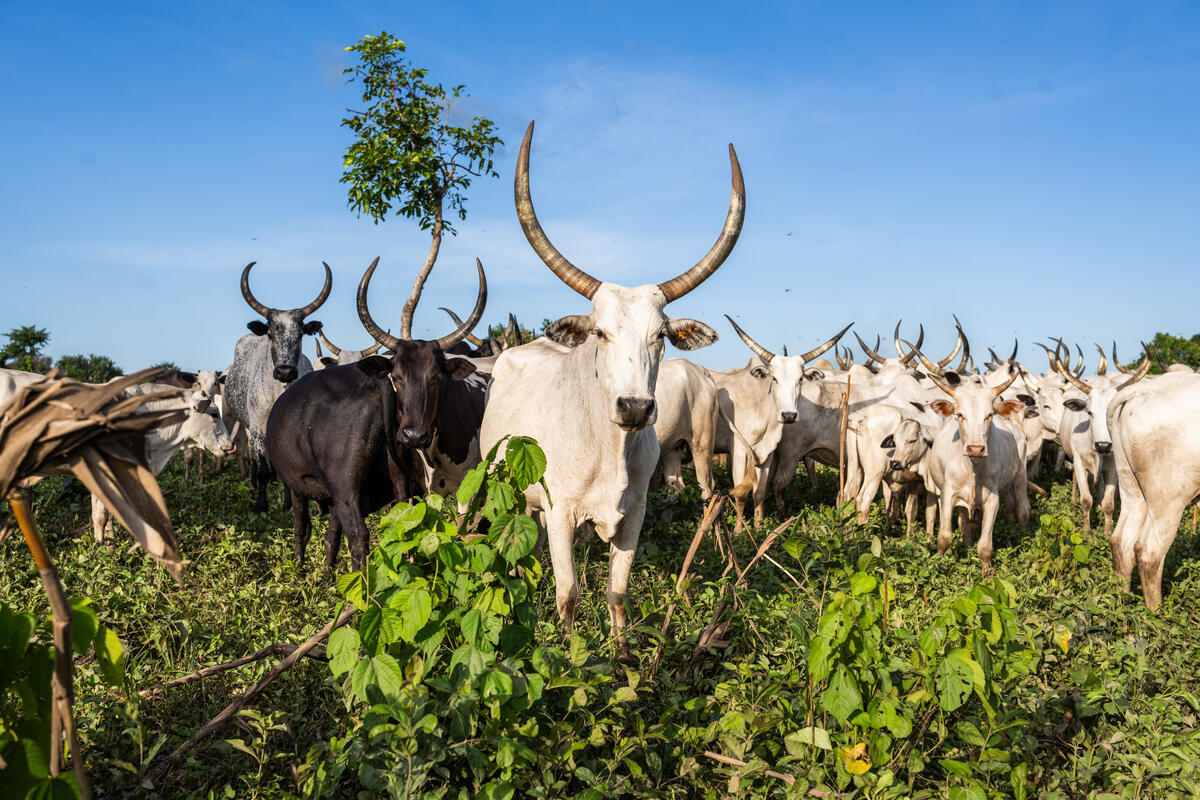
There is much that Mimi would like to forget. Three years ago, she was not a teacher but a farmer. She, her husband and their three children had two hectares of land in Guma Local Government Area, just a 30 minute-drive from the camp. They grew yams, sesame and millet and kept pigs and chickens. Mimi was particularly proud of their yams, which grew to a large size in the area’s rich soil. Occasionally, nomadic cattle herders would pass by. “They would ask our people for millet or yams, and we would give to them,” recalls Mimi. “That was then, but not now.”

One day, as Mimi, her husband, and their 11-year-old daughter were tending to their yam fields, they heard a gunshot. When they looked up, they saw armed men. There was no time to run. The men raped and killed Mimi’s daughter. Mimi herself was raped and her husband was killed. A hunter later found her injured and unconscious and helped her into the bush. They hid there for two days before it was safe enough for him to bring her to the camp. There, she received medical treatment and reunited with her two sons, now aged 12 and 15.
“I lost everything,” says Mimi. “If you go to my village, everything has been burned down; I cannot farm any longer. And it’s not only me … we all went through these things. We have a lot of widows and orphans here.”
Nearly all the 3,790 registered residents of Ichwa camp, and of many other camps dotted around Benue State, were smallholder farmers like Mimi, forced here by violent land grabs.
Over the past decade, conflict between communities has claimed countless lives in Nigeria’s lush Middle Belt region and displaced an estimated half a million people in Benue State alone. Similar clashes are playing out across the Sahel region as climate change disrupts traditional livelihoods and intensifies competition for dwindling supplies of water and productive land.
A report released today by UNHCR, the UN Refugee Agency, in collaboration with research partners, examines the intersection between climate change, conflict and forced displacement. It warns that more frequent extreme weather can aggravate tensions and weaken social cohesion, intensifying the root causes of conflict and instability.
Meanwhile, extreme weather events such as floods and drought are compounding the threats faced by people already displaced by conflict and violence. Currently, about 90 million forcibly displaced people live in countries with high-to-extreme exposure to climate-related hazards, and nearly half of all forcibly displaced people are bearing the burden of both conflict and the adverse effects of climate change. That figure is set to grow as climate-related hazards intensify over the coming decades.
A new challenge
© UNHCR/Colin Delfosse
He adds that security measures have done little to resolve the crisis. “The only thing we saw that worked was dialogue. Dialogue is the better way. Then other interventions like training in peace building and job skills.”
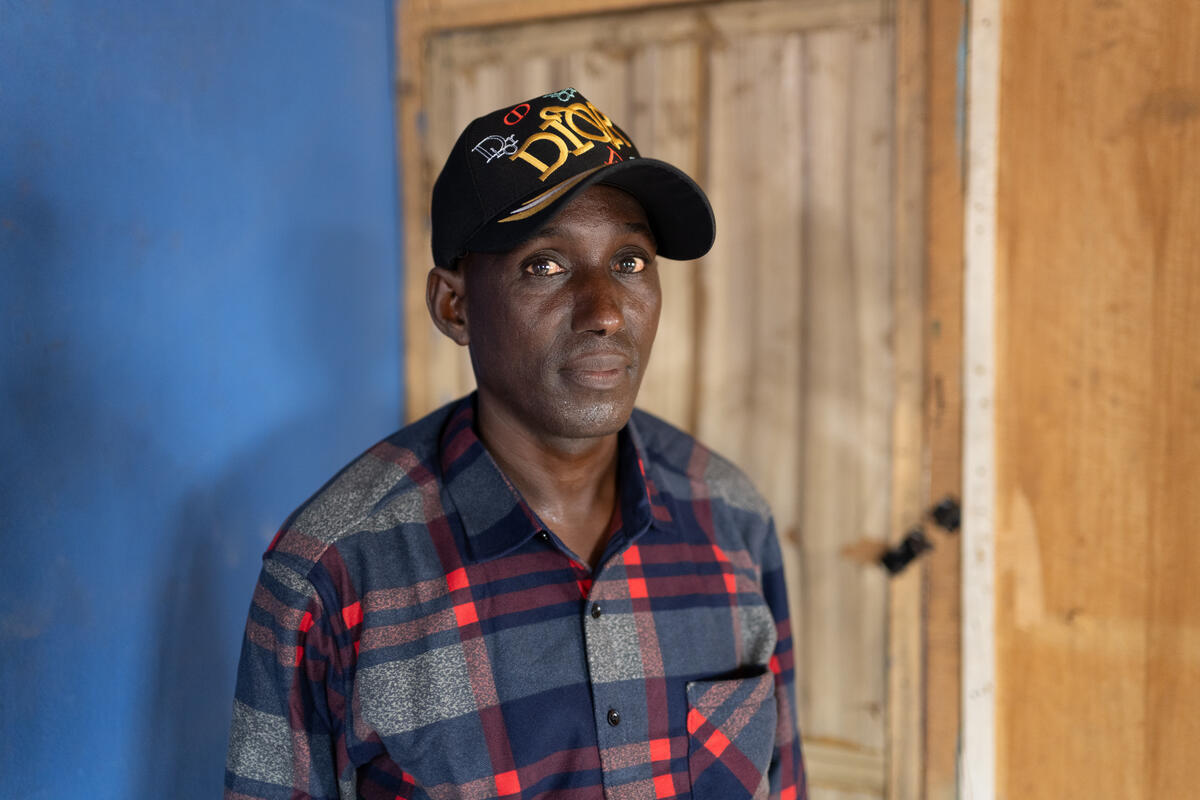
MACBAN is involved in efforts to educate herders about the benefits of abandoning their nomadic way of life and practising climate-smart agriculture to grow enough grass and fodder for their animals. “If we can live in one place, our children can go to school, we can vote, we can protect ourselves,” he says. “But we need land, we need education, we need better health facilities.”
Harsh conditions
Beatrice Shomkegh, a Senior Field Associate with UNHCR in Makurdi agrees with Ibrahim on the need for more engagement with herder and farming communities. “The conversation has to continue; we need to evaluate and re-evaluate what we are doing right and what we need to do differently.”
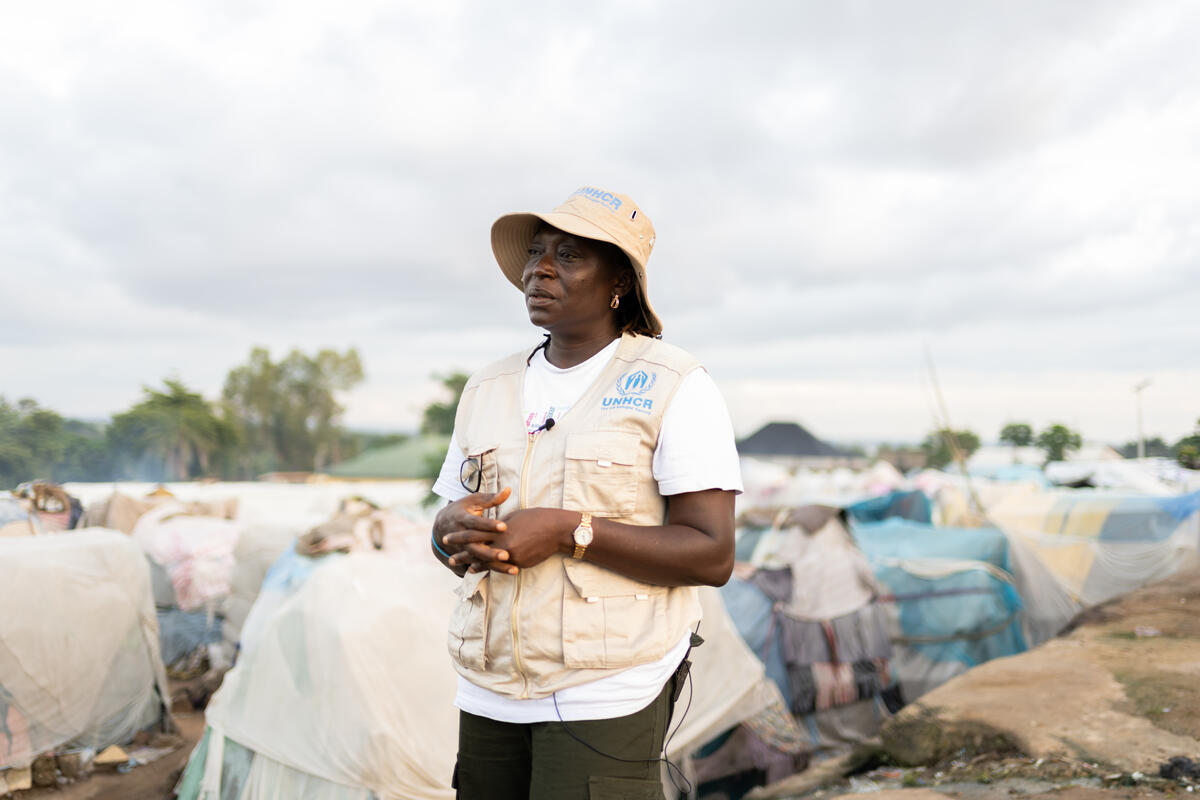
In the meantime, UNHCR is working with its local partner, the Foundation for Justice, Development and Peace, to provide life-saving assistance, child protection, and gender-based violence and counselling services to displaced individuals like Mimi who are struggling with loss and trauma.
“Since they counselled me and trained me, it’s assisted me a lot,” says Mimi. “It’s very painful, but I have to speak about my life. It makes that pain reduce.”
She now goes from tent-to-tent counselling other women and encouraging them to talk about their own experiences. “It has given me a job that I can never leave when I go back to my community.”
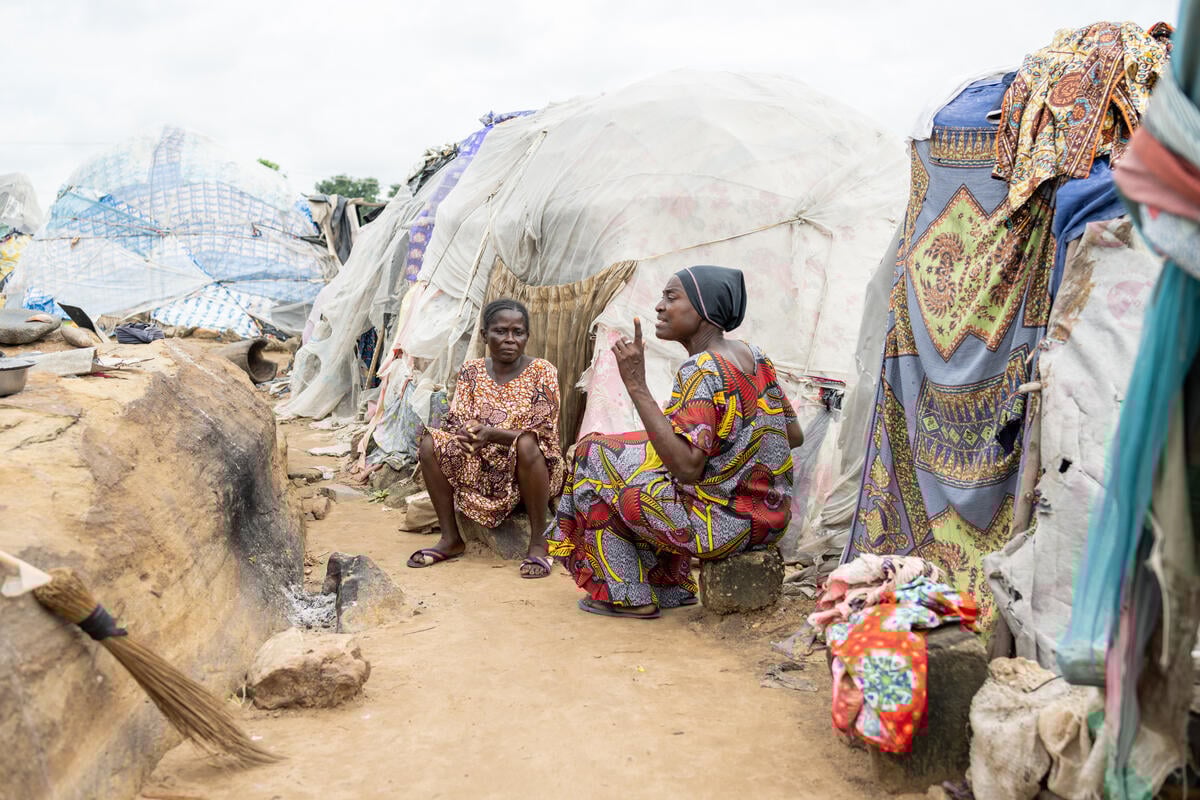
While teaching at the school and receiving counselling has helped her manage her trauma, life in the camp is unrelentingly harsh. She describes the tiny makeshift shelter she shares with her two sons as “a cage” and recounts narrowly surviving being bitten by a snake.
Shomkegh says a shortage of funding is preventing UNHCR from doing more to alleviate such conditions, or from supporting more initiatives to help displaced farmers find new livelihoods and herders adapt to the changing climate. Most of Ichwa’s residents rely on occasional work on farms near the camp to earn a small income. Others are renting small plots of land nearby so they can farm, but this comes with a risk given the region’s increasingly unpredictable climate, as well as prevailing insecurity.
Vincent Ijebe and his wife Jennifer borrowed money to rent half a hectare of land next to the Benue River to grow rice. They borrowed more money for fertilizer and spent hours a day travelling from the camp to tend to their crop. They planned to repay their debt after harvesting the rice but just a month before it was ready, heavy rain and the release of water from a dam upriver in Cameroon caused the river to burst its banks and flood their field. They were able to salvage only a small amount of the rice.
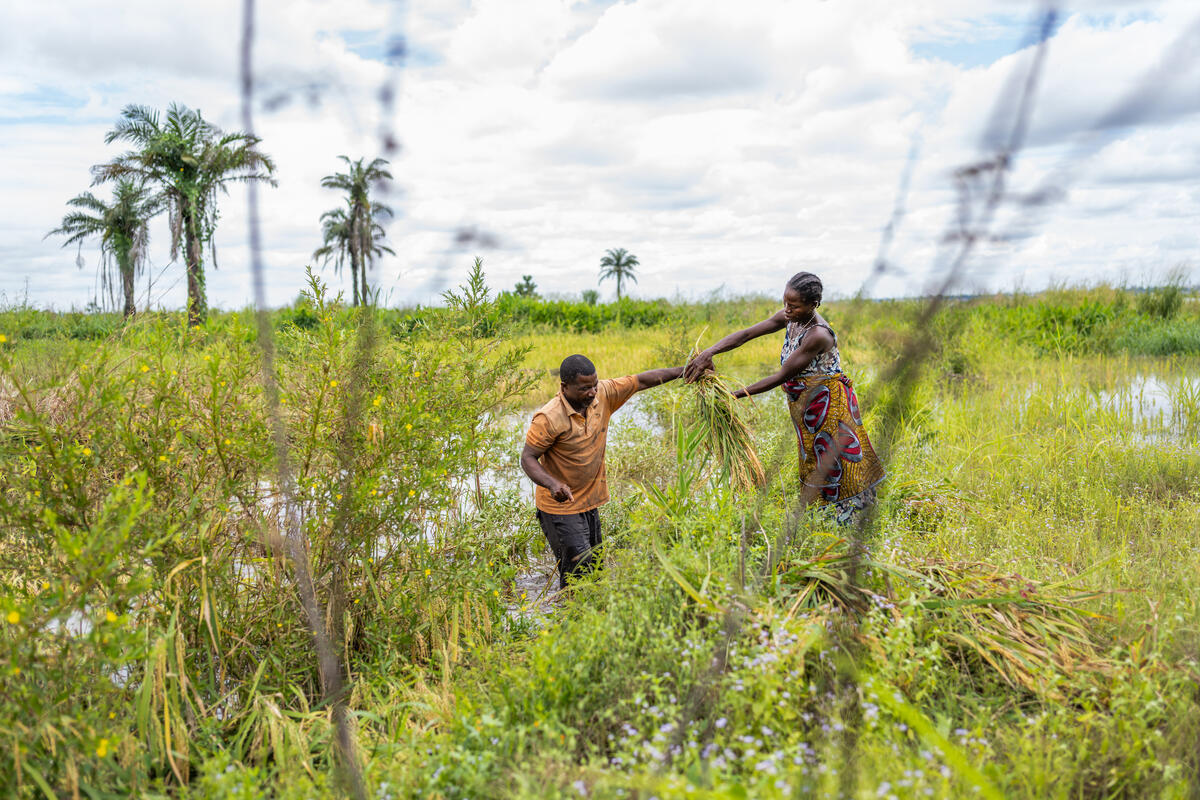
“I’ll be forced to work on other people’s farms again,” says Vincent as he reaches into the floodwaters to pull out fistfuls of immature rice plants. There will be no money to pay for his older son to attend secondary school outside the camp.
Mimi remains hopeful she will return to her ancestral land one day. “We used to be the food basket of the nation … I was really proud,” she says. “I will still farm; it’s part of our life.”