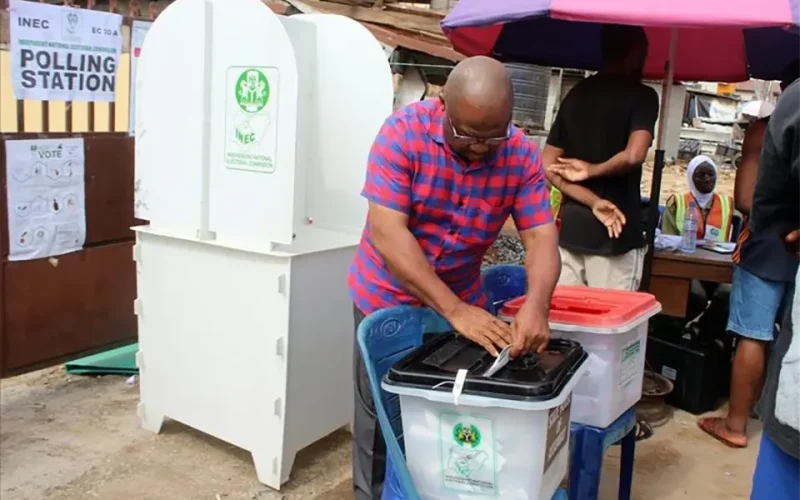
NIGERIA’S 2027 general elections could trigger political unrest unless significant reforms are implemented to fix the country’s electoral commission, according to new research examining the failures of the 2023 polls.
Onyedikachi Madueke, a teaching assistant at the University of Aberdeen, warns that without immediate action to address systemic problems within the Independent National Electoral Commission (INEC), Africa’s largest democracy risks sliding into violence.
“If it can’t deliver credible polls, the country risks sliding into political unrest,” Madueke writes in The Conversation, adding that “flawed elections do more than produce disputed winners – they deepen cynicism, depress turnout, and risk violence.”
The warning comes as political activities for the 2027 elections are already beginning, with politicians forming alliances and preparing campaign strategies.
Four Critical Problems Identified
Madueke’s research, which examined the 2023 elections through interviews with senior electoral commission staff, political party representatives, and other stakeholders, identified four key issues undermining INEC’s effectiveness.
Leadership Independence Compromised
Despite being financially independent on paper, the electoral commission remains vulnerable to political influence through presidential appointments to key positions, Madueke found.
“In practice, appointees are often politically connected, sometimes openly partisan,” he writes. “Civil society groups flagged these risks ahead of 2023, but partisan nominees still took up sensitive electoral posts.”
The researcher points to INEC’s abandonment of real-time result uploads during the 2023 presidential election as evidence of political interference, noting this decision “fuelled suspicions of political influence.”
Widespread Corruption Among Officials
Electoral officials, particularly temporary staff, routinely accept cash payments from politicians, according to the research. Madueke describes how officials use the euphemism “sachet water” money for these bribes, which results in vote buying being ignored, result sheets being altered, and favourable polling officers being assigned to strategic locations.
“The 2023 polls brought fresh allegations: from officials charging voters to collect their voter cards, to attempted bribes for changing the result figures,” he writes.
Technology Failures Raise Manipulation Concerns
The 2023 elections saw the failure of promised technological safeguards, including the real-time uploading of presidential results, despite the same system working for National Assembly results cast on the same day.
“Many believe abandoning the result viewing portal technology made it easier for the result of the 2023 presidential poll to be manipulated,” Madueke states. “This wasn’t just a technical hiccup; it was a breach of legal guidelines and public trust.”
Inadequate Workforce Training
With a small permanent staff and reliance on over one million temporary workers for nationwide elections, INEC faces significant workforce challenges. Madueke found that recruitment is vulnerable to political interference, training is inconsistent, and institutional knowledge is being lost as experienced staff retire.
Regional Implications
Madueke emphasises that Nigeria’s electoral standards have broader implications for West Africa, warning that repeating 2023’s failures could encourage other regional leaders to treat election commissions as political tools.
“Nigeria’s example matters. It’s Africa’s largest democracy. Its electoral standards influence the region,” he writes.
Four-Point Reform Agenda
The academic outlines four urgent reforms needed before 2027:
- Merit-based appointments: Remove the president’s sole power to appoint commission leadership through a multi-stakeholder vetting process and create a professional electoral service corps.
- Technology improvements: Strengthen ICT infrastructure, implement redundancy systems, conduct independent audits, and integrate voter registers with biometric and national ID systems.
- Legal reforms: Tighten pre-election litigation timelines, ensure swift post-election dispute resolution, and impose stricter penalties for electoral offences.
- Enhanced civic engagement: Improve voter education, particularly on vote buying and citizens’ rights, while giving civil society groups better access as partners in the process.
Madueke concludes that “the real contest isn’t between the parties or personalities. It’s between a compromised electoral institution and the reforms needed to make it worthy of public trust.”
The research was published in The Conversation on September 10, 2025, with Madueke disclosing no relevant financial interests beyond his academic appointment at the University of Aberdeen.