THE bribery trial of former Nigerian Petroleum Minister Diezani Alison-Madueke took a dramatic turn at Southwark Crown Court this week when written statements from former President Goodluck Jonathan and two of West Africa’s most powerful oil executives were placed before the jury – each flatly contradicting the prosecution’s account of corruption at the heart of Nigeria’s petro-state.
Jonathan, who appointed Alison-Madueke as oil minister in 2010, told the court through a formal statement that it was entirely normal practice for third parties to make payments on behalf of ministers travelling on official duties abroad. He further confirmed that he had personally authorised his minister’s use of private jets on some foreign trips – one of the central allegations in the Crown’s case.
| “At no time did I do anything to influence or show favour to anyone.” — Diezani Alison-Madueke |
His intervention carries significant political weight. Jonathan’s statement effectively endorses Alison-Madueke’s core defence – that the lifestyle costs incurred during her tenure were standard practice for a minister of her rank, and that any third-party assistance was properly reimbursed.
The Businessmen Speak
Two oil magnates whose names have featured prominently in the prosecution’s narrative also provided exculpatory statements to the court.
Kevin Okyere, a Ghanaian businessman and chief executive of several oil and gas companies, told the National Crime Agency (NCA) in 2016 that he had paid approximately £3,900 for items at the Peter Jones department store in London after a chance encounter with Alison-Madueke at the checkout — and that she had fully repaid him in cash at his Abuja office. The suggestion that he had bribed her, Okyere told investigators, was “completely untrue”.
Nigerian oil tycoon Igho Sanomi, in a separate 2017 NCA statement, offered a similarly benign explanation for his financial involvement with the minister: that foreign currency exchange difficulties in Nigeria had made it practical for him to purchase items on her behalf in London, with full expectation of reimbursement. Sanomi added that his companies had always won their contracts through fair, competitive bidding, and that Alison-Madueke had played no improper role in any allocation to him or his firms.
Neither Okyere nor Sanomi has been charged in this case, and neither appeared in person before the court.
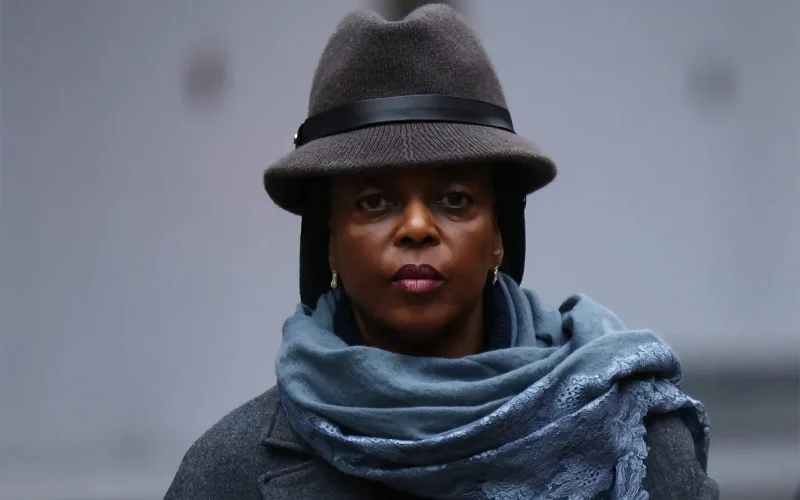
Alison-Madueke, 65, completed nearly eleven days of testimony earlier this week, the final stretch of which saw prosecutor Alexandra Healy KC press her on a series of high-value purchases allegedly made on her behalf. These included a £170,000 shopping trip to Vincenzo Caffarella, a London antiques dealer, where Venetian lamps and vases formed part of an extensive haul.
The former minister denied the items were purchased to furnish a Nigerian property under construction. “I don’t think anyone would risk their career for furniture and handbags,” she told the court.
She also denied falsely claiming that the costs of services rendered to her had been repaid, and rejected the entirety of the prosecution’s suggestion that she had received financial advantages from oil executives. “At no time did I do anything to influence or show favour to anyone,” she said.
| “I don’t think anyone would risk their career for furniture and handbags.” — Alison-Madueke, in court |
When challenged on why she had not produced documentary proof of repayments since her 2015 arrest, Alison-Madueke pointed to a decade of effective detention in London at the “expense of taxpayers”, and accused the Nigerian authorities of seizing her papers and refusing to assist her defence — motivated, she said, by political opposition to the government in which she had served.
A Trial with Continental Dimensions
The case reverberates far beyond the walls of Southwark Crown Court. It implicates not merely one minister but the entire structure of Nigeria’s oil governance during one of the most lucrative — and contested — periods of African petro-politics.
The court previously heard how oil tycoons allegedly bankrolled private jets, luxury properties worth millions of pounds, and chauffeur-driven transport as part of what the prosecution characterises as a sustained programme of bribery. The five counts of accepting bribes and one count of conspiracy to commit bribery that Alison-Madueke faces carry the prospect of a lengthy custodial sentence if upheld.
Also in the dock are her brother, former Archbishop Doye Agama, 69, who denies conspiracy to commit bribery, and oil industry executive Olatimbo Ayinde, 54, who faces one count of bribery relating to Alison-Madueke and a separate count involving a foreign public official. Neither Agama nor Ayinde gave or is expected to give evidence.
The trial continues.