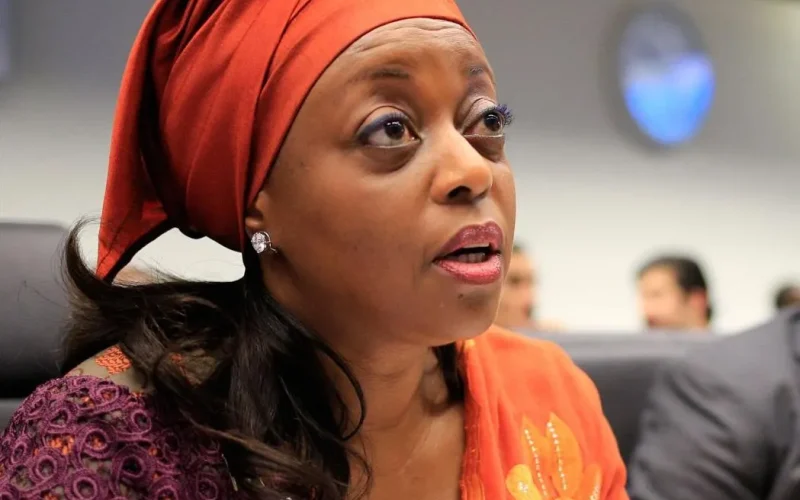
THE woman who once controlled the lifeblood of Africa’s largest economy now finds herself in the unfamiliar position of defendant, her fate resting in the hands of a British jury.
Diezani Alison-Madueke, 65, Nigeria’s former petroleum minister and once a commanding presence in global energy circles, has begun what promises to be a gruelling 12-week trial at Southwark Crown Court. She stands accused of living a double life: public servant by title, private beneficiary of an elaborate bribery scheme by alleged design.
The charges are stark. Prosecutors claim that between 2011 and 2015, while Alison-Madueke wielded enormous influence over Nigeria’s state-owned oil apparatus, she accepted millions in bribes from energy executives hungry for lucrative government contracts. In exchange for her favour, the court heard, these businessmen allegedly bankrolled an extravagant lifestyle that spanned continents.
A Life of Luxury on Trial
The prosecution’s case, laid out by Alexandra Healy KC, paints a portrait of excess that seems pulled from fiction: more than £2 million spent at Harrods alone, with Alison-Madueke enjoying the services of a personal shopper reserved only for the store’s most elite clients. Multimillion-pound properties in London and Buckinghamshire. Private jets. Chauffeur-driven cars. A retinue of staff, including housekeepers, nannies, gardeners, and window cleaners.
One property in particular captures the alleged arrangement’s opulence: The Falls, a mansion in Gerrard’s Cross featuring its own cinema room. Prosecutors say Nigerian businessman Olajide Omokore purchased it in 2010, but Alison-Madueke had “exclusive use” from late 2011. She allegedly spent six weeks there writing a book about Nigeria’s president, attended by a personal chef and a driver who knew her simply as “HM”—Honourable Minister.
The refurbishment costs alone tell their own story: £4.6 million allegedly spent updating properties, including £300,000 for The Falls. Rent for two central London flats where Alison-Madueke and her mother lived reportedly cost £500,000 over three years.
All of it, prosecutors claim, was paid for by the very businessmen whose fortunes depended on her decisions.
Why London? Why Now?
The spectacle of a Nigerian corruption case unfolding in a British courtroom raises obvious questions. Healy addressed them directly: “We live in a global society. Bribery and corruption undermine the proper functioning of the global market. There is an important public interest in ensuring that conduct in our country does not further corruption in another country.”
It’s a statement that underscores London’s role not just as an alleged playground for corrupt officials, but as a jurisdiction increasingly willing to police foreign corruption when it touches British shores.
The Burden of Denial
Alison-Madueke has pleaded not guilty to five counts of accepting bribes and one count of conspiracy to commit bribery. She sits in the dock alongside two co-defendants: oil executive Olatimbo Ayinde, 54, who faces separate bribery charges, and her own brother, former archbishop Doye Agama, 69, charged with conspiracy to commit bribery and appearing via video link for medical reasons.
All three deny the charges.
For Alison-Madueke, the stakes could not be higher. She served as petroleum minister from 2010 to 2015 under President Goodluck Jonathan, a period when she was not merely powerful but pivotal—one of the few women to reach such heights in the male-dominated worlds of both Nigerian politics and global energy.
The Nigeria That Watches
Back in Nigeria, this trial carries a different weight. Oil constitutes the backbone of the nation’s economy, yet ordinary Nigerians have seen precious little of that wealth trickle down. As an OPEC member nation sitting atop vast reserves, Nigeria should be prosperous. Instead, corruption has long been identified as the barrier between the country’s potential and its reality.
Whether Alison-Madueke is guilty or innocent, her trial serves as a referendum on an era—a moment when the global spotlight turns to uncomfortable questions about who benefited from Nigeria’s oil wealth, and how.
The trial continues. The verdict, when it comes, will determine not just the fate of one woman but potentially reshape how the world views accountability for those who once seemed untouchable.
The case is expected to conclude in approximately 12 weeks.