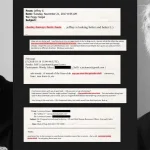

IN the final days before his arrest, disgraced financier Jeffrey Epstein was attempting to purchase one of North Africa’s most opulent properties – a gilded Moroccan palace – even as American authorities were closing in on him. The financial manoeuvring behind that doomed transaction, now revealed in documents released by the U.S. Department of Justice, offers a window into a web of African connections that stretched from the Atlas Mountains to the East African coast.
The Morocco Deal
Reuters reports that Charles Schwab wired approximately $27.7 million on behalf of Epstein to a realtor in Morocco in the ten days before his July 2019 arrest, as the convicted sex offender attempted to purchase the Palace Bin Ennakhil in Marrakesh. According to Reuters, the opulent property – whose name translates to “amidst the palms” – boasts gold-draped walls, 60 marble fountains, a hammam steam spa, an outdoor pool and jacuzzi, and spans a plot larger than New York’s Washington Square Park, ringed by hundreds of olive trees and more than 2,000 palm trees.
Reuters reports that Schwab opened three accounts for Epstein’s companies in April 2019, including one for a shell company called Southern Trust – the vehicle Epstein was using to pursue the Marrakesh purchase. The brokerage processed two wire transfers to Julius Baer accounts in Switzerland held by Marrakesh-based realtor Marc Leon: first, approximately $12.7 million in euros on June 26, 2019, which was subsequently reversed when Epstein’s associates said the terms were not “agreeable,” and then a second wire of $14.95 million on July 4 – signed by Epstein himself – even though the Southern Trust account lacked sufficient funds, as the earlier transfer had not yet been returned.
According to Reuters, Epstein’s arrest came on July 6, 2019, and Schwab only filed a suspicious activity report (SAR) to the U.S. Treasury Department’s Financial Crimes Enforcement Network (FinCEN) seven days later, on July 13. In that report, Schwab told regulators it had “concerns with attempted wires for the purpose of real estate, in light of negative media surrounding Jeffrey Epstein” and concerns about him being a possible flight risk ahead of a bail hearing. Reuters notes that Schwab had been alerted to Epstein’s notoriety – the Miami Herald had published damaging reporting on him as far back as 2018 – yet processed the transfers over several months before shutting down his accounts.
Reuters reports that Leon, the Moroccan realtor, confirmed Epstein had first tried to buy the property as far back as 2011, with negotiations continuing on and off for nearly a decade. Leon defended his role, telling Reuters: “Epstein had been convicted of sex crimes (in 2008) and had served his sentence. There was therefore nothing to prevent him from attempting to purchase property in Morocco. We had no way of knowing that he had continued his terrible crimes.”
The palace deal ultimately collapsed. Leon told Reuters the property has since been sold to another buyer.
A Continent-Wide Footprint
The Morocco episode, while striking, is far from the only African thread running through the DOJ’s massive document release of more than 3.5 million pages.
The most extensively documented African connection, according to The African Mirror’s examination of the files, involves a 2002 humanitarian trip during which former U.S. President Bill Clinton, actor Kevin Spacey, and comedian Chris Tucker flew on Epstein’s private jet for a five-day tour of Ghana, Nigeria, Rwanda, Mozambique, and South Africa, ostensibly to draw attention to the AIDS crisis. Clinton’s spokesperson has stated he knows nothing about the crimes Epstein committed and took four trips on Epstein’s plane between 2002 and 2003 in connection with Clinton Foundation work. Clinton has not been accused of any wrongdoing.
It was during that same 2002 South Africa trip that South African model Juliette Bryant publicly said she was groomed and trafficked by Epstein. Bryant, who was 20 at the time and an aspiring model based in Cape Town, told The Daily Beast she was approached by women who told her Epstein had connections to Victoria’s Secret and could help her modelling career. Her account illustrates how Epstein’s African visits were not always the philanthropic exercises they appeared to be.
Passport records contained in the DOJ files reveal Epstein’s long-standing interest in Africa as a travel destination. In 2011, three years after his guilty plea in Florida, Epstein applied for a second U.S. passport, writing: “Please issue me a second passport so I may have the 3 visas issued for Africa while I am using my current passport in France.” The filing underlines that Epstein’s African connections did not end with his 2008 conviction.
East Africa: Transit Points and Troubling Emails
The DOJ files reference Kenya and Somalia as locations flagged for paedophile activity, and identify Tanzania and Senegal as transit points in Epstein’s alleged trafficking operations. Tanzania is referenced partly in connection with Mnemba Island, a private Indian Ocean archipelago visited by members of Epstein’s circle.
One email exchange flagged by investigators shows an associate telling Epstein that girls were “totally excited” about an upcoming trip to Africa, describing them riding “the African plains.” Investigators and experts who have reviewed the files have noted this is consistent with patterns of trafficking under the guise of safari and travel opportunities.
The files also suggest that Epstein’s estate was exploring the possibility of opening a film studio in Somaliland, the self-declared independent region of Somalia – ostensibly as a commercial venture, though investigators have noted the potential for such a project to be used to exploit young aspiring actors.
The South Africa Connection
The African Mirror reports that the DOJ files contain a reference to a dinner involving former South African President Jacob Zuma and Epstein – described as taking place on the final evening of Zuma’s visit to London, after an official meeting at South Africa House. According to The African Mirror, there had been no previous public indication of any connection between Zuma and Epstein.
A Pattern of Financial Complexity
The Morocco transactions fit a broader pattern visible across the DOJ documents: Epstein using layers of shell companies, international wire transfers, and multiple financial institutions to obscure the flow of his wealth. Reuters reports that Schwab was among at least seven financial firms subpoenaed by the U.S. Virgin Islands in 2020, requesting documents related to the co-executors of Epstein’s estate, though the subpoena did not name Schwab as a defendant and contained no accusations of wrongdoing.
Epstein had turned to Schwab in 2019 after Deutsche Bank wound down his accounts, Reuters reports. His accountant, Richard Kahn – who was authorised to operate the Southern Trust account at Schwab – has since been ordered to testify before the U.S. House Oversight Committee over questions about whether he helped facilitate Epstein’s crimes. Reuters notes it has no evidence that Kahn is guilty of wrongdoing.
Epstein died in a New York jail in August 2019 while awaiting trial on federal sex trafficking charges. A DOJ memo released in July 2025 concluded his death was a suicide. The palace of Bin Ennakhil – the property he never managed to buy – has since passed to a new owner, another buyer having completed what Epstein never could.