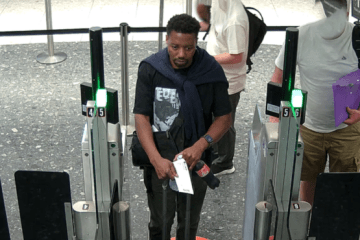
IN the early hours of Monday morning, another planeload of human cargo touched down in Eswatini – a kingdom smaller than New Jersey that has become an unlikely destination for migrants the United States doesn’t want. The arrival of these 11 deportees marks the latest chapter in a controversial arrangement that has transformed this landlocked nation into a pressure cooker of legal battles, street protests, and diplomatic handwringing.
This isn’t Eswatini’s first rodeo with America’s deportation machine. Just weeks after widespread protests erupted in July over the arrival of five deportees – whom U.S. officials branded as “depraved monsters” – the kingdom has quietly accepted another batch. Earlier this same week, 10 more arrived. The message from the government is clear: despite the fury in the streets and the lawyers hammering at courtroom doors, Eswatini will honour its deal with Washington.
A Trail of Tears Across Continents
The journey these deportees took reads like a grotesque travelogue. Tracked by vigilant lawyers and human rights activists, the deportation flight hopscotched from Louisiana’s Alexandria Staging Facility to Puerto Rico, then across the Atlantic to Senegal and Angola, before finally descending into southern Africa. On board: Southeast Asian migrants—Vietnamese, Laotians, and others—who have never set foot in Eswatini, don’t speak its languages, and have no ties to the nation that will now imprison them.
Among the deportees are two Vietnamese nationals represented by U.S.-based lawyer Tin Thanh Nguyen, who has been tracking this shadowy deportation pipeline with increasing alarm. His clients join four others already languishing in Eswatini’s maximum-security prisons: men from Cuba, Laos, Vietnam, and Yemen who have been detained without charge and denied legal counsel for nearly three months. One Jamaican deportee was eventually repatriated, but the others remain in legal limbo—convicted criminals with deportation orders in America, but stateless prisoners in Africa.
The $5.1 Million Question
What would compel a small African monarchy to accept up to 160 deportees who aren’t even its citizens? According to Human Rights Watch, the answer comes with a price tag: $5.1 million in U.S. funding earmarked for “border and migration management capacity-building.” For King Mswati III’s absolute monarchy—already facing international criticism for crushing pro-democracy movements—it’s a transaction that trades cash for controversy.
The Eswatini government frames this differently, of course. In carefully worded statements, officials emphasise their “sovereign authority,” their collaboration with the International Organisation for Migration, and the “secure facilities” where deportees pose “no security threat” to the public. They speak of months of negotiations with Washington and their commitment to international cooperation on migration management.
But the lawyers and activists tell another story. They describe harsh detention conditions, stonewalled legal access, and a government deliberately stalling court proceedings. The legal challenges keep mounting: cases arguing that these deportations violate constitutional principles, international refugee law, and the fundamental protection against refoulement—the prohibition on returning people to places where they face persecution.
Africa’s Reluctant Coalition
Eswatini isn’t alone in this dubious club. The Trump administration’s third-country deportation program has quietly enlisted at least five African nations in largely secretive agreements. Since July, more than 30 deportees have been scattered across the continent like unwanted parcels:
- Eight to South Sudan, where six remain detained in an unspecified facility
- Seven to Rwanda, which refuses to disclose where it’s holding its deportees
- Fourteen West African migrants to Ghana, where 11 are now suing the government for detaining them in what they describe as appalling conditions at a military camp outside Accra
The pattern is consistent: poor countries accepting deportees in exchange for U.S. funding, minimal transparency, questionable detention conditions, and mounting legal challenges from human rights organisations.
The Human Cost of Diplomatic Deals
Behind the statistics and legal briefs are human beings caught in a bureaucratic nightmare. Consider the absurdity: Southeast Asian migrants who sought asylum in the United States were denied, and now find themselves imprisoned in African nations where they have no cultural connection, no language skills, and no realistic path to repatriation or resettlement.
The initial five deportees who arrived in July sparked nationwide protests in Eswatini. Citizens took to the streets, appalled that their country was being used as a repository for people America deemed too dangerous or undesirable to keep. The optics were devastating: a tiny kingdom already struggling with poverty and political repression now importing foreign prisoners to hold indefinitely.
The protesters understood something fundamental: this isn’t just about immigration policy or bilateral agreements. It’s about dignity, justice, and the uncomfortable reality that desperate nations can be pressured into deals that wealthier countries would never accept.
Legal Battlegrounds and Diplomatic Fallout
The courtroom has become the main theatre of resistance. Lawyers representing the deportees have filed multiple challenges, arguing that Eswatini is violating both domestic constitutional law and international human rights standards. They point to rulings in neighbouring South Africa, where courts have declared certain refugee detention and deportation provisions unconstitutional—precedents that could theoretically influence Eswatini’s legal landscape.
But in a monarchy where the king holds absolute power and democratic institutions are weak, legal victories may prove hollow. The government has shown no inclination to halt the deportations, even as cases wind through the courts. Each new arrival strengthens the protesters’ argument that Eswatini has become complicit in a system that treats migrants as commodities to be traded and stored.
Neighbouring countries are watching nervously. South Africa’s Department of International Relations has formally raised concerns about the security implications and human rights dimensions of Eswatini’s arrangement with the U.S. Regional bodies are questioning whether these deportation deals violate continental commitments to human rights and refugee protection.
An Uncomfortable Mirror
The Eswatini deportation saga holds up an uncomfortable mirror to global power dynamics. Here is the world’s wealthiest nation outsourcing its immigration problems to some of the world’s poorest countries. Here are migrants fleeing persecution in Southeast Asia and Latin America, seeking safety in America, only to be shipped to Africa. Here are governments that preach human rights and democratic values, paying autocratic regimes to warehouse unwanted people.
For Eswatini’s citizens, the anger isn’t complicated. They see their government accepting money to imprison foreigners who pose no direct threat but represent a massive reputational and humanitarian burden. They see a deal that benefits politicians and Washington bureaucrats while ordinary Swazis bear the stigma of being labelled a dumping ground.
The Road Ahead
As October unfolds, the question isn’t whether more deportees will arrive—the government has already confirmed the deal covers up to 160 people. The question is whether sustained protest, legal pressure, and international scrutiny can force a reckoning with this system.
The lawyers will keep filing motions. The protesters will keep marching. The deportees will keep sitting in their cells, caught between countries that don’t want them and legal systems that move with glacial slowness. And the world will keep watching to see whether a tiny African kingdom can stand up to American pressure, or whether poverty and diplomatic isolation make saying “no” an unaffordable luxury.
What’s certain is that Eswatini has become ground zero in a larger debate about the ethics of third-country deportations, the treatment of migrants in an age of mass displacement, and the price that poor nations pay to maintain relationships with powerful ones. The protests in the streets of Mbabane aren’t just about 11 or 21 or 160 deportees. They’re about sovereignty, dignity, and the question of what a nation is willing to accept in exchange for $5.1 million.
The answer, it seems, is more than many Swazis are comfortable with—and far more than the deportees ever bargained for when they sought asylum in the land of the free.