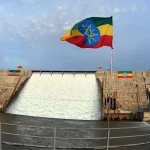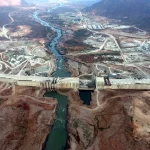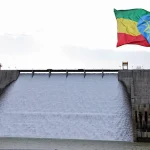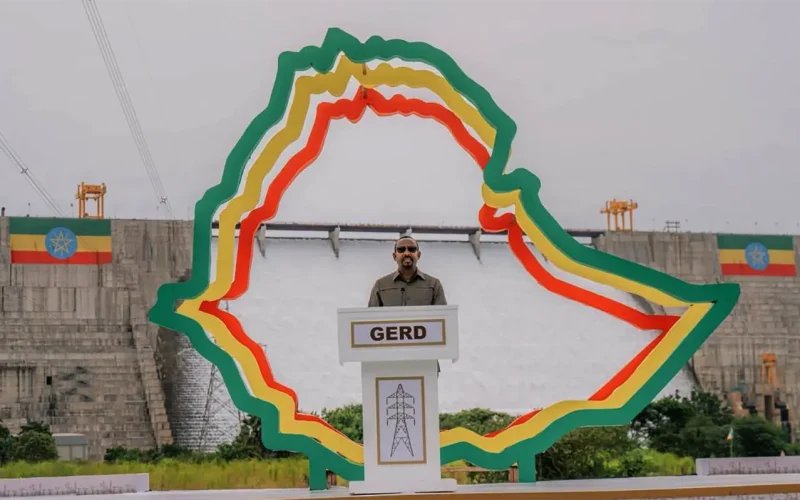
ETHIOPIA has officially inaugurated the Grand Ethiopian Renaissance Dam (GERD), marking the completion of Africa’s largest hydroelectric project that promises to provide electricity to millions while deepening tensions with downstream neighbours Egypt and Sudan over Nile River water rights.
The $4.2 billion dam on the Blue Nile represents a “transformative moment in Ethiopia’s history” after 14 years of construction, positioning the Horn of Africa nation to generate over 5 gigawatts of electricity for its 120 million citizens, many of whom lack reliable power access.
Prime Minister Abiy Ahmed framed the project as an opportunity for regional cooperation, stating that “the Renaissance Dam is not a threat, but a shared opportunity” during parliamentary remarks in July. The dam is central to Ethiopia’s economic development ambitions, with plans to export surplus power to neighbouring countries and boost agricultural productivity.
A NEW ERA OFFICIALLY UNFOLDS
— Fana Media Corporation S.C. (FMC) (@fanatelevision) September 9, 2025
Abbay river said YES to its motherland!????#GERD by the great people!
The Grand Ethiopian Renaissance Dam for the great people!
The beginning of the Ethiopia's renewal era! pic.twitter.com/OJZLFjQLC2
However, the inauguration comes amid intense diplomatic opposition from Egypt and Sudan, who fear the massive reservoir will threaten their water security. Both downstream countries are “intensifying political and diplomatic efforts to highlight what they say is the illegality of unilaterally operating the dam without a binding agreement” and worry that Ethiopia’s actions could undermine their water access.
Last week, Egypt and Sudan rejected attempts to expand negotiations beyond the three countries, insisting talks remain confined to Egypt, Sudan and Ethiopia after meeting in Cairo to coordinate their response.
The GERD dispute has become one of Africa’s most complex transboundary water conflicts, with negotiations stalled for years over dam operations, filling procedures, and drought mitigation measures. The reservoir has a capacity of 74 billion cubic meters and sits on the Blue Nile, which provides approximately 80% of the Nile River’s flow during flood season.
For Ethiopia, the project represents national pride and energy independence. The dam’s inauguration gives “new hope to many Ethiopians” including rural communities that have long lacked electricity access. The country currently has one of the world’s lowest per-capita electricity consumption rates despite significant hydroelectric potential.
This Dam, #GERD
— Belete Molla Getahun (@BeleteMG) August 10, 2025
The all-important Dam,
Our Dam, our new national brand !
We got to celebrate it, appreciate it, cherish it, keep defending it !
The Great Ethiopian Renaissance Dam, GERD ! pic.twitter.com/1Agx4d0Ngq
Egypt, which depends on the Nile for 90% of its water supply, views the dam as an existential threat to its 104 million people. Sudan, sandwiched between the two regional powers, faces complex calculations as it could benefit from regulated water flow and cheap electricity while also risking reduced water access during droughts.
While Ethiopia has been producing power from operational turbines during construction phases, Tuesday’s ceremony marks the formal completion of the main infrastructure. The project has been financed primarily through domestic bonds and Chinese loans, demonstrating Ethiopia’s determination to proceed despite international pressure.
The inauguration represents a fait accompli that “is not a proposal to be negotiated, a project to be stopped, or a threat to be eliminated; it is a reality to be managed” according to Ethiopian officials. The coming months will test whether the three Nile nations can find accommodation or if tensions will escalate further in one of the world’s most water-stressed regions.
The Grand Ethiopian Renaissance Dam stands complete!
— Abiy Ahmed Ali ???? (@AbiyAhmedAli) September 9, 2025
A testament to Ethiopia’s resolve and a beacon for Africa’s future. pic.twitter.com/RV6SMmoLMv