NIGERIA has issued its most severe rebuke yet of South Africa’s handling of the safety of foreign nationals, warning that “all options remain on the table” after two of its citizens were killed within hours of each other on 28 June – one of them, the Ministry of Foreign Affairs alleges, during a “gruesome interrogation” by Tshwane Metro Police officers.
The language of Sunday’s statement, signed by ministry spokesperson Kimiebi Imomotimi Ebienfa, is unusually blunt for a bilateral relationship built on solidarity dating back to the anti-apartheid struggle. It accuses named South African law-enforcement units of a pattern of extrajudicial killing, invokes state responsibility under international law, and describes conduct by anti-migrant formations as amounting to “apartheid-style behaviour.” It is language calibrated for maximum political effect at home, where public anger over the treatment of Nigerians abroad has become a live issue for President Bola Tinubu’s government.
But the statement lands in the middle of a crisis that is bigger, messier and more combustible than any single bilateral dispute — and one in which Pretoria has just demonstrated, in a near-identical case involving Ghana, exactly how it intends to respond to accusations it considers unproven.
Two deaths, one unresolved case
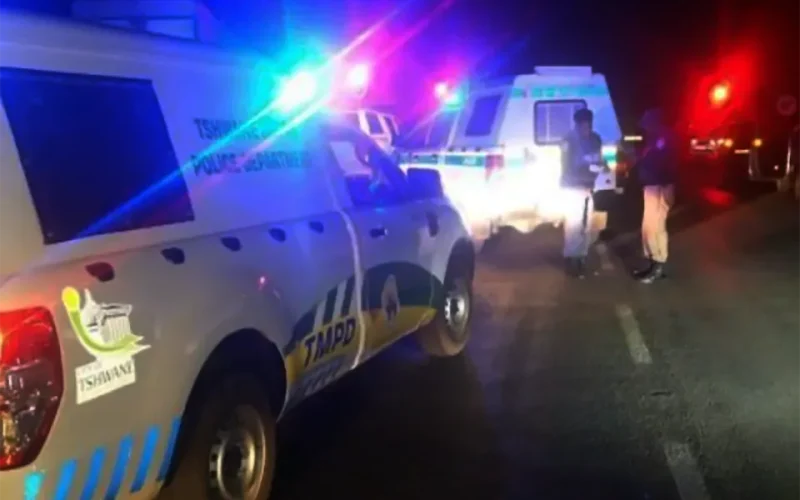
Emeka Charles Iroegbu died in Sunnyside, Pretoria, on 28 June after what Nigerian authorities and the Nigerian Consulate in Johannesburg describe as a violent interrogation by Tshwane Metro Police officers. A murder case has reportedly been opened at Hercules SAPS. On the same day, in Witbank, Mpumalanga, small-business owner Musa Yunana Joe — known locally as “Big Joe” — was shot dead outside his shop by attackers South African police have not yet identified.
Nigeria has linked Iroegbu’s death to an earlier case: the 20 April killing of Nnaemeka Mathew Andrew Ekpenyong, allegedly at the hands of the same Tshwane unit, in which Nigerian community organisations say the four officers involved remain known to SAPS but unsuspended and unprosecuted more than two months on. Nigerian community groups count the two men among at least four Nigerians who have died amid the current unrest, alongside Amaramiro Emmanuel, who Nigeria’s consulate says died after being assaulted by South African National Defence Force personnel in Port Elizabeth in April.
A country in the grip of an immigration reckoning
The killings occur against the backdrop of the most sustained anti-migrant mobilisation South Africa has experienced since 2008. Movements including March and March, Operation Dudula and Progressive Forces have spent months campaigning against undocumented migration, culminating in a 30 June “deadline” — widely circulated on social media and in pamphlets — by which undocumented foreigners were told to leave the country or face violence. The government took pains to brand this an unofficial and fabricated construct with no basis in law, and President Cyril Ramaphosa met protest leaders to press for peaceful conduct.
The human toll of the build-up has nonetheless been severe. Mozambique says five of its nationals died in xenophobic attacks in the Western Cape in May; Malawi has recorded mob killings in Pietermaritzburg; South African police say more than 900 people were arrested during the 30 June marches, mostly for immigration offences and looting. By Pretoria’s own figures, roughly 25,000 foreign nationals have already left the country. More than 15,000 Malawians alone have been processed for deportation or repatriation, and Ramaphosa has announced a formal fast-tracking of removals of undocumented migrants involving Home Affairs, the Border Management Authority and SAPS. Statistics South Africa puts the country’s documented and undocumented migrant population at roughly 2.4 million people — a figure anti-migrant campaigners dispute as a significant undercount.
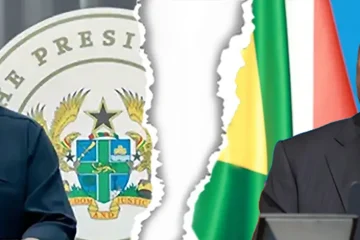
What makes Nigeria’s statement especially combustible is timing. Days earlier, South Africa was locked in an almost identical row with Ghana over the killing of a Ghanaian national, Bashiru Isak, whom Accra said was shot during the 30 June protests. South Africa’s Justice Minister and Inter-Ministerial Committee on Migration chair, Mmamoloko Kubayi, rejected the claim as “factually incorrect” and “not based on fact,” accusing Ghana of spreading “false information” to sustain what she called a “false narrative” of South African xenophobia. A senior DIRCO official, Clayson Monyela, went further, telling the BBC the account was a “fabricated tale.” South African police said they had no record matching the case Ghana described and pointed instead to a separate, apparently extortion-related shooting of another Ghanaian national. Foreign Minister Ronald Lamola had already warned Accra a month earlier that Pretoria would not tolerate “public spectacles” built on incomplete or misleading information.
The same script surfaced in May, when Lamola addressed allegations — including from Nigeria — that nationals had been killed by law enforcement during earlier unrest. He said there was “no credible evidence” to support the claim at that stage, and cautioned against manipulated footage and fake videos circulating online.
Pretoria has, in other words, already signalled the standard against which it will measure Abuja’s latest allegations: verified fact, established through its own police and forensic processes, communicated through formal diplomatic channels rather than public statements. Nigeria’s decision to go public first — as it also did in May, when DIRCO complained that a routine bilateral meeting request had been recast by Abuja as a diplomatic sanction — suggests the two governments remain talking past each other on process even as they claim to agree on principle.
The stakes beyond the statement
Unlike the Ghana case, Nigeria’s allegation against the Tshwane Metro Police is not a single contested account; it involves an open SAPS murder docket, a distinct and long-unresolved April case, and a pattern serious enough that Nigerian community organisations have separately demanded the suspension of the officers concerned and an independent probe by the Independent Police Investigative Directorate. That gives Abuja firmer ground than Accra had — but also raises the bar for what evidence South Africa will require before conceding institutional failure, rather than isolated criminal conduct, is at play.
Nigeria has additionally signalled it will pursue compensation for citizens who fled the unrest, and continues formally evacuating registered nationals through its Johannesburg mission — even as it reiterates, pointedly, that South African citizens and firms face no comparable harassment operating inside Nigeria. Whether the relationship moves toward the ministerial dialogue both Lamola and his Nigerian counterpart have previously invoked, or toward the kind of public slanging match now playing out with Accra, may depend less on what happened in Sunnyside and Witbank than on whether Pretoria’s investigators produce answers before the war of words does further damage to a friendship forged in the anti-apartheid era.