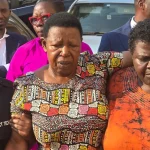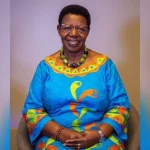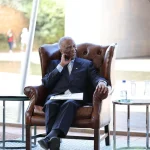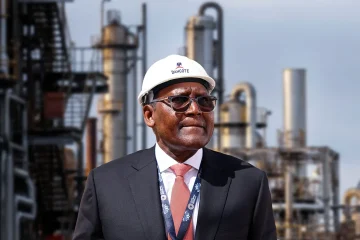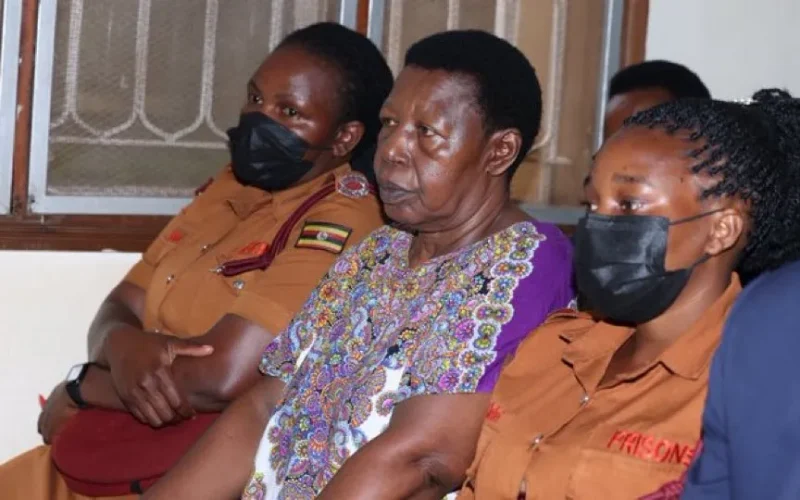
MIRIA Matembe, it seems, started exactly where she left off. Four days after security operatives dragged her from a friend’s house to Mbuya, a day after a magistrate remanded her to Luzira Prison, and mere hours after that same court granted her bail with an explicit instruction to avoid “utterances similar to those complained of in the charge,” the 73-year-old former Ethics and Integrity minister issued one of the most direct challenges any Ugandan public figure has put to President Yoweri Museveni in years – not to his policies, but to the basic question of whether he is still the one running the country.
In remarks that quickly circulated among Ugandans following her release, Matembe said Museveni “should come out and tell us if he is still the president,” and, if he is, that he must “put an end to his son” and “stop him from speaking again.” She went further still, warning that if power has in fact already passed informally to General Muhoozi Kainerugaba, Ugandans “also know” and will “chase them away both.” It was vintage Matembe: blunt, personal, and delivered with no apparent concern for the legal jeopardy she had just walked out from under.
A WARNING DELIVERED, A WARNING IGNORED
The Luzira Grade One Magistrate’s Court granted Matembe non-cash bail of Shs 3 million on 1 July, with her four sureties bonded at Shs 2 million each. Magistrate Sheilah Gloria Atim rejected the State’s argument that Matembe was “safer in prison” and had no fixed place of abode, finding instead that the veteran politician had a known home in Luzira, no previous convictions, and no record suggesting she would interfere with witnesses. Atim’s ruling was not, however, unconditional freedom. She was explicit that Matembe would be “guided to avoid utterances similar to those complained of in the charge,” and cautioned her against any conduct that could jeopardise the case before its conclusion.
That charge – one count of promoting sectarianism – stems from a television interview in which prosecutors allege Matembe claimed public resources were disproportionately benefiting Banyankole women ministers, comments the State says were likely to incite hostility against members of that community. Matembe denies the charge, and the case remains active. Her latest remarks about Museveni and his son do not repeat the specific sectarian allegation at the heart of the prosecution, but they land squarely in the territory the court told her to avoid: inflammatory public commentary about the country’s most powerful figures, made while she remains an accused person on bail.
“President Museveni should come out and tell us if he is still the president. If he is, he should put an end to his son. Stop him from speaking again. If he gave up power to his son, we also know — and we chase them away both.”
Dr Miria Matembe
THE BACKDROP: A MONTH OF ESCALATION
Matembe’s defiance cannot be read in isolation. Her ordeal began on 24 June, when security agents raided her Luzira home while she was out on her routine morning jog. She evaded arrest for two days before being picked up from a friend’s house and taken to the military facility at Mbuya. General Muhoozi Kainerugaba, Museveni’s son and Uganda’s Chief of Defence Forces, confirmed her detention himself on social media, days after publishing a string of personally abusive posts about her – dismissing her as no elder of his and warning her against speaking publicly again. The sequence, rights groups say, followed Matembe’s own public criticism of a wave of abductions and of Muhoozi’s expanding political footprint.
Her case did not unfold alone. In the same fortnight, former Kampala mayor Erias Lukwago was abducted and abused, with Muhoozi posting images of the aftermath; Speaker Anita Among was politically dismantled; Nation Media Group’s flagship outlets – the Daily Monitor, NTV, KFM, Dembe FM and Spark TV – were forced off air; and Kenyan lawyer Martha Karua was deported after representing opposition figure Kiiza Besigye. Amnesty International’s regional director for East and Southern Africa, Tigere Chagutah, called for an end to what the organisation described as the arbitrary use of the criminal justice system against government critics, naming Matembe alongside Besigye and Lukwago.
A QUESTION THE FIRST FAMILY ITSELF CANNOT SETTLE
Matembe’s challenge to Museveni – declare who is president, or face being “chased away” – echoes a question that has been quietly asked inside Museveni’s own political household. Political scientist Kristof Titeca, writing for Democracy in Africa, has argued that decision-making in Kampala has “spiralled” away from the 82-year-old president and toward his son, pointing to the speed with which Muhoozi has moved against institutions and individuals with apparent impunity. Even Museveni’s son-in-law, Odrek Rwabwogo, broke his own silence recently to warn that the president must be protected from unnamed figures seeking to “monopolise” him – language widely read in Kampala as directed at Muhoozi and his Patriotic League of Uganda movement.
Not every analyst agrees that the constitutional order has actually shifted. A rebuttal published by ChimpReports has argued that Parliament continues to legislate, the judiciary still functions, the military remains formally under presidential command, and that Muhoozi’s post-2024 rise reflects deliberate delegation by an ageing but still-decisive Museveni rather than a loss of control. What both camps agree on is that the ambiguity itself has become dangerous – and Matembe’s ultimatum is a direct attempt to force Museveni to resolve it publicly, in his own voice.
FEARLESS – OR RECKLESS?
Supporters will read Matembe’s latest intervention as consistent with a career built on confrontation – a former minister who quit Museveni’s government over what she regarded as its betrayal of the values that first drew her to the National Resistance Movement, and who has previously invoked the promise Museveni is said to have made her decades ago that she would never be arrested or killed under his watch. That promise, as reported this week, has now visibly been broken. For Matembe, the calculation may be that having already survived a raid, days in hiding and a night in Luzira, there is little left to lose by naming the problem she believes Uganda actually faces.
For the court, and for the State, her comments present a harder question. Magistrate Atim’s warning was not a suggestion; bail conditions in Uganda, as elsewhere, can be revoked where an accused person is found to have breached the terms on which they were released, and prosecutors opposing her bail had already argued she was likely to reoffend. Whether the authorities choose to treat her latest remarks as a fresh breach – reigniting a case that has already drawn international condemnation – or allow them to pass, will itself be read across Uganda as a signal of who is actually deciding such matters: the courts, the presidency, or the office of the Chief of Defence Forces.
WHY IT MATTERS BEYOND UGANDA
Matembe’s case has become a reference point well beyond Kampala’s political class. It sits inside a broader continental pattern The African Mirror has tracked in recent months – from Mali and Burkina Faso’s tightening grip on independent media to Zimbabwe’s term-extension manoeuvres – in which the machinery of state is turned against critics who question succession arrangements presented as settled. What distinguishes the Ugandan case is the explicitness of the family framing: an elder stateswoman publicly demanding that a sitting president answer, in plain terms, whether his son now speaks for the state. As Uganda moves deeper into a presidential term secured amid allegations of a militarised, personalised transition, Matembe’s ultimatum will not be the last word – but it has forced the question of who governs Uganda back into the open, exactly where the court had ordered her to leave it alone.