
ACROSS the African continent, governments are racing to account for tens of thousands of their citizens caught in the catastrophic fallout from a US-Israeli military assault on Iran – a conflict that has turned the Gulf’s gleaming cities of Dubai, Doha, Abu Dhabi, and Manama into active war zones, grounding flights, severing communications, and plunging families from Johannesburg to Kampala to Lagos into anguish.
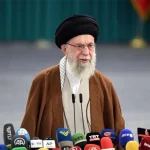
The crisis began in the early hours of Saturday, 28 February 2026, when the United States and Israel launched a coordinated series of airstrikes against Iranian military and nuclear sites. Iran’s Supreme Leader, Ayatollah Ali Khamenei, was killed in the assault – a seismic development that prompted Tehran to unleash an unprecedented wave of retaliatory drone and ballistic missile strikes across the Gulf, targeting US military bases in Bahrain, Kuwait, Qatar, Saudi Arabia, and the UAE. A second day of explosions rocked Dubai, Doha, and Manama on Sunday morning, with thick plumes of black smoke rising over cities that had long presented themselves as the safest destinations in a turbulent region.
The human cost for Africa is still being counted – but it is mounting by the hour.
“We Are Living Minute to Minute”
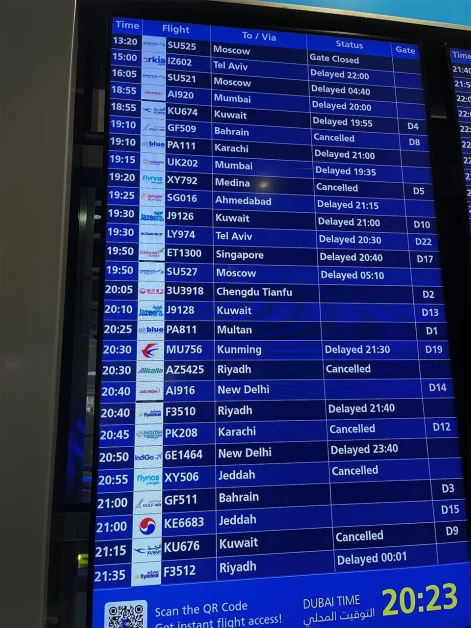
For South Africans stranded in the Gulf, the shock has been visceral. Dubai – the world’s busiest international airport hub, with a record 95.2 million passengers in 2025 – is effectively closed. Dubai International Airport sustained damage after an Iranian drone struck one of its concourses, injuring four staff. Zayed International Airport in Abu Dhabi was also hit, with falling debris from an intercepted drone killing one person and injuring seven others. Both facilities were suspended until further notice.
South Africans who had been working, holidaying, or transiting through the Gulf found themselves with nowhere to go. With Dubai’s famous Palm Jumeirah in flames – the luxury Fairmont Hotel struck by a drone and set ablaze – and no public bomb shelters in the city, residents and visitors spent Saturday night sheltering in underground parking garages, parents telling frightened children the explosions were Ramadan cannons.
“We have been trying to get hold of [DIRCO] with no luck,” one South African stranded in the UAE told Times Live, speaking between sobs. “We understand that flights are grounded, but we request to be taken to a place of safety.”
South African socialite, DJ, and reality TV personality Eva Modika went public with her ordeal after a birthday trip and professional bookings in Dubai were cancelled due to regional airspace closures, costing her an estimated R250,000. Her appeal, and those of countless less prominent South Africans, flooded social media platforms throughout the weekend.
Zimbabwe also found itself dealing with an anxious diaspora. One Zimbabwean woman shared on X that her brother, who had been living in the UAE for five years, had been sending “unsettling messages” – leaving her too anxious to carry out her usual weekend activities. “I’m just at home now, feeling under the weather,” she wrote.
For Kenyans, a woman identified on social media described waking up to messages from her sister asking for emergency contacts: “I just saw explosions outside my window,” the sister had written from her Gulf home. The Kenyan State Department for Diaspora Affairs moved quickly to publish emergency contact numbers, with the Kenyan Embassy in Kuwait posting advisories for its citizens in the affected countries.
African Governments Scramble – Emergency Lines Published, Evacuations Explored
Across the continent, governments activated emergency protocols at a speed unusual for their foreign affairs ministries.
South Africa’s Department of International Relations and Cooperation (DIRCO) confirmed it was monitoring the situation and in contact with South Africans through multiple communications platforms. Deputy Director-General Clayson Monyela addressed those demanding immediate evacuation with a frank assessment: “Airspaces are closed. It’s impossible to move in or out of those countries. We are in touch with South Africans using various comms platforms. Our systems do work. Every country’s diplomatic mission has evacuation plans. Various interventions and options are being explored.”
He added that South Africans who had registered with embassies in the region had already been contacted before the attacks and advised to leave while they still could. DIRCO published a full set of emergency contact lines for South African missions across the affected countries, including numbers for its missions covering the UAE, Saudi Arabia, Kuwait, Qatar, Bahrain, Iraq, and Israel-Palestine.
Nigeria’s Ministry of Foreign Affairs, through spokesperson Kimiebi Imomotimi Ebienfa, said the government was “closely monitoring the evolving and volatile situation” and issued a security advisory urging its nationals in Iran and Gulf countries to “remain extremely aware of their surroundings at all times and avoid areas known to host strategic, military, or government installations.” Nigerian embassies in Tehran and missions across Qatar, Bahrain, Kuwait, the UAE, and Saudi Arabia were placed on high alert. “The safety and well-being of Nigerian citizens abroad remains a top priority,” the ministry said, while also calling on all parties to pursue diplomatic solutions.
Uganda went further than most, issuing one of the continent’s most urgent advisories. The Ministry of Foreign Affairs called on all Ugandan nationals in Iran who were able to do so to leave the country “through any possible means,” citing escalating security risks. In an extraordinary step, the government withdrew all non-essential staff from its embassy in Tehran. “Consular services are severely limited for the time being as alternative arrangements are put in place,” the ministry’s statement read. Those choosing to stay were told to inform community leaders of their whereabouts, stay indoors, and monitor official updates closely. Kampala also appealed to neighbouring countries to grant Ugandan citizens visa-free transit to ease evacuation, while embassies in Turkey, Saudi Arabia, the UAE, and Qatar were instructed to provide consular support. Uganda Airlines had already halted its Dubai route as the crisis deepened.
Ghana’s Ministry of Foreign Affairs and Regional Integration issued a formal advisory on Saturday, 28 February, warning all citizens to “suspend all non-essential travel to the Middle East.” Officials in Accra expressed particular concern about the volatile aviation environment and the threat of sudden airspace closures trapping travellers. The ministry noted that international flight-tracking data showed a massive diversion of civilian aircraft, with airspaces over Israel, Iran, Jordan, and several Gulf states declared restricted zones.
Zambia’s Ministry of Finance and National Planning issued statements monitoring the economic implications of rising oil prices, while also advising citizens in the region to heed safety warnings.
Kenya’s State Department for Diaspora Affairs published emergency contact numbers for Kenyans in affected countries, urging families to reach their loved ones through official mission channels. Kenya’s Consulate General in Dubai posted advisories for Kenyans stuck in the UAE, and Kenyan social media communities began circulating safety check-in resources.
The African Union’s three elected members of the UN Security Council (the A3) — Somalia, Sierra Leone, and Algeria – issued a joint statement condemning Iran’s missile and drone attacks on the sovereign territories of Bahrain, Kuwait, Qatar, Saudi Arabia, and the UAE, while simultaneously condemning the broader military escalation. Ambassador Mohamed Rabi Yusuf of Somalia, speaking on behalf of the A3, called for “restraint, urgent de-escalation, and sustained dialogue,” reaffirming all parties’ obligations under the UN Charter. The A3 also called for the establishment of a Middle East Zone free of nuclear and other weapons of mass destruction.
Flight Chaos: 14 SA Flights Cancelled, 19,000 Disrupted Globally
Airports Company South Africa (ACSA) confirmed that 14 flights – inbound and outbound – were cancelled across the country’s three main international airports. OR Tambo International Airport in Johannesburg, the hardest hit, saw eight cancellations — seven outbound and one inbound. Cape Town International Airport recorded four outbound cancellations, and King Shaka International Airport in Durban had two outbound flights scrapped.
ACSA issued an urgent public advisory urging travellers scheduled for the Middle East and UAE not to proceed to airport precincts until they had confirmed their flight status directly with their airlines. “ACSA continues to monitor developments in coordination with aviation stakeholders. We acknowledge the inconvenience caused and extend our support to all affected travellers,” spokesperson Ofentse Dijoe said.
Emirates suspended all flights to and from Dubai until at least 15:00 UAE time on Monday, 2 March. Qatar Airways remained suspended pending the reopening of Qatari airspace. Both carriers were directed as contact points for rebooking.
The disruption at South African airports is part of a broader global aviation catastrophe. More than 19,000 flights were delayed or disrupted globally, with over 1,800 flights cancelled by major Middle Eastern carriers alone, according to aviation analytics company Cirium. Bahrain, Iran, Iraq, Israel, Jordan, Kuwait, Qatar, and the UAE all announced at least partial airspace closures. At least 145 planes that were already in the air – some carrying passengers from African cities routing through the Gulf – were diverted to Athens, Istanbul, Rome, and other alternative hubs. One flight departing Philadelphia spent nearly 15 hours in the air after turning back from Spain.
Turkish Airlines, Lufthansa Group, Air France, British Airways, KLM, Air India, Etihad, flydubai, Wizz Air, Finnair, Norwegian, and others all announced widespread cancellations and suspensions across the region.
The Human Scenes: Garages, Hotel Vouchers, and Desperate Calls Home
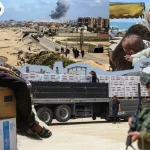
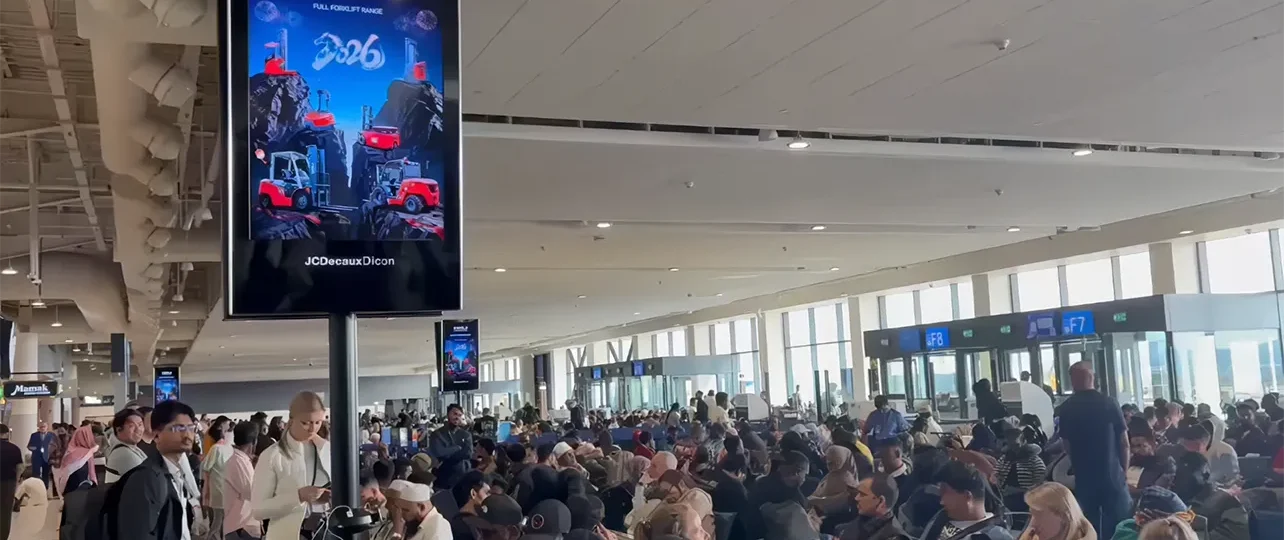
The scenes inside Gulf airports and cities illustrated the scale of the human crisis. At Abu Dhabi International Airport, thousands of passengers – including many Africans and other diaspora travellers – were caught in terminal halls as alarms blared and National Guard personnel moved in. Transfer desks became focal points of desperation, with passengers queuing for hours for hotel vouchers. Foreign nationals without UAE visas were offered 10-day emergency transit visas only after exhausting waits.
In Doha, passengers described “long lines” overnight, with families, children, and elderly people among those crowded into terminals and bussed to hotels. At Dubai International – the world’s busiest airport – passengers stranded in the parking lot waited for assistance as the airspace above them remained closed.
Nigerian social media users shared threads helping compatriots navigate how to contact the country’s embassies in Gulf states, while Ugandan community leaders in the UAE began coordinating safe accommodation for Ugandans unable to return home.
Economic Ripple Effects: Oil, Shipping, and Debt
Beyond the immediate humanitarian crisis, analysts warn of severe economic consequences for African nations. Oil prices have spiked sharply, with Brent crude trading on a trajectory toward $90–$100 per barrel amid fears of disruption to the Strait of Hormuz – the critical chokepoint through which roughly 20% of the world’s oil passes. Iran’s Islamic Revolutionary Guard Corps threatened to close the Strait as part of its escalation posture.
For oil-importing African economies – including South Africa, Kenya, and most of sub-Saharan Africa – the price surge threatens to inflame already elevated inflation, weaken currencies, and squeeze household purchasing power. The Institute for Security Studies (ISS) Africa warned that the broader trade disruptions could drag the global economy toward recession, with depreciation-driven debt deterioration complicating debt restructuring in Zambia, Ethiopia, and Ghana, and tightening fiscal constraints in Nigeria and Kenya, where debt servicing already consumes over 30% of government revenue.
The rerouting of shipping around Africa’s Cape of Good Hope – rather than through the Suez Canal and the Red Sea – raises logistics costs for East African food and fertiliser imports, compounding existing food insecurity in vulnerable regions.
For a continent already navigating the withdrawal of Western development aid and the aftershocks of earlier geopolitical tensions, the ISS warned, the Middle East conflagration arrives at the worst possible moment.