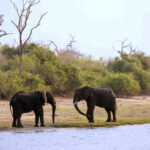
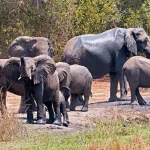
SO there he goes – Craig, the absolute unit, the six-ton gentleman, the pachiderm who could have retired on his Instagram followers alone. At 54 years old, with tusks that literally scraped the ground like some kind of biological red carpet announcement, Craig has finally decided that five decades of being photographed by khaki-clad tourists was quite enough, thank you very much.
Let’s be honest: Craig didn’t just die. Craig exited. And he did it the way he lived – calmly, dignified, probably wondering what all the fuss was about while the rest of us ugly-cried into our safari hats.
The Early Years: Born to Be Legendary
Craig entered this world in January 1972, when Nixon was still in the White House, and bell-bottoms were inexplicably popular. Even as a calf, one imagines, Craig possessed a certain je ne sais quoi, a combination of “don’t mess with me” and “but also, I’m quite pleasant company.”
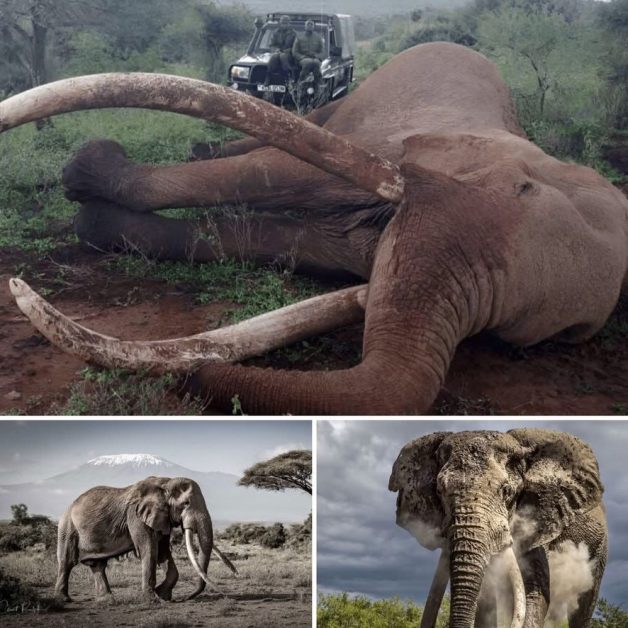
While other elephants were busy being elephants, Craig was busy becoming an icon. Those tusks – each weighing over 45 kilograms, for those keeping score – didn’t just grow. They announced themselves. They were near-ground-sweeping monuments to evolutionary excellence, carried with such casual grace you’d think all elephants had them.
The Amboseli Years: Making Tourism Look Easy
For decades, Craig held court in Amboseli National Park, that spectacular stretch of Kenyan wilderness where the grass is golden, the views are endless, Mount Kilimanjaro looms eternal in the background, and one particular elephant made absolutely certain you got your money’s worth.
Craig moved freely across this unfenced landscape, travelling unhurriedly between swamps and open plains like he owned the place. Which, let’s be honest, he kind of did. He was calm, tolerant, composed – the elephant equivalent of that friend who never gets stressed even when everything’s on fire.
Thousands – no, millions – of visitors paid good money to commune with nature, to reconnect with something primal and real. And what they got was Craig. Standing there. Being magnificent. Often pausing, peacefully, the conservationists say, while busloads of tourists, researchers, and filmmakers observed in quiet awe and fumbled with their camera settings.
For many people, Craig was Amboseli. Not just an attraction, the attraction. The elephant they travelled across the world hoping to see. The one they told their friends about. The one whose photo ended up in frames on living room walls from Tokyo to Toronto.
“Just one more shot, honey!”
Craig: [chews grass, models effortlessly]
He was the centrepiece, the headliner, the Beyoncé of Amboseli. Except instead of choreography, Craig offered something better: an authentic, ground-shaking, tusk-dragging presence. He was living proof that you don’t need a publicist when you’re literally one of the last super tuskers on Earth.
The Super Tusker: Craig’s Biological Flex
Let’s talk about those tusks. In an age where “super” is slapped onto every latte and smartphone, Craig earned the title legitimately. Super tusker. Two words that mean: “Yes, evolution occasionally shows off.”
While poachers spent decades decimating elephant populations for ivory – those small-souled, morally bankrupt merchants of death 0 Craig stood as a living middle finger to the whole enterprise. His tusks weren’t just ivory; they were defiance. They were genetic lottery winnings. They were nature saying, “Remember when animals could be this extraordinary? Well, here you go. Don’t screw it up.”
By the 2020s, fewer than 25 super tuskers remained in Africa. Craig was one of them. He carried those magnificent tusks like a responsibility, a burden, a crown he never asked for but wore with unshakeable calm.
The Celebrity Years: When Beer Companies Come Calling
In 2021, Craig achieved what few elephants ever do: corporate sponsorship. East African Breweries, through their Tusker brand (subtle, right?), officially adopted him. Because nothing says “we care about conservation” quite like a beer company putting its money where its mouth is.
And you know what? Good. Craig deserved it. If you’re going to plaster a tusker on your beer bottles, the least you can do is help keep the actual tuskers alive.
Craig became a symbol – not just of conservation success, but of collaboration. Rangers, conservationists, tourism operators, and even beer executives are working together to ensure this magnificent creature can live out his days naturally, without a poacher’s bullet or a snare’s cruel grip.
The Father: Craig’s Genetic Encore
Craig wasn’t just a pretty face with ground-scraping accessories. He fathered calves. Multiple calves. His bloodline – carrying that super tusker potential, that gentle temperament, that preternatural patience with camera-wielding primates—lives on across Amboseli and beyond.
Somewhere in the park right now, young bulls carry Craig’s DNA. Perhaps their tusks will grow. Perhaps they’ll inherit his calm. Perhaps they’ll stand patiently while another generation of tourists tries to remember if they charged their batteries.
This is Craig’s real legacy: not the photos, not the fame, but the living, breathing, growing elephants who carry forward his genetic gift.
The Conservation Win: Kenya Gets It Right
Here’s the remarkable thing: Craig lived to 54. Naturally. No poacher’s bullet. No snare. No human cruelty, cutting short what should have been.
This wasn’t luck. This was protection. Rangers patrolling. Communities engaged. Policies enforced. Kenya’s elephant population grew from 36,280 in 2021 to 42,072 in 2025. That’s not an accident – that’s success.
Craig lived because Kenya decided he should. Because people cared enough to make it happen. Because rangers risked their lives. Because conservationists dedicated careers. Because tourists paid premiums to see wildlife thriving, not suffering.
In an era of environmental despair, Craig’s long life is a middle finger to inevitability. It’s proof that when we actually try, when we actually care, nature doesn’t just survive – it thrives.
The Final Bow: Natural Causes
January 3, 2026. Craig, aged 54, died of natural causes. Let that sink in. Natural causes.
Not poached. Not poisoned. Not hit by a vehicle or caught in a human-wildlife conflict. He simply… completed his time. Like elephants are supposed to do. Like they did before we showed up and made everything complicated. His long, free life, spent roaming an open, unfenced landscape beneath Kilimanjaro, was the result of decades of dedicated conservation, effective anti-poaching efforts, and the stewardship of the Amboseli community.
The Amboseli Trust for Elephants expressed gratitude that Craig “lived out his life naturally.” As if this should be remarkable. As if this shouldn’t be the absolute minimum we owe these creatures.
But in 2026, it is remarkable. And we should celebrate it.
The Legacy: What Craig Leaves Behind
So what did Craig give us, really?
He gave millions of people a moment of genuine awe. In our age of screens and simulations, Craig offered something irreplaceable: actual majesty. The real thing. Six tons of breathing, walking, tusk-dragging wonder.
He gave conservationists hope – proof that protection works, that elephants can recover, that super tuskers don’t have to be memories.
He gave Kenya an icon, an ambassador, a living advertisement for why wildlife conservation isn’t just ethical – t’s economically brilliant.
He gave his calves a genetic inheritance that might, just might, produce another super tusker generation.
And he gave us, all of us watching from afar, mourning an elephant we never met, a reminder that some things in this world are still worth fighting for.
Farewell, You Magnificent Beast
So here’s to Craig, the elephant who made patience look heroic, who turned standing around into performance art, who carried 90+ kilograms of ivory and never once asked for applause.
Rest well, old man. Your tusks have scraped their last savannah. Your calm, dignified presence has graced its final sunrise. Your work here – fathering calves, inspiring humans, embodying everything wild and wonderful about this world – is done.
Amboseli won’t be the same without you.
But then again, Amboseli never would have been the same without you in the first place.
Craig: 1971-2026
Super Tusker. Gentle Giant. Absolute Legend.
In lieu of flowers, Craig requests you support your local conservation organisation, stop buying ivory (seriously, what is wrong with you?), and maybe pause patiently the next time someone fumbles with their camera. He would have wanted that.