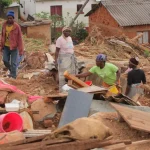

WHEN Cyclone Idai swept through Zimbabwe’s eastern districts in March 2019, it didn’t just destroy infrastructure – it stripped away the dignity of an entire region. In one devastating night, 300,000 people were plunged into darkness, their hopes dimmed, their futures uncertain.
Imagine Clinical Nurse Patricia Chikandi standing helplessly in her clinic as the power died, knowing that vaccines were spoiling in silent refrigerators while patients needed life-saving care. Picture teacher after teacher at Chipinge High School watching their computer labs fall silent, their students’ dreams of technological literacy fading with the flickering lights.
In workshops across Chimanimani and Chipinge, entrepreneurs like Jacob Mukunukuji felt their livelihoods crumble as the cost of diesel generators consumed their profits. Farmer Tsitsi Mutswairo watched her crops wither as irrigation systems failed, her family’s food security hanging by a thread.
For over two agonising months, darkness reigned. Industries shuttered. Hospitals operated in crisis mode. Schools abandoned their digital classrooms. An entire region’s potential was held hostage by severed power lines and broken dreams.
But from the depths of despair came an extraordinary partnership. The African Development Bank, recognising that true recovery meant more than just rebuilding—it meant restoring human dignity—committed $24.7 million to the Post-Cyclone Idai Emergency Recovery Project. This wasn’t just about poles and wires; it was about reigniting the spark of possibility in thousands of lives.
Working alongside the United Nations Office for Project Services and the Government of Zimbabwe, the Bank understood a fundamental truth: electricity is not merely a utility—it is the foundation of human dignity, the catalyst for dreams, and the lifeline of hope.
The $3.7 million electricity component became a testament to resilient engineering and unwavering compassion. Steel poles replaced wooden ones, standing tall against future storms like sentinels of hope. New distribution lines separated power supplies, ensuring that one district’s challenges wouldn’t darken another’s future.
But the real magic happened when the switches flipped back on.
Dignity Restored, One Life at a Time
For Patricia Chikandi, electricity meant more than convenience—it meant the power to save lives. “Reliable electricity has been a game-changer for us,” she explains, her voice filled with renewed purpose. “During emergencies, we no longer worry about power cuts, and our vaccines are stored safely. It has improved the quality of care we provide.” Every hum of the refrigerator now represents lives saved, families kept whole, and communities kept healthy.
For student Farai Ndlovu, the returning lights illuminated pathways to the future. “With electricity back, we can use computers in the lab and study after dark. This is helping us prepare better for exams and giving us skills we wouldn’t have access to otherwise.” Each keystroke in the computer lab now types out possibilities, and each late-night study session writes tomorrow’s success stories.
For farmer Tsitsi Mutswairo, power meant prosperity restored. “Before the power line was restored, our irrigation systems were unreliable, and we often lost crops. Now, with consistent electricity, our yields have improved significantly, and we’re earning more from our produce.” Every drop of water pumped through her irrigation system now nourishes not just crops, but hope for her family’s future.
For agro-processor Leonard Nyamukondiwa, electricity unlocked entrepreneurial dreams. “Before the rehabilitation, we couldn’t meet our targets because of constant outages. Now, we’re able to process more produce, and our profits have increased.” Each machine that hums to life processes more than agricultural goods – it processes opportunity itself.
The Ripple Effect of Empowerment
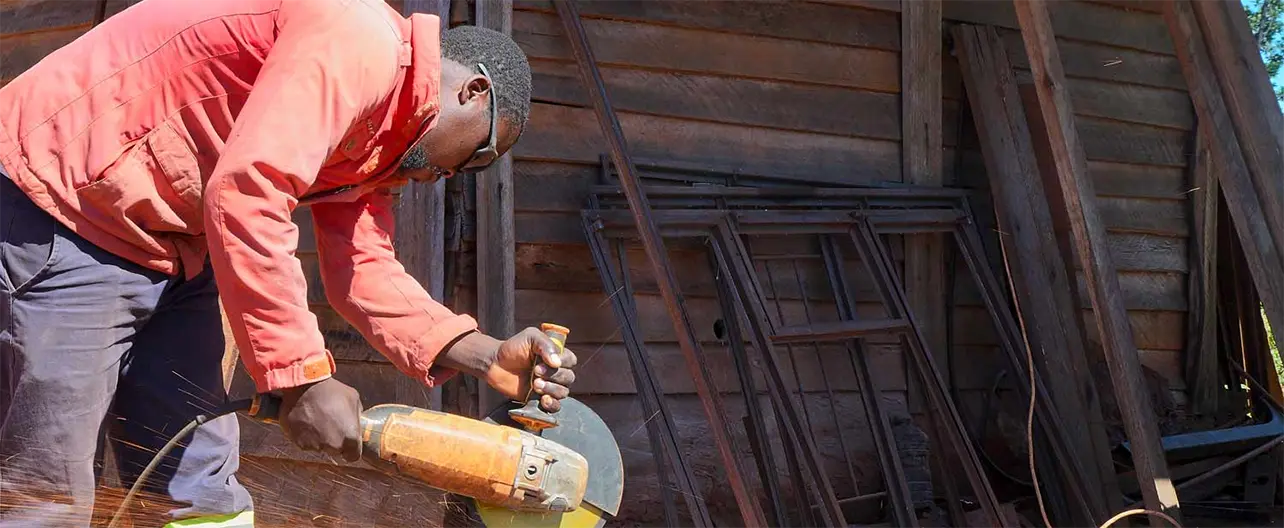
Perhaps nowhere is the transformation more profound than in Jacob Mukunukuji’s workshop in Marimauta Village. Once constrained by expensive diesel generators, Jacob now operates with reliable three-phase industrial power, his small workshop transformed into a beacon of skills development and community empowerment.
“Having electricity is very, very important because I can make whatever I want,” Jacob declares, his workshop now alive with the sounds of progress – rip saws cutting lumber, grinding mills processing grain, welding torches creating the tools that serve farmers across the region.
But Jacob’s greatest creation isn’t made of metal – it’s the human potential he’s unleashing. Paul, once unemployed, now works as a skilled welder. Danmore Majuta has opened his own copper workshop. A female apprentice manufactures building materials, shattering glass ceilings along with traditional gender roles.
This is the true power of the African Development Bank’s intervention: not just restoring electricity, but electrifying human potential.
A Community Reborn
Today, as community elder Jeremiah Mutasa surveys his transformed region, his words carry the weight of profound gratitude: “The power lines have brought hope back to our region. We have electricity for our homes, our farms, and our schools. It’s more than just power; it is the light that keeps our community alive.”
Engineer Selina Mudzinganyama, who oversaw the rehabilitation, speaks with technical precision but emotional depth: “We have significantly reduced the number of faults in the system. Maintenance costs have also gone down because the upgraded design is built to withstand harsher conditions. Clinics, schools, and households now enjoy reliable power, and businesses can operate without constant interruptions.”
The success in Chimanimani and Chipinge represents something far greater than disaster recovery – it embodies the African Development Bank’s vision of sustainable transformation. As Power Engineer Seaga Molepo reflects: “The electricity infrastructure interventions under this project exemplify the critical intersection of disaster recovery and sustainable development. The successful collaboration between the Bank, the Government of Zimbabwe, and UNOPS proves that when we align our efforts with clear strategic priorities – particularly ‘Lighting and Powering Africa’ – we can deliver transformative results that improve the quality of life for the people we serve.”
The Light That Endures
Cyclone Idai took much from Zimbabwe’s eastern districts – homes, infrastructure, and hope. But the African Development Bank’s response proved that disasters, no matter how devastating, cannot extinguish the human spirit when the right support arrives at the right time.
Today, 300,000 people live not just with restored electricity, but with restored dignity. Nurses save lives with confidence. Students type their futures into computer keyboards. Farmers harvest prosperity. Entrepreneurs forge dreams into reality.
The lights are on in Chimanimani and Chipinge – not just in their homes and businesses, but in their hearts and souls. This is the true power of the African Development Bank: not just building infrastructure, but building hope, one community, one life, one dream at a time.
In a world often darkened by catastrophe, the Post-Cyclone Idai Emergency Recovery Project stands as proof that when development partners truly understand that infrastructure is about human dignity, they don’t just restore power – they restore possibility itself.