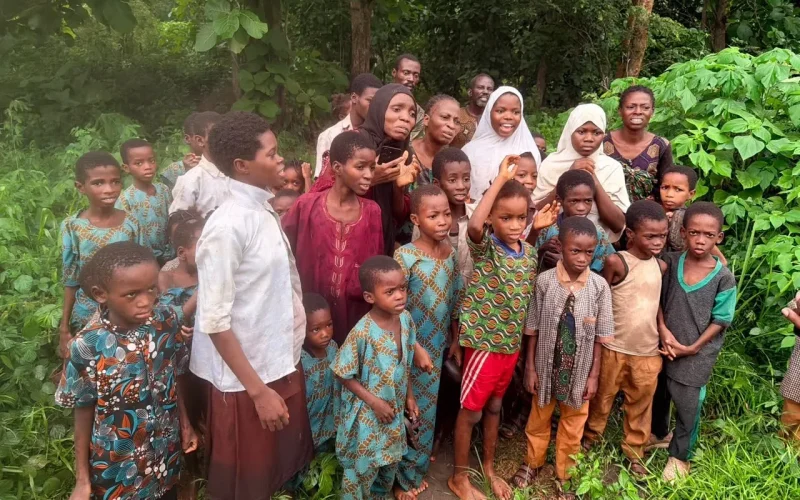
THEY walked out of a hospital gate in Ibadan on Friday, 10 July 2026, blinking into cameras and the arms of relatives who had spent 56 days fearing the worst. Forty-four pupils and teachers – reduced from an original 46 by the murder of two of their number – had regained their freedom after a month-long, intelligence-driven operation that the Nigerian Army says dismantled the terrorist network holding them hostage in the forests of Old Oyo National Park.
The nightmare began on 15 May, when gunmen linked to Ansaru, a Boko Haram splinter faction, stormed three schools in the Oriire Local Government Area of Oyo State – Baptist Nursery and Primary School in Yawota, Community High School in Ahoro-Esiele, and L.A. Primary School in the same community – and marched away 39 students and seven members of staff. One teacher, Adegboye Adesiyan, was killed on the spot. A second, Michael Oyedokun, was beheaded in captivity; his death circulated on video in a calculated act of psychological warfare against the Nigerian state and the families watching helplessly at home.
A Ground War in a Green Fortress
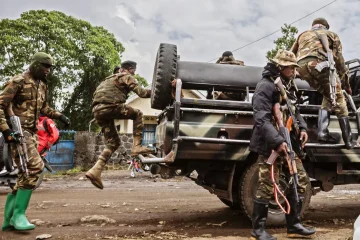
What followed was less a rescue than a siege of patience. The General Officer Commanding 2 Division of the Nigerian Army, Major General Chinedu Ralph-Nnebeife, later told a handover ceremony in Ibadan that troops moved into the forest almost immediately after the abduction but ran into the limits of modern military technology. The dense canopy of Old Oyo National Park swallowed sunlight and, with it, the usefulness of drones and Air Force surveillance sorties. What began as a technology-driven manhunt became, in his words, a grinding ground operation deep inside hostile bush.
The scale of the response reveals how seriously Abuja ultimately treated the crisis: Special Forces from the Army, Navy and Air Force; the Office of the National Security Adviser and its National Counter Terrorism Centre; the Defence Headquarters; the Nigeria Police Force; the Department of State Services; the National Intelligence Agency; the Nigeria Security and Civil Defence Corps; and, crucially, the local knowledge of Amotekun Corps operatives, vigilantes and hunters who know the forest paths no satellite can map. Multiple arrests across Oyo State and other parts of the country, the Army says, disorganised the kidnap network, choked its logistics chain and ultimately forced an unconditional release – without a naira paid in ransom, according to both President Bola Tinubu and Oyo State Governor Seyi Makinde.
“The operation therefore became a ground operation deep inside the forest.”
Maj Gen Chinedu Ralph-Nnebeife, GOC 2 Division
Defence Minister Christopher Musa has since disclosed that the kidnappers tried to use the children as leverage to force the release of jailed commanders, threatening to kill hostages if troops moved in – a chilling reminder of how thin the line was between the joyful reunions of last week and a far darker outcome. The Army has confirmed that its own personnel suffered casualties during the final push, though it has released no further details on numbers or identities, a silence that will need to be filled for the families of those who paid the ultimate price to bring the children home.
Scars That Will Take Time to Heal
For those who survived, freedom has come at a cost that no operational statement can capture. Rachael Alamu, principal of Community High School in Ahoro-Esiele and among the freed captives, has described watching hope drain from the group as their captors killed one teacher after another to pressure the government. She has spoken of the anguish of relatives forced to watch abduction videos of loved ones circulated online, and of a healing process that, in her words, has only just begun. Her account, delivered directly to Governor Makinde at Monday’s handover ceremony at the Oyo State Government House, put a human face on what officialdom has largely narrated in the bloodless language of operational success.
That human face matters because the abduction and its resolution have reopened uncomfortable national conversations. The Oriire kidnapping shocked Nigeria precisely because of where it happened: the mostly Christian south-west, long regarded as insulated from the jihadist violence and mass kidnapping-for-ransom economy that has scarred the north for over a decade. Inevitably, commentary has reached back to the 2014 Chibok abductions, where roughly 90 of 276 kidnapped girls remain unaccounted for more than a decade – a comparison that is as much a warning as a point of reference. Lawmakers and rights groups are now pressing for scrutiny of how funds under the federal Safe School Initiative, established in the wake of Chibok, have actually been spent, given that schools in Oriire evidently had little meaningful protection when armed men arrived.
Nor is the threat contained. On the very day the Oyo children were seized, gunmen struck schools in Borno State, the epicentre of Nigeria’s long war against Boko Haram and its offshoots; those victims remain in captivity as this rescue is celebrated elsewhere. The juxtaposition is a sober corrective to any narrative of total triumph: Nigeria’s security architecture can, when fully mobilised across army, police, intelligence and community networks, break a kidnap cell and bring children home alive. It has not yet shown it can prevent the next schoolyard from becoming a hostage-taking site in the first place.
What the Analysis Owes Africa
For a continent that has watched school kidnappings metastasise from a northern Nigerian anomaly into a recurring feature of the Sahel’s security collapse, the Oriire operation offers a rare template of what coordinated, sustained, intelligence-led pressure can achieve without paying a ransom that would only fund the next abduction. President Tinubu, Governor Makinde and the security chiefs have earned the right to take a measure of credit for that discipline. But the true test of this rescue’s legacy will not be told in handover ceremonies or presidential commendations. It will be told whether Nigeria’s Safe School Initiative is finally audited and rebuilt, whether the children of Borno still in captivity are brought home with the same resolve shown in Oyo, and whether the forests that hide Nigeria’s kidnap gangs are ever meaningfully reclaimed rather than merely fought over, one abduction at a time.