THE children are still missing. Sixteen days after gunmen on motorcycles swept into three schools along the Ahoro-Esinele and Yawota axis of Oriire Local Government Area in Oyo State, abducting more than 40 pupils and seven teachers in a coordinated dawn assault, President Bola Ahmed Tinubu dispatched the most senior security delegation a Nigerian community has received in years – and still could not announce their return.
On Sunday, 31 May 2026, Chief of Staff Femi Gbajabiamila led the National Security Adviser Nuhu Ribadu, Inspector-General of Police Tunji Disu, Minister of Defence General Christopher Musa, Minister of Power Joseph Tegbe, and Special Adviser on Media Sunday Dare to the villages of Esiele and Yawota. These are the men who manage Nigeria’s wars — and they came to a farming community in the Ogbomoso axis to stand among grieving parents and a bereaved widow.
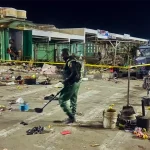
Within hours of that visit, a separate crisis unfolded further north. In the early hours of 1 June 2026, suspected bandits barricaded a highway in Kogi State’s Kabba-Bunu Local Government Area, abducting passengers travelling the Ayegunle-Bunu Road. The operation that followed — swift, intelligence-responsive, and ultimately partially successful — underscores both the relentless tempo of kidnapping across Nigeria’s middle belt and the uneven capacity of security forces to respond.
“Mr. President is deeply troubled by this incident. Whatever it takes, our children and teachers will be brought back home safely.”
Femi Gbajabiamila, Chief of Staff, Oriire community visit, 31 May 2026
WHAT HAPPENED ON 15 MAY: THE OYO ABDUCTIONS
The attackers struck at approximately 8:00 a.m. on Friday, 15 May 2026. Around twelve gunmen, arriving on six motorcycles and dressed in military camouflage, simultaneously stormed Baptist Nursery and Primary School in Yawota, Community Grammar School, and L.A. Primary School in Esiele. Witnesses described them communicating in Yoruba, Hausa and Nigerian Pidgin — the multilingual profile of a nationally networked syndicate, not a local gang of opportunity.
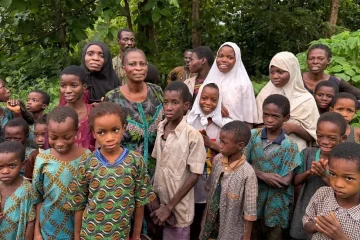
They departed into the forests of the Old Oyo National Park with an estimated 39 to 46 victims, including children as young as two years old. Two people were killed in the attack, among them mathematics teacher Michael Oyedokun. Days later, a video circulated online appearing to show Oyedokun’s beheading — a tactic rarely associated with the kidnap-for-ransom networks of Nigeria’s northwest, but entirely consistent with the propaganda methodology of the Islamic State West Africa Province (ISWAP). No armed group has formally claimed responsibility, though the operational signature closely mirrors tactics long documented in ISWAP’s campaigns across the Lake Chad Basin.
“The targeting of teachers and pupils has left many families afraid. If they can behead a teacher in broad daylight, we are not safe anywhere.”
Protester, Ogbomoso
A SOUTHWEST UNDER NEW THREAT
The significance of the Oyo attack cannot be overstated. Since Boko Haram abducted 276 schoolgirls from Chibok in April 2014, more than 1,799 students have been seized in subsequent major attacks — almost all in the northwest and northeast. Oyo State, in the predominantly Yoruba southwest, had been largely spared. That shield has now been pierced.
Security analysts note that the Old Oyo National Park — straddling the border between Oyo and Kwara states — has long functioned as a bandit corridor. In March 2026, four passengers were abducted on the Igbeti-Kishi Road in the same LGA before being rescued. But the May 15 assault represented a qualitative escalation: organised, multi-target, apparently ideologically inflected, and directed at the most symbolically vulnerable targets a community possesses.
Oyo Governor Seyi Makinde ordered the closure of schools in four local government areas. Schools in Iseyin and Ogbomoso shut or closed early. Students at Ladoke Akintola University of Technology briefly dispersed after rumours of further movement. Protests erupted across the region: teachers marched on the TESCOM office in Ogbomoso; mothers and youth took to the streets in Ogun State with placards reading ‘The crime they committed is they went to school.’
TINUBU’S MEASURES: SIGNIFICANT BUT NOT YET SUFFICIENT
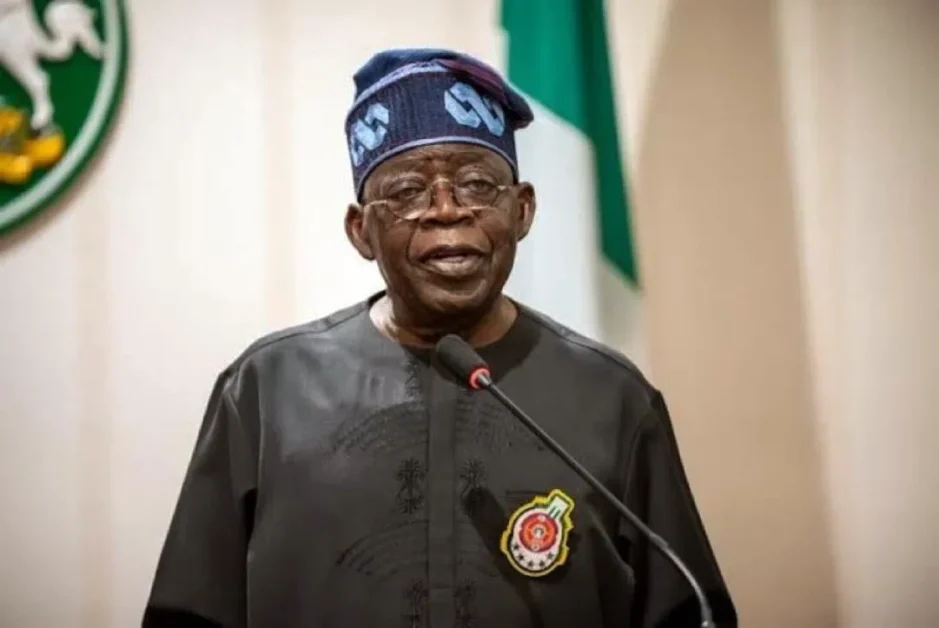
President Tinubu’s announced measures signal recognition that the security architecture in Oyo’s rural hinterland is dangerously thin. The approval of 1,000 forest guards for deployment in Oyo State — in collaboration with the state government — addresses a documented vulnerability: the national park’s vast, poorly monitored terrain. Forest guards, properly resourced and coordinated with federal and state security agencies, could provide genuine early-warning capacity.
The deployment of a specialised rescue unit with both “kinetic and non-kinetic” capabilities is the most urgent element. The emphasis on intelligence-led rescue — explicitly offered as reassurance to parents who had appealed for caution after Oyedokun’s killing — suggests the government is attempting to avoid catastrophic outcomes that have followed heavy-handed operations in previous hostage scenarios.
The request from community leaders for a permanent military base in the area has been conveyed to the President for consideration. Its approval would represent the most significant structural change to the southwest’s security posture since the formation of the Amotekun regional security corps in 2020. That Oriire’s community leaders now want military basing — previously associated exclusively with northeastern counterinsurgency — is a measure of how profoundly the threat environment has shifted.
BREAKING: THE KOGI OPERATION AND WHAT IT REVEALS
The early-morning rescue in Kogi State, announced by the Nigerian Army’s 12 Brigade at dawn on 1 June 2026, offers both encouragement and sobering qualification. After receiving a distress call at 3:30 a.m., troops deployed swiftly from the Kabba metropolis and mounted an aggressive pursuit along the kidnappers’ suspected withdrawal routes. Their pressure was sufficient to force the abandonment of 23 captives — a measurable success by any standard of counter-kidnapping operations.
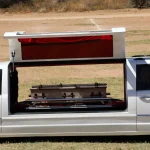
But the kidnappers escaped. Two victims were killed before the troops arrived. Five others were injured and taken to St. Joseph Hospital, Kabba. The recovery of two Toyota commercial buses and a HOWO truck — seized as transport — suggests an operation of some organisational complexity. Whether the Kabba-Bunu attack is connected to the same networks operating in Oyo’s forests remains publicly unconfirmed; the geographic proximity of Kogi to the Old Oyo National Park corridor, however, warrants investigation.
The juxtaposition of the two operations — Tinubu’s high-level visit to Ogbomoso on 31 May and the army’s overnight response in Kogi on 1 June — captures the central tension in Nigeria’s security predicament. Political will and military capability are not absent. What is absent is the intelligence architecture, rural surveillance capacity, and inter-agency coordination that would allow security forces to arrive before the kidnappers flee — or before they kill.
“The operation will be intelligence-led and carefully coordinated, deploying both kinetic and non-kinetic measures to secure the safe return of the victims.”
Femi Gbajabiamila, Oriire Community, 31 May 2026
THE WIDOW, THE SOUN, AND THE WEIGHT OF SYMBOLISM
The Ogbomoso delegation’s visit carried necessary symbolic weight. Gbajabiamila addressed residents in both English and Yoruba — a deliberate signal of cultural solidarity from a federal government often perceived as distant from southwestern realities. The delegation called on the Soun of Ogbomoso, HRM Kabiyesi Ghandi Afolabi Olaoye, placing federal engagement within the framework of traditional authority central to Yoruba civic life.
Most poignantly, they met with Mrs. Mary Oyedokun and her two children. Michael Oyedokun’s widow has become, in the fortnight since his murder, a figure of quiet, devastating symbolism. Gbajabiamila delivered the President’s condolences and a promise that “the family will not suffer.” The weight of that promise belongs not to the Chief of Staff but to the presidency that sent him.
WHAT MUST NOW FOLLOW
The measures announced on 31 May and the Kogi rescue on 1 June, together represent a beginning, not a resolution. The Oriire victims — exact numbers disputed between 39 and 46 — remain in captivity in forest terrain that has so far resisted security penetration. Until they are returned safely, every announcement is provisional and every commendation premature.
Nigeria’s pattern of mass abductions over the past decade has revealed consistent structural failures: delayed initial response, inadequate rural intelligence networks, jurisdictional confusion between federal and state agencies, and the absence of a coherent national hostage recovery protocol. The Kogi operation demonstrates that troops can respond and that pressure can yield results — but also that arriving after the killing has already begun is not success. It is damage limitation.
The Ogbomoso abduction, in the context of suspected ISWAP fingerprints, suggests these failures are now breeding a more dangerous threat: terrorist southward migration, from the lake basin to the forest belt. President Tinubu’s government has announced the right instruments — forest guards, a specialised rescue unit, a potential military base, and intelligence-led operations. What is required now is the sustained political will, inter-agency coordination, and resources to deploy those instruments at the speed and scale the crisis demands. The children of Oriire are still in the forest. Their safe return is the only verdict that matters.