THE soldiers left around midnight. The bandits arrived at 4 a.m.
In those four hours of darkness, the fate of 25 schoolgirls at Government Girls Comprehensive Secondary School in Maga, Kebbi State, was sealed. Despite advanced intelligence. Despite two military checkpoints within seven kilometres. Despite an armoured personnel carrier stationed less than a kilometre away.
Vice Principal Malam Hassan Yakubu Makuku died with his body between the gunmen and his students. It wasn’t enough.
That was Monday. By Friday, armed groups had returned to strike St Mary High School in neighbouring Niger State, seizing 315 students and teachers in what has become Nigeria’s largest mass school abduction in recent years. The Vatican responded with rare urgency—Pope Leo XIV demanded immediate release of the victims, expressing “immense sadness” and “deep sorrow, especially for the many abducted boys and girls and their anguished families.”
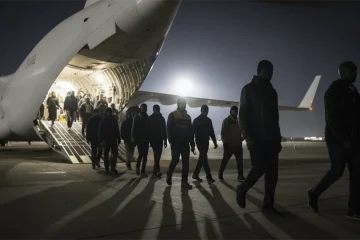
This is Nigeria’s security paradox: a nation that can execute flawless counterterrorism operations one week and watch armed groups breach school perimeters repeatedly the next. Eight days before the Kebbi attack, Nigerian forces rescued 86 kidnapping victims in Borno State without firing a shot—a precision operation that destroyed terrorist hideouts and captured weapons. The military celebrated. The nation exhaled.
Then Monday came, and 25 girls disappeared into the forests. Four days later, 315 more students and teachers vanished.
Welcome to Nigeria’s ping-pong war—a relentless back-and-forth where tactical victories never translate into strategic security, where rescues make headlines while prevention remains elusive, and where each military success is merely a countdown to the next abduction. In just five days, 340 students and teachers were taken from two schools. Approximately 50 children have escaped from the Niger State Catholic school and been reunited with families, but that leaves at least 290 still missing, alongside the 25 girls from Kebbi.
The 4 A.M. Question—And the Friday Encore
The Kebbi attack shouldn’t have succeeded. Community leaders had warned authorities. Governor Nasir Idris ordered troops to mobilise. Security forces deployed to the school and engaged the attackers in a firefight.
But the bandits scaled the fence, stormed dormitories, killed a vice principal, wounded a staff member, and escaped with 25 students before reinforcements could intervene effectively.
Four days later, armed groups demonstrated that the Kebbi attack was not an isolated failure but a repeatable template. On Friday, they struck St Mary High School in Niger State—a Catholic institution whose religious affiliation made it a symbolic target—and extracted 315 students and teachers. The scale dwarfs the Kebbi abduction, making it one of Nigeria’s largest mass school kidnappings in recent history.
The timing raises questions that Nigerian officials have yet to answer: Why did soldiers positioned near the Kebbi school withdraw hours before that attack? Why, after Monday’s abduction drew national attention, were security forces unable to prevent Friday’s even larger operation? Was this catastrophic coordination failure replicated twice in one week, or have attackers perfected methods that render current security measures obsolete?
These aren’t rhetorical questions—they’re the difference between hundreds of students sleeping safely in their dormitories and hundreds of families waiting in agony for news.
A Crisis Escalating Beyond Control
The numbers have become numbing, but this week’s twin abductions demand renewed attention:
Over 1,680 students abducted since the 2014 Chibok kidnapping—a figure that now requires updating to account for the 340 students and teachers seized in just five days this week. More than 180 children were killed in school attacks. At least 1,400 schoolchildren have been taken since 2014 alone. As of April 2024, 82 Chibok girls are still missing—a decade after the world promised #BringBackOurGirls.
This year, Boko Haram seized over 400 people from a Borno displacement camp. Al-Qaeda-linked militants abducted 287 students and staff from a Kaduna school, demanding 600,000 dollars. Now, in a single week in November, two schools in adjacent states lost 340 students and teachers to armed groups. In 2020, attacks forced 11,500 schools to close. By 2021, over one million children were too afraid to return to class.
The frequency is accelerating. The scale is expanding. The perpetrators are growing bolder.
Nigeria isn’t experiencing isolated security incidents. It’s witnessing the systematic dismantling of its educational infrastructure by multiple armed groups who have learned a brutal lesson: schools are soft targets, children are valuable commodities, and forests are sanctuaries. The attack on St Mary High School—a Catholic institution—also signals the religious dimensions of the targeting, prompting Pope Leo XIV’s unprecedented public intervention calling for the immediate release of the victims and demanding that “churches and schools may always and everywhere remain places of safety and hope.”
International Pressure and Regional Spillover
The crisis has now drawn direct Vatican intervention and escalating geopolitical tensions. Pope Leo XIV’s Sunday address to crowds in St Peter’s Square represented an unusually forceful response, with the pontiff expressing “immense sadness” over the kidnappings of “priests, faithful, and students” across the region. His appeal to “competent authorities to take appropriate and timely decisions to secure their liberation” carries implicit criticism of government response effectiveness.
The Pope’s statement encompassed not only the Nigerian school abductions but also the kidnapping of six Catholic priests from the Archdiocese of Bamenda in Cameroon, along with a Baptist pastor in the same area—evidence that the kidnapping epidemic has metastasised beyond Nigeria’s borders into a regional crisis targeting religious institutions specifically.
US President Donald Trump has recently threatened military action over what he described as the persecution of Christians by radical Islamists in Nigeria, raising the stakes further. The targeting of St Mary High School—a Catholic institution—and the Pope’s public response may intensify international pressure on Nigerian authorities already struggling to contain the crisis.
The religious targeting adds another volatile dimension to an already complex security landscape, risking escalation of sectarian tensions while armed groups exploit the propaganda value of attacking Christian institutions.
The Economics of Terror
Mass abductions have evolved into Nigeria’s most profitable criminal enterprise, powered by a sophisticated business model:
The Revenue Stream: Ransoms range from hundreds of thousands to millions of naira per victim—multiply that by 315 students and teachers from a single Catholic school, and the economic incentive becomes staggering. Families liquidate assets, communities pool resources, and intermediaries negotiate through encrypted channels. Despite a 2022 law criminalising ransom payments with 15-year prison sentences, the practice continues because desperation overrides legislation.
The Infrastructure: Criminal networks conduct surveillance to identify targets and assess vulnerabilities. Inside informants—local residents, former students, compromised staff—provide operational intelligence. Remote forest camps serve as holding facilities. Logistics suppliers deliver fuel, food, medical supplies, and weapons to sustain the enterprise.
The November 9 Borno operation intercepted 29 logistics suppliers carrying 1,000 litres of petrol, medical supplies, and provisions—evidence of how industrialised these networks have become. Yet within days, one cell struck Kebbi, then another hit Niger State with even greater force, seizing five times as many victims in a single operation.
This is the hydra problem: cut off one head, two more emerge from ungoverned forests spanning Zamfara, Katsina, Kaduna, Kebbi, and Niger states.
Three Enemies, One Victim
Nigeria’s school kidnapping crisis involves distinct actors with overlapping hunting grounds:
Boko Haram and ISWAP deploy abductions as ideological terror, though their targeting of Muslim children exposes their claims to Islamic legitimacy as fraud. They blend terror with revenue generation, holding victims for ransom while advancing strategic objectives. The recent targeting of Catholic schools adds a sectarian dimension that risks escalating religious tensions.
Criminal bandits operate purely for profit, turning kidnapping into a business stripped of ideological pretence. Operating from forest strongholds, they’ve perfected the abduction-to-ransom pipeline with ruthless efficiency.
Al-Qaeda affiliates like Ansaru bring sophisticated organisational structures, blending ideological goals with financial imperatives in operations that demonstrate troubling tactical sophistication.
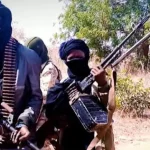
Their methods are devastatingly consistent: intelligence gathering through surveillance and informants, nighttime or early morning raids by 20-50 armed men on motorcycles, overwhelming force against unarmed security guards, rapid extraction to forest hideouts inaccessible to pursuing forces.
The Geography of Failure
Kebbi State sits at a dangerous intersection. To the east lie Zamfara’s bandit-infested forests. To the south, Niger State’s security challenges bleed across borders. These ungoverned spaces—dense forests, mountainous terrain, abandoned settlements—have become strategic sanctuaries where armed groups operate beyond effective state reach.
But here’s what makes the Kebbi attack particularly damning: this wasn’t a remote outpost in an inaccessible wilderness. Two military checkpoints stood within seven kilometres of the school. One checkpoint, fortified with an armored personnel carrier, was positioned less than a kilometer away.
If security infrastructure exists but cannot prevent or intercept a prolonged attack by dozens of armed men on motorcycles, the problem isn’t capability—it’s execution.
The Human Price
Statistics obscure individual catastrophe. Behind every number is a child experiencing conditions that released victims describe with haunting consistency: death threats, starvation, sleeping exposed to elements, forced marches into forest depths. Girls face rape and forced marriage. Adults report systematic beatings and torture until ransom demands are met.
The psychological wounds persist long after physical freedom. Parents in northeastern and northwestern Nigeria increasingly withdraw children from school entirely, calculating that illiteracy poses less danger than education. One in three Nigerian children is now out of school—a generation whose stolen education represents a theft of national potential.
And then there are the heroes like Malam Hassan Yakubu Makuku, who placed his body between guns and students, who died doing what Nigerian security forces failed to do: protect children pursuing education.
Why Victory Keeps Losing
The November 9 Borno operation demonstrated what Nigerian forces can achieve: intelligence-led precision, tactical coordination, zero military casualties, 86 lives saved, terrorist infrastructure destroyed, and supply chains disrupted.
Eight days later, bandits struck Kebbi. Four days after that, armed groups seized 315 students and teachers from Niger State—the largest mass school abduction in recent years.
This encapsulates Nigeria’s strategic failure. The nation wins battles but loses wars because tactical victories don’t address systemic vulnerabilities:
Weak state capacity leaves security forces overstretched and under-resourced, unable to maintain presence across vast ungoverned territories.
Coordination failures plague operations. Intelligence doesn’t translate into sustained protection. Orders are given, but execution falters. The Kebbi attack had advance warning—and still succeeded. Then, four days later, with the nation on high alert, an even larger abduction occurred in neighbouring Niger State.
Ransom economics create overwhelming incentives for kidnapping. President Bola Tinubu declares the government won’t pay a dime, but families have no alternative when their children languish in captivity for months. The criminals’ business model remains intact.
Ungoverned spaces provide sanctuaries where planning, training, and holding victims occur with minimal intervention risk. These forests span state boundaries, offering strategic depth that tactical raids cannot eliminate.
Corruption and complicity undermine security from within. Informants facilitate attacks. Some officials may negotiate deals or receive protection payments. Trust between communities and security forces erodes.
Only 37 percent of schools across ten assessed states have early warning systems. Just 14 percent possess functioning, safe, accessible infrastructure. Borno State leads at 70 percent safety standard fulfilment; Kaduna and Sokoto languish at 25 and 26 percent, respectively.
Nigeria keeps fighting the same war with the same tools, expecting different results.
Hundreds of Futures in Limbo
As combined forces comb forests for the missing students, history suggests possible outcomes:
Military rescue—if intelligence, coordination, and overwhelming force align as they did in Borno, the victims could return within days or weeks. This is the best-case scenario and increasingly unlikely given the scale: 315 people are far more difficult to track and extract than 25. The Christian Association of Nigeria reports that approximately 50 children from St Mary High School have escaped and been reunited with families—but that leaves at least 265 still missing from Niger State alone, alongside the 25 girls from Kebbi.
Negotiated release—more probable is extended negotiation through intermediaries, ransom payments despite official denials, and release after weeks or months of captivity. With 290+ victims still in captivity from this week’s abductions alone, the ransom demands will be astronomical. The girls and boys return alive but traumatised.
Prolonged captivity—like the 82 Chibok girls still missing after ten years, some or all may disappear into terrorist networks, subjected to forced marriages, conversion, or worse fates.
Tragedy—in some cases, rescue attempts fail, or ransom deadlines pass, and hostages are killed. This nightmare haunts every waiting family.
Hundreds of families don’t need government statements about unwavering commitment or statistics about tactical operations. They don’t need Pope Leo XIV’s prayers alone—they need action that brings their children home, able to complete their education without fearing for their lives.
Breaking the Pattern
Nigeria’s kidnapping epidemic will continue until leaders address root causes rather than symptoms:
Immediate imperatives: Sustained 24/7 security presence at vulnerable schools, not predictable deployment schedules that attackers can exploit—as evidenced by troops withdrawing from Kebbi hours before the attack. Intelligence that translates into action. Hardened infrastructure at 86 percent of schools currently lacks safety standards. Rapid response forces are positioned to reach threats within minutes. The fact that 340 students and teachers were taken from two schools in adjacent states within five days proves current measures are catastrophically inadequate.
Systemic transformation: Governance extended into ungoverned spaces through military presence, development projects, and community engagement. Economic alternatives to address the poverty and frustration that fuel recruitment into criminal networks. Community intelligence networks are built on trust rather than fear. Regional cooperation to eliminate cross-border safe havens. Accountability for security failures like the Kebbi attack.
None of this is revolutionary. It’s a basic state function: protecting citizens, especially the most vulnerable.
The Existential Threat
Nigeria’s school kidnapping crisis transcends security—it’s an existential threat to national viability. Every child pulled from school, every teacher killed protecting students, every family choosing early marriage over education represents irreplaceable human capital that Nigeria desperately needs.
One in three Nigerian children is out of school. This generation will inherit a nation where going to class can be a death sentence, where forests hold more power than governments, and where education is a gamble rather than a right.
The ping-pong war continues: celebrate rescues, mourn new attacks, launch operations, pay ransoms, make promises, repeat. Until Nigeria musters the political will to break this cycle decisively, its children remain pawns in a conflict that steals futures while claiming freedom.
The Only Question That Matters
The November 9 Borno operation proved Nigeria can rescue kidnapped students. That’s no longer in doubt.
The question is whether Nigeria can stop the kidnappings from happening in the first place.
Until the answer is yes, Malam Hassan Yakubu Makuku’s sacrifice remains unredeemed, 25 Kebbi families wait in agony, 82 Chibok girls remain ghosts, and Nigerian children remain trapped in a ping-pong war where nobody wins except those who profit from their suffering.
As of publication, all 25 students remain missing. Security forces conduct search operations across multiple forest areas. The Nigerian government has yet to issue a comprehensive statement addressing how this attack succeeded despite advance intelligence and nearby military presence, or outlining specific measures to prevent the next inevitable abduction.
The ping-pong war continues. Nigeria’s children remain in the crossfire.
More than 1,680 students have been abducted from Nigerian schools since 2014. The cycle shows no signs of breaking.