IN a devastating blow to Nigeria’s ongoing battle against terrorism and banditry, armed gunmen stormed a girls’ boarding school in Kebbi State in the early hours of Monday, November 17, killing a vice principal and abducting 25 female students – mere days after the Nigerian military celebrated rescuing 86 kidnapped victims in neighbouring Borno State.
The brazen attack on Government Girls Comprehensive Secondary School in Maga, Danko-Wasagu Local Government Area, has reignited fears about the government’s ability to protect its most vulnerable citizens and exposed the persistent security vacuum that allows such attacks to occur with alarming regularity.
A Pattern of Terror: Attack Details
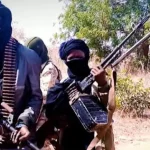
At approximately 4:00 a.m. Monday, heavily armed bandits wielding sophisticated weapons scaled the school’s perimeter fence and stormed student hostels, firing sporadically as they forced their way into dormitories. Vice Principal Malam Hassan Yakubu Makuku was shot dead while attempting to protect students during the invasion, while another staff member, Ali Shehu, sustained gunshot injuries.
Despite police tactical units being deployed at the school and engaging the attackers in a firefight, the bandits had already abducted 25 students to an unknown location before security forces could mount an effective response.
What makes this attack particularly disturbing is evidence suggesting it may have been preventable. Community leaders revealed there was intelligence about the impending attack, and Kebbi State Governor Nasir Idris instructed soldiers at the Ribah junction checkpoint to mobilise to the school – they arrived but left around midnight, and the bandits struck shortly after.
The timing raises troubling questions: Was this a catastrophic failure of coordination, or did the bandits possess inside information about security movements?
The Ping-Pong War: Victory and Defeat in Rapid Succession
The Kebbi attack comes just eight days after Nigerian troops achieved what appeared to be a significant victory against Boko Haram and ISWAP terrorists in Borno State. On November 9, the 135 Special Forces Battalion successfully rescued 86 kidnapped victims, destroyed 11 terrorist hideouts, arrested 29 logistics suppliers, and recovered weapons and ammunition – all without a single military casualty.
That operation was hailed as a triumph of intelligence-led precision warfare, demonstrating what Nigerian security forces can achieve when properly coordinated and equipped. The rescued victims, including Muslim women and children kidnapped by terrorists falsely claiming Islamic identity, were returned to their families in a powerful rebuke to extremist ideology.
Yet barely a week later, bandits struck again – this time in a different state, against a different but equally vulnerable target. The cycle repeats: military success, public celebration, renewed attack, public outrage, calls for action, and then the waiting game until the next abduction or rescue.
This is the ping-pong war Nigeria has been fighting for over a decade – a relentless back-and-forth where victories are fleeting and defeats devastatingly frequent.
The Staggering Scale of Nigeria’s Kidnapping Epidemic
The Kebbi attack is not an isolated incident but part of a metastasising crisis that has transformed Nigeria’s educational system into a hunting ground for terrorists, bandits, and criminal gangs.
The statistics paint a harrowing picture:
Since the 2014 Chibok Abduction:
- Over 1,680 students have been abducted across Nigeria since the Chibok schoolgirls kidnapping
- More than 180 children have been killed in attacks on schools, with an estimated 60 school staff kidnapped and 14 killed
- Between 2014 and 2024, more than 1,400 schoolchildren were taken from Nigerian schools
- As of April 2024, 82 of the Chibok girls remained missing—ten years after their abduction
Recent Major Incidents:
- In 2024 alone, Boko Haram abducted over 400 people, mainly women and schoolchildren, from a Borno State IDP camp
- Al-Qaeda-linked Ansaru militants abducted 287 students and staff from a Kaduna State school, demanding ₦1 billion (around $600,000) ransom
- At least 1,400 students have been kidnapped from Nigerian schools since 2014
The human cost extends far beyond raw numbers. As of 2021, over one million children were afraid to return to school, and in 2020, around 11,500 schools were closed due to attacks. Education—the foundation of any nation’s future—has become a gamble with children’s lives.
Who Are the Perpetrators? A Complex Web of Terror
Nigeria’s school kidnapping crisis involves multiple actors with different motivations, making it particularly difficult to combat:
1. Boko Haram and ISWAP (Ideological Terrorists)
Boko Haram primarily employs abductions as a tool of terror and intimidation, while groups like ISWAP use kidnappings for strategic objectives, including generating revenue through ransom demands and bolstering their influence. Their victims are often Muslim, exposing the lie that they represent Islamic values.
2. Bandits (Criminal Gangs)
For criminal groups and bandits, mass school abductions have no ideological motive—ransom funds serve as their primary revenue source. Operating from ungoverned forests spanning Zamfara, Katsina, Kaduna, and Kebbi states, these groups have turned kidnapping into a lucrative business model.
3. Ansaru and AQIM-Linked Groups
Al-Qaeda-affiliated militants bring sophisticated organisational structures to their operations, blending ideological goals with financial imperatives.
Armed with firearms and explosives, gangs of 20 to 50 men invade schools at vulnerable hours—typically at night or early morning, arriving on motorcycles or pickup trucks to overpower unarmed security guards using gunfire and explosions to instil fear.
The modus operandi is devastatingly effective: School kidnappers gather vital information through extensive surveillance, assessing school layouts, security routines, and escape routes, with informants—often local residents, former students or compromised staff—providing inside knowledge.
The Geographic Hotspots: Nigeria’s Ungoverned Spaces
Hotspots include the forests of Zamfara, Katsina, Kaduna and Niger states—ungoverned spaces that have become strategic hideouts for armed groups, bandits and insurgents. Security forces struggle to access these remote hideouts in dense forests, mountainous regions, and abandoned settlements, making rescue efforts extraordinarily difficult.
Kebbi State, where Monday’s attack occurred, sits at the intersection of multiple security threats – bordered by Zamfara State’s bandit-infested forests to the east and sharing proximity with Niger State to the south. Locals reported that terrorists infiltrated the area through Zamfara forests and operated unhindered despite two military checkpoints near the school -one in Damarke about seven kilometres away, and another less than a kilometre from the school at Rabah junction, fortified with heavy military equipment, including an armoured personnel carrier.
This raises the most disturbing question: If military checkpoints equipped with APCs are positioned within a kilometre of the school, how did 20-50 heavily armed men on motorcycles manage to execute a prolonged attack without being intercepted?