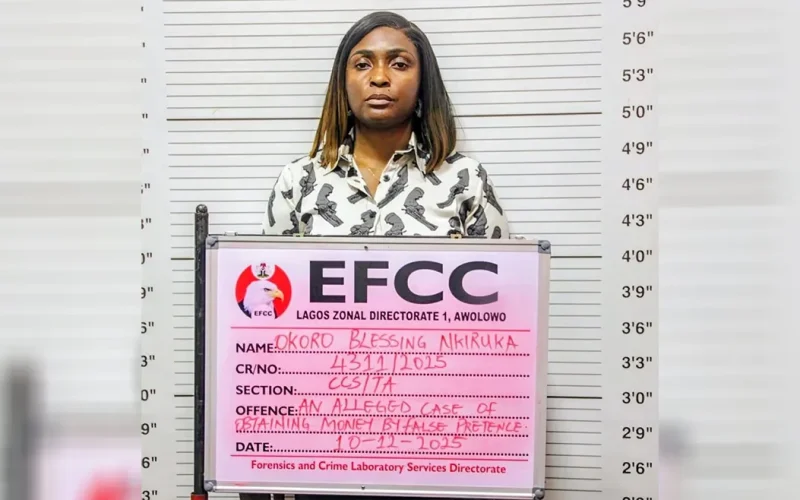
SHE styled herself the apostle of romantic truth – a flamboyant social media relationship coach whose millions of followers hung on her every word about love, self-worth, and the audacity to want better. She was, by her own account, Blessing CEO: fearless, fabulous, and – she claimed – dying.
The dying part, investigators now allege, was a spectacular and cold-blooded lie. And the people she targeted with that lie were not wealthy patrons or anonymous philanthropic foundations. They were ordinary Nigerians – fans who trusted her, strangers who wept for her, citizens who quietly transferred money they could barely afford because a woman they admired on their phone screens told them she had Stage 4 breast cancer and could not pay for treatment.
On Wednesday, 10 June 2026, the Economic and Financial Crimes Commission formally arraigned Okoro Blessing Nkiruka – known across Nigeria and the diaspora simply as ‘Blessing CEO’ – before Justice Yelim Bogoro of the Federal High Court sitting in Ikoyi, Lagos. The charges: six counts of obtaining money by false pretence and retaining the proceeds of fraud, totalling thirteen million naira. The instrument of that fraud, the EFCC alleges, was a forged histopathology report purporting to confirm a diagnosis of invasive ductal carcinoma.
She pleaded not guilty. The court was unimpressed. She will remain in a correctional centre until her trial commences on 24 September 2026.
The Architecture of Deception
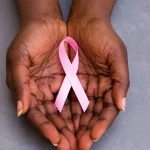
The fraud, as the EFCC narrates it, was devastatingly simple and devastatingly effective. Blessing CEO posted on her social media platforms – where she commanded a formidable following built on the currency of her personality – that she had been diagnosed with a left breast lump and invasive ductal carcinoma with lobular features. The posts were calibrated for maximum emotional impact: a woman of apparent strength laid low by a disease that kills indiscriminately, seeking only the help of those who had been moved by her voice.
The response was immediate, generous, and entirely human. Donations flooded in. The Nigeria Cancer Society was among those who received her claims and responded with concern. So did hundreds, perhaps thousands, of individuals across the country and beyond, each moved by a story that exploited one of the most primal of human impulses – the desire to ease another person’s suffering.
To make the story credible, investigators allege she forged a medical report – a Histopathology/Cytopathology Report purportedly from Xinus Medical Diagnostics. The document, which she apparently deployed to silence sceptics and substantiate her appeals, is now at the centre of a separate forgery count under the Miscellaneous Offences Act. That she knew the document to be false is the prosecution’s unambiguous assertion. That she used it to extract financial advantage from unsuspecting citizens is the core of the criminal case against her.
“That you, Okoro Blessing Nkiruka, did obtain the total sum of ₦13,000,000 from unsuspecting citizens under the false pretence of being diagnosed with a terminal illness… which representation you knew to be false.”
Count 1, EFCC Charge Sheet, Federal High Court, Ikoyi, Lagos
Influence as a Loaded Weapon
What makes this case so troubling – and so instructive – is the specific nature of the tool used to commit the alleged crime. It was not a bank account used to launder money from a faceless scheme. It was not a corporate structure engineered to disguise peculation. The weapon of choice was a human being’s social media persona: carefully constructed, emotionally resonant, and deeply trusted by a large audience.

Social media influencers in Nigeria have built extraordinary followings on the strength of relatability – the sense that one is watching a real person navigate real life with honesty and flair. Blessing CEO was a particularly effective practitioner of this art. Her brand was built on candour; she told women hard truths about relationships and demanded that they set high standards. That her own alleged conduct involved the most cynical manipulation of human goodwill is an irony too bitter to be lost on those who donated.
Cancer occupies a particular emotional register in Nigerian society, as it does across the African continent. It is a word that still carries a weight of dread partly because public health infrastructure often cannot meet the demand for early diagnosis and quality treatment. To invoke it falsely – to weaponise that dread – is to add layers of callousness to a crime that was already coldhearted in its conception.
The Law Closes In
The EFCC’s Lagos Zonal Directorate 2 began receiving petitions from multiple individuals and groups, the Nigeria Cancer Society among the most prominent. Their cumulative weight triggered an investigation that culminated in the six-count charge filed before Justice Bogoro. The charge draws on two separate statutory provisions: the Advance Fee Fraud and Other Fraud Related Offences Act, 2006 – which covers the obtaining of money by false pretence – and the Miscellaneous Offences Act, which encompasses the document forgery allegation.
In court on Wednesday, prosecution counsel H. U. KofarNaisa requested a trial date and moved for remand in a correctional centre. Defence counsel Stanley Ofoegbu sought an adjournment to file a bail application. Justice Bogoro granted neither bail nor the adjournment that would have enabled it. The defendant was remanded. The trial was fixed for 24 September.
Between now and that date, Blessing CEO has time – ample, quiet, uninterrupted time – to reflect on the nature of the audience she allegedly deceived. They were not faceless marks. They were people who believed in her.
A Mirror Held Up to Online Nigeria
The case raises questions that go far beyond the guilt or innocence of a single defendant. It asks Nigeria – and the wider African continent, where social media influencer culture has exploded in tandem with smartphone penetration – how it intends to govern the enormous power that large online platforms now confer on individuals.
Influence is not inherently corrupt. The vast majority of Nigerian content creators use their platforms to educate, entertain, connect, and build legitimate businesses. But the Blessing CEO case is a stark demonstration that a social media following – built on trust and emotional intimacy – is also an asset that can be catastrophically weaponised, and that existing consumer protection frameworks have not kept pace with the speed at which such assets can be turned predatory.
The Nigeria Cancer Society, in particular, deserves commendation for its decision to petition the EFCC. Charitable disease-awareness organisations are uniquely vulnerable to this kind of exploitation – their brand of compassion is precisely what fraud of this type needs to be credible. Their willingness to act, rather than maintain dignified silence, may prove to have been the decisive intervention.
What Comes Next
The trial beginning in September is unlikely to be brief. Defence counsel has already signalled that bail will be pursued and contested. Given the public profile of the defendant and the scale of documented petitioners, the proceedings are expected to attract significant media and public attention.
For the thousands of Nigerians who donated money they are unlikely to recover, the criminal process offers a measure of moral vindication, even if material restitution remains an uncertain prospect. For the Nigerian digital economy – which depends on the credibility of its online personalities to function – the case is a necessary reckoning with the limits of trust.
Blessing CEO built her brand on the premise that people deserve honesty. The EFCC alleges she gave her followers the opposite. She has until September — at least — to sit with that contradiction.
CHARGE SUMMARY
Defendant: Okoro Blessing Nkiruka (a.k.a. Blessing CEO)
Court: Federal High Court, Ikoyi, Lagos — Justice Yelim Bogoro
Charges: Six counts — obtaining money by false pretence; forging a medical document
Amount: ₦13,000,000 (Thirteen Million Naira)
Plea: Not Guilty
Status: Remanded in correctional centre; trial set for 24 September 2026
Prosecutor: H. U. KofarNaisa (EFCC)
Defence Counsel: Stanley Ofoegbu
"I have been remanded in Kirikiri Correctional Center" — Blessing CEO shares update on her EFCC cases. pic.twitter.com/ljcTEcMeuX
— OVA TV MEDIA?? (@ovatvofficial) June 10, 2026