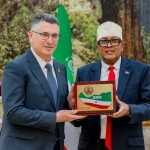
ISRAEL’S recognition of Somaliland as an independent state has triggered what may be the most unified international rebuke the country has faced in recent memory. Not a single nation has endorsed the move. Even Israel’s closest ally, the United States, has explicitly distanced itself from the decision.
The scale of opposition is remarkable. Twenty-one countries spanning the Islamic world – from Algeria to Yemen, from Iran to Saudi Arabia – issued a joint condemnation through the Organisation of Islamic Cooperation. The African Union, Arab League, Gulf Cooperation Council, and the Intergovernmental Authority on Development (IGAD) all rejected the recognition. At an emergency UN Security Council meeting, 14 of 15 members condemned Israel’s action. Only the United States abstained from condemnation, yet it too refused to follow Israel’s lead.
When asked whether America would recognise Somaliland, President Donald Trump responded bluntly: “No,” before adding, “Does anyone know what Somaliland is, really?” The State Department reaffirmed American recognition of Somalia’s territorial integrity, declaring there would be no change in policy.
African Unity Against External Interference
For African nations, Israel’s unilateral recognition strikes at the heart of continental stability. The African Union’s position is unequivocal: the borders inherited at independence, however imperfect, must be respected. To do otherwise risks unleashing separatist movements across a continent where ethnic, linguistic, and regional identities often transcend colonial boundaries.
Kenya, Uganda, Tanzania, Djibouti, Eritrea, and South Africa have all condemned the move individually. Their concern is practical, not merely philosophical. If Somaliland’s breakaway succeeds through external recognition rather than negotiated settlement, what precedent does this set for disputed regions across Africa?
Djibouti’s position is particularly pointed. As Somaliland’s immediate neighbour and a country with its own delicate ethnic balance, it views Israeli recognition as destabilising. The port competition between Djibouti and Somaliland’s Berbera adds commercial rivalry to political opposition.
The Question That Won’t Go Away
Israel’s Deputy UN Ambassador Jonathan Miller insisted the recognition “is not a hostile step toward Somalia, nor does it preclude future dialogue.” But his assurances have failed to quell a more troubling suspicion voiced repeatedly at the United Nations: Is this about Gaza?
The Arab League warned explicitly against measures aimed at facilitating the forced displacement of Palestinians or exploiting northern Somali ports for military bases. Pakistan’s deputy ambassador noted that Israel had previously referenced Somaliland as a potential destination for deporting Palestinians from Gaza, making the recognition “deeply troubling.”
Israel’s UN mission did not address these concerns directly. Yet the timing and context are unavoidable. Israel’s current government includes far-right politicians who openly advocate encouraging Palestinians to leave their homeland. President Trump’s peace plan, while stating no one will be forced to leave Gaza, also declares that those wishing to leave will be free to do so.
In March, the foreign ministers of Somalia and Somaliland stated they had received no proposal to resettle Palestinians. But the absence of a formal proposal has not dispelled regional fears that Israel’s interest in Somaliland extends beyond agricultural cooperation and technology transfer.
Strategic Calculus: Red Sea Access and Houthi Containment
The geopolitical logic is transparent. Somaliland’s location near the Red Sea, where Yemen’s Houthis have disrupted shipping throughout the Gaza conflict, offers Israel a potential strategic foothold. Recognition comes with the promise of immediate cooperation in agriculture, health, technology, and economy – but also the implicit possibility of security arrangements.
For Somaliland, Israeli recognition represents validation after 34 years of effective independence without international acknowledgement. The former British protectorate has maintained relative peace and stability since 1991, when Somalia descended into civil war. Its leaders hope Israeli recognition will encourage other nations to follow, opening access to global markets and diplomatic forums.
But that calculation may prove optimistic. The unanimous opposition suggests that rather than opening doors, Israeli recognition may have complicated Somaliland’s path to international acceptance.
Double Standards or Fundamental Difference?
At the UN Security Council, American Deputy Ambassador Tammy Bruce accused the body of double standards, noting that several Western nations recently recognised Palestinian statehood while opposing Somaliland’s recognition. Slovenia’s ambassador offered a sharp rebuttal: Palestine is an illegally occupied territory with UN observer status, not part of any existing state. Somaliland, by contrast, is part of a recognised UN member, making its recognition a violation of the UN Charter’s respect for territorial integrity.
The legal distinction matters. International law provides pathways for occupied peoples to seek statehood. It offers no such pathway for unilateral secession recognised by external powers over the objections of the parent state and regional bodies.
A Dangerous Precedent
Israel’s isolation on this issue is nearly absolute. The three Abraham Accords signatories – the UAE, Bahrain, and Morocco – conspicuously declined to sign the joint Islamic condemnation, but neither did they voice support. Only Taiwan welcomed the recognition, citing shared democratic values, but even this fell short of endorsement.
For African observers, the message is troubling. A powerful state has unilaterally recognised a breakaway region against the wishes of the continental body, the regional organisation, the parent state, and the international community. It has done so while facing accusations – however speculative – of ulterior motives involving the displacement of other people.
Israel may frame its recognition as an act of principle, supporting self-determination for a stable, peaceful region. But standing entirely alone against unified continental and global opposition, the move appears less like principled courage and more like strategic overreach – a gambit whose ultimate consequences for both Somaliland and the Horn of Africa remain deeply uncertain.
The question now is not whether other nations will follow Israel’s lead. The unanimous opposition answers that. The question is whether Somaliland’s aspirations for recognition have been advanced or set back by becoming entangled in the geopolitics of the Middle East conflict, and whether Africa’s hard-won principle of territorial integrity can withstand external powers willing to disregard it for strategic advantage.