

IN the bustling heart of Lagos, a city where shadows of deception dance between gleaming skyscrapers, a tale of international intrigue was about to unfold. The seven-storey Big Leaf Building stood like a fortress of fraud, its walls hiding a complex web of digital predators who had turned romance and false promises into a ruthless global enterprise.
On a crisp December morning, the Economic and Financial Crimes Commission (EFCC) descended like a thunderbolt, shattering the carefully constructed illusion of these cybercriminal networks. Within hours, 792 suspects found themselves ensnared in a dragnet that would become one of the most significant blows against international crime syndicates in recent memory.
The building was a United Nations of deceit – 148 Chinese nationals, 40 Filipinos, and numerous Nigerian accomplices, all intricately connected in a sophisticated operation that targeted unsuspecting victims across the Americas and Europe. Their weapons were not guns or knives, but smartphones, messaging apps, and a chilling mastery of psychological manipulation.
Their modus operandi was a grotesque dance of digital seduction. Using WhatsApp and Instagram as their hunting grounds, these cybercriminals would first win their victims’ trust through elaborate romantic narratives or tantalizing investment opportunities. Once the emotional or financial hook was set, they would pressure their targets into transferring money for entirely fictitious cryptocurrency schemes.
The Nigerian accomplices were the initial scouts, skilled in the art of online phishing, identifying and softening up potential victims from the United States, Canada, Mexico, and various European countries. Once trust was established, the foreign operators would take over, executing the final, devastating financial betrayal.
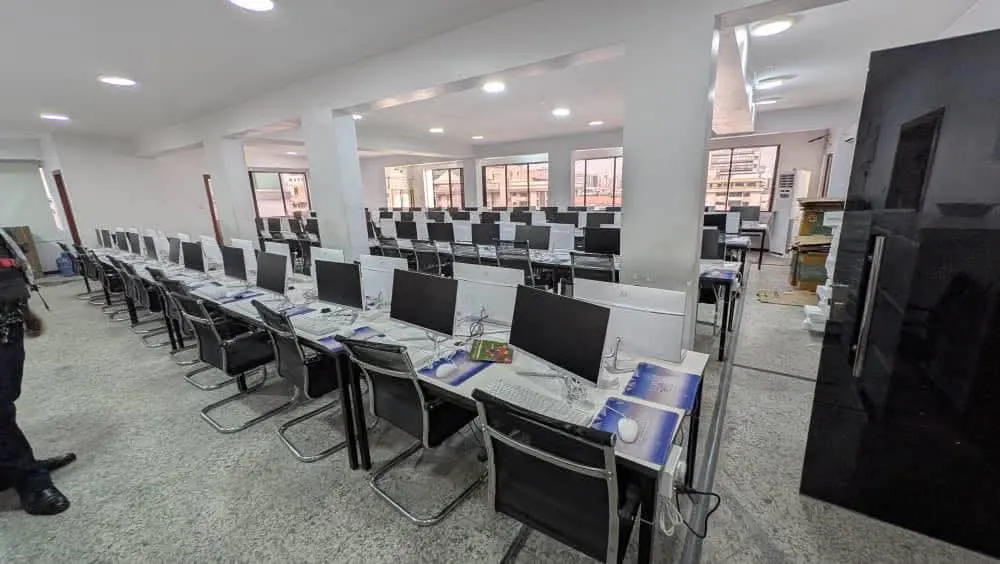
When the EFCC raid concluded, it was more than just an arrest – it was a declaration of war against international cybercrime. Computers, phones, and vehicles were seized, physical evidence of a digital underworld that had operated with brazen impunity.
Wilson Uwujaren, the EFCC spokesperson, stood before the press, his voice a mixture of professional detachment and moral triumph. This wasn’t just a law enforcement operation; it was a moment of national redemption, a powerful statement that Nigeria was no longer a safe haven for global fraudsters.
As the arrested suspects were processed, the Big Leaf Building – once a symbol of sophisticated criminality – now stood as a testament to the power of persistent, coordinated law enforcement. The digital predators had been caught, their networks dismantled, their dreams of easy money evaporating like morning mist.
In the end, this was more than a crackdown. It was a powerful reminder that in the interconnected world of the 21st century, justice knows no borders, and those who prey on human vulnerabilities will eventually be held accountable.