GHANA’s Foreign Affairs Ministry has announced the successful rescue and repatriation of 28 of its nationals from Côte d’Ivoire, where they had been held captive by a sophisticated human trafficking syndicate that had lured them across West African borders under the false promise of a new life in Europe.
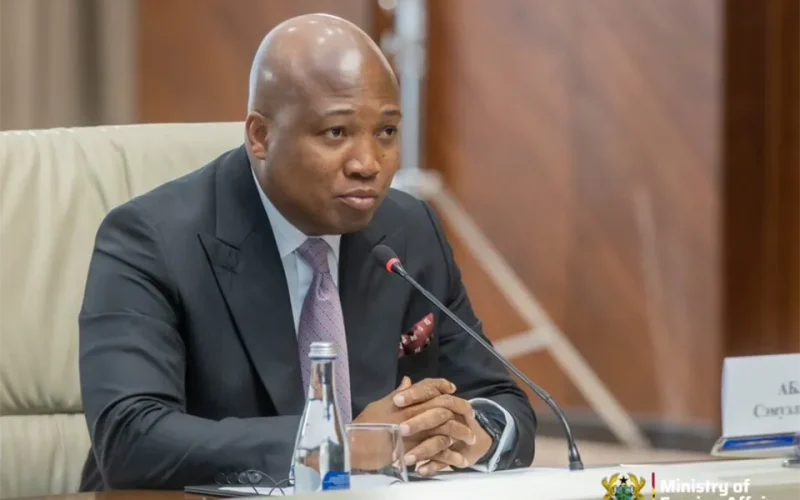
The government’s confirmation, delivered through Foreign Affairs Minister Samuel Okudzeto Ablakwa, came amid growing public alarm over a trafficking network whose reach, investigators now believe, extends to at least five countries and ensnares hundreds – possibly thousands – of vulnerable Ghanaians.
THE MINISTER SPEAKS
In a statement that was at once a declaration of diplomatic resolve and a warning to would-be victims, Minister Ablakwa announced:
| “We have successfully rescued and repatriated 28 Ghanaians from Côte d’Ivoire who were victims of a sophisticated human trafficking network. All 28 Ghanaians had been promised paradise in Europe by the traffickers after extorting huge sums of money from them. Thankfully, they are back in Ghana safely following our special operation.” |
The minister left no ambiguity about the Mahama administration’s commitment to its citizens abroad: “The Mahama Administration shall not abandon any Ghanaian in distress.” He paired that pledge with a stark advisory: “We, however, urge the youth to be alert and avoid falling prey to the modus operandi of these criminal networks.”
THE OPERATION
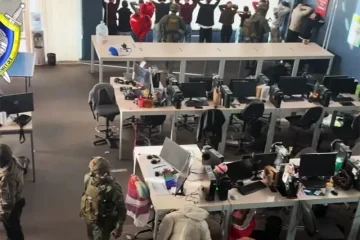
The rescue was the result of a coordinated mission involving Ghanaian national security operatives and officials from the Ghana Embassy in Abidjan, with critical intelligence-sharing and logistical support from Ivorian authorities. The 28 Ghanaians — predominantly young people between 20 and 40 years of age — arrived back in Accra on Saturday, 10 May 2026, and are currently assisting investigators with ongoing efforts to identify the network’s leadership.
The Ghana Police Service Anti-Human Trafficking Unit, led by Superintendent William Ayariga and supported by a private tracking expert, played a central role in locating the victims. “Through tracking, we realised a large number of the victims we were searching for had been trafficked to Côte d’Ivoire,” an investigator told GHOne TV last week.
Two suspected traffickers — identified in reports as Deborah and Suzzy — have been arrested and transferred to Ivorian authorities. Deborah is alleged to be a key figure operating multiple trafficking camps across Côte d’Ivoire, while Suzzy, reportedly from Sefwi Wiaso, is said to have used multiple aliases to recruit victims.
THE SCALE OF THE CRISIS
While the rescue of 28 nationals represents a genuine diplomatic and operational success, it barely scratches the surface of a crisis that security officials now describe in sweeping terms. A joint security operation conducted in early May discovered between 400 and 450 victims in a single camp in Bondoukou alone. Other suspected trafficking hubs have been identified in Aniabrekrom, Ambegro, Songor, and Noé.
| A single camp in Bondoukou held between 400 and 450 victims — including pregnant women, nursing mothers and children as young as two months old. |
Those discovered in the camps included pregnant women, nursing mothers, and children as young as two months old, with the ages of victims ranging from 16 to 60 — cutting across all social classes. Investigators reported that victims included teachers, nurses, bank executives, and security personnel, shattering the assumption that trafficking exclusively targets the economically marginalised.
Conditions in the camps are described as inhumane. Victims sleep on mats, survive on minimal food, and depend on unsafe water sources. Medical care is largely absent, with unqualified individuals providing rudimentary treatment. In some reported cases, seriously ill victims have been abandoned.
THE MODUS OPERANDI
The syndicate’s architecture of deception is well-rehearsed. Targets are approached — often online — by recruiters promising European or North American employment and visa facilitation. They are told that Côte d’Ivoire, Nigeria, Cameroon, Senegal, Burkina Faso, or Liberia serves as a transit point for document processing en route to France, Canada, Belgium, or Qatar.
Victims and their families pay extortionate sums for this fabricated access. Families in some documented cases have sold assets and paid as much as GH¢130,000 — equivalent to several years of average earnings — to secure what they believed were opportunities abroad. In Parliament last year, Minister Ablakwa revealed that in the QNET-linked phase of the crisis, payments ranged from GH¢18,000 to GH¢40,000.
Once across the border, victims’ documents are seized, their freedom of movement is curtailed, and they are subjected to psychological coercion and, in many cases, forced into criminal activities — including cybercrime, prostitution and the recruitment of further victims into the scheme. Personal documents confiscated at the border become instruments of control.
A BROADER PATTERN
This rescue does not exist in isolation. In April 2025, INTERPOL, working alongside Ghanaian and Ivorian authorities, dismantled a separate trafficking network operating from Abidjan whose recruiters used Canadian phone numbers and identities to lure victims through fake online job postings, demanding up to $9,000 per victim before diverting them to Abidjan-based exploitation operations.
The Ghanaian NGO Challenging Heights reported that it had rescued 82 trafficking victims — including 57 children from forced labour in the fishing sector and 25 Nigerian nationals from forced prostitution — since the start of 2026 alone, in partnership with the Ghana Police Service.
| The Walk Free Foundation estimates more than 91,000 people in Ghana live under conditions of modern slavery — including some 21,000 children in forced labour on Lake Volta. |
The United States Department of State, in its 2024 Trafficking in Persons Report, placed Ghana on Tier 2 — acknowledging significant efforts but noting that the country still falls short of minimum international standards for eliminating trafficking. The report flagged continued exploitation of Ghanaians by fraudulent labour recruiters abroad and noted that no such recruiters were prosecuted during the reporting period.
WHAT THE LAW SAYS
Ghana’s Human Trafficking Act of 2005 prescribes prison terms ranging from five to 25 years for those convicted of trafficking offences. However, the gap between legislative intent and prosecutorial outcome remains a persistent concern for human rights advocates and international observers.
The Ministry of Foreign Affairs, in its weekend statement, warned the public against engaging unlicensed recruitment agencies and advised prospective travellers to verify all travel and job offers with the Ministry of Foreign Affairs, the Ministry of Labour, Jobs and Employment Relations, or Ghana’s diplomatic missions abroad. “The public should be conscious of the dangers associated with engaging unlicensed recruitment agencies which promise travel and job opportunities,” the ministry stated.
THE DIPLOMATIC DIMENSION
The successful rescue underscores the importance of functional bilateral security cooperation between Ghana and Côte d’Ivoire. Accra has publicly commended Abidjan for the intelligence-sharing and logistical support that made the operation possible — a relationship that will be tested further as Ghana now faces the larger challenge of locating and extricating the hundreds of its citizens still believed to be in captivity across West Africa.
In July 2025, Minister Ablakwa informed Parliament that over 700 Ghanaians were then being held hostage across Côte d’Ivoire, Nigeria, Benin, and Togo, with over 500 in Côte d’Ivoire and 202 in Nigeria. The numbers may have shifted since — but the structural problem has not. Ghana’s diplomatic missions in those countries are providing consular services and working with immigration authorities and Interpol to secure further rescues.
ANALYSIS: A RESCUE, NOT A SOLUTION
The return of 28 Ghanaians is unambiguously welcome. It is a reminder that state power, when exercised with focus and political will, can retrieve citizens from the grip of criminal networks. President Mahama’s government deserves credit for the operation — and for the directness with which Minister Ablakwa has communicated both the success and the peril.
But 28 is a small number against the scale of the problem. With hundreds still trapped in Bondoukou and elsewhere, with criminal networks that reconstitute themselves after each law enforcement disruption, and with a prosecutorial record that has yet to demonstrate meaningful deterrence, the mercy mission of May 2026 is better understood as the beginning of a sustained campaign than as its conclusion.
The trafficking networks targeting Ghanaians — and, as the evidence makes clear, other West Africans — are sophisticated, adaptive, and profitable. They exploit youth unemployment, digitalisation, the perennial allure of Europe, and the administrative vulnerabilities of border states. Combating them requires not only emergency rescues but structural reform: regional prosecutorial cooperation, harmonised anti-trafficking legislation, robust public education, and economic interventions that reduce the demand side of the equation.
Until then, the youth of Ghana — and of the region — remain at risk from networks that, as Minister Ablakwa warned, promise paradise to deliver captivity.