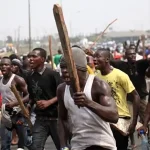
NIGERIA’S upcoming 2027 elections are already showing ominous signs of violence, with early clashes erupting between ruling party supporters and opposition groups in northern states. But the real story, according to groundbreaking research, lies not in whether violence will occur—but in who carries it out and why.
The answer comes down to money. Specifically, how much cash state governors control.
A newly published study exposes a disturbing two-tier system of electoral violence across Nigeria, where wealthy governors hire sophisticated armed groups while their cash-strapped counterparts recruit desperate citizens for as little as $4.
“The distinction in electoral violence perpetrators is driven by governors’ financial capacity to ‘rent’ violence,” writes Maureen Fubara, a PhD candidate at the University of Amsterdam, in The Conversation. “While those with access to more resource rents or state fiscal allocations hire armed groups, others rely on ordinary citizens.”
The Resource Rent Factor
Fubara’s research across Lagos, Rivers, Plateau and Nasarawa States reveals how federal allocations—primarily from oil revenues and value-added tax—have been weaponised to maintain political power.
In resource-rich states like Lagos and Rivers, governors deploy powerful organised groups. Lagos relies heavily on the National Union of Road Transport Workers, whose street enforcers, known as “agberos”, terrorise voters while maintaining control over the city’s lucrative transport system. During the 2023 elections, minority ethnic voters reported attacks and threats from union members pressuring them to vote for the ruling All Progressives Congress.
Rivers State tells an even darker story. Cult groups like the Icelanders and Deewell have become political weapons, “financed with millions of naira, sometimes even equipped with sophisticated weapons,” Fubara notes. “Their reputations for violence mean that just the rumour of their presence can keep voters at home.”
Violence on the Cheap
In poorer states like Nasarawa and Plateau, the violence looks entirely different—and more desperate.
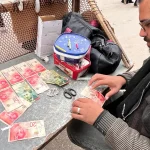
Politicians recruit unemployed young people with payments of ₦5,000 (about $4)—”well below Nigeria’s minimum monthly wage of ₦70,000 ($47),” Fubara writes. The compensation often includes alcohol or hard drugs to disrupt rival rallies or attack opposition neighbourhoods.
“Citizens involved in violence return to farming, hustling or unemployment once elections end,” she explains. The violence is “cheaper and ad hoc” compared to the organised militias of wealthier states.
A Self-Perpetuating System
The implications extend far beyond election day. In high-rent states, governors don’t just hire violence—they invest in it, granting armed groups access to criminal enterprises like oil bunkering in exchange for political loyalty.
“These alliances secure ruling parties’ dominance across elections,” Fubara warns. “In Lagos and Rivers, violence has become a permanent feature of politics, not a temporary campaign strategy.”
The system creates one-party dominance in wealthy states while low-rent states see “cheaper” violence that still undermines democratic competition. “In both cases, the implication is that democracy is undermined,” she writes, “but the organised violence of high-rent states is especially harmful because it embeds one-party dominance and long-term insecurity.”
2027: Another Violent Election?
The warning signs are already visible. Clashes have erupted in Jigawa, Kogi and Kebbi states between supporters of the ruling party and opposition groups.
Human Rights Watch has documented a pattern of impunity for political violence in Nigeria. With no accountability, Fubara argues, “politicians have no reason to stop when the risks are low and the rewards, such as political, economic and social power, are so high.”
The human cost is mounting. “When voters expect violence, many will stay at home, leaving elections to be decided not by choice but by violence,” she writes. Low trust in government and democratic institutions means another violent election “risks pushing citizens further away from the polling units and closer to apathy.”
Breaking the Cycle
Standard election monitoring won’t solve the problem, Fubara argues. Real change requires “fiscal reforms that limit governors’ control over rents, and institutions strong enough to prosecute sponsors and perpetrators of violence.”
The pattern isn’t unique to Nigeria—other resource-rich African nations like Tanzania face similar struggles with electoral violence.
But for Africa’s most populous democracy, the stakes couldn’t be higher. Since returning to civilian rule in 1999, every Nigerian election has been marred by violence, from party clashes and physical attacks to assassinations and widespread intimidation.
“Nigerians deserve elections where voters’ choices, not violence, decide winners,” Fubara concludes.
As 2027 approaches, the question is whether Nigeria’s democratic institutions can finally break the cycle—or whether money will continue to buy chaos at the polls.