THE earth that swallowed more than 200 lives in Rubaya, in the Eastern Democratic Republic of Congo (DRC) this week didn’t collapse without warning. It had been destabilised by relentless extraction, weakened by seasonal rains, and left vulnerable by the complete absence of safety infrastructure that characterises mining operations controlled by armed groups. The disaster that unfolded on Wednesday in eastern DRC represents not merely a tragic accident, but the inevitable outcome of a system where human life is treated as expendable in the pursuit of minerals that power the world’s smartphones and laptops.
The Predictable Catastrophe
A former mine supervisor’s assessment to the BBC was devastating in its simplicity: the site was not properly maintained. In any legitimate mining operation globally, this statement alone would trigger immediate closure and criminal investigation. But in Rubaya, operating under the control of the M23 rebel group since 2024, such maintenance was never a consideration. The very concept of “safety protocols” exists in a different universe from the reality facing those who descended into a fragile earth armed only with manual tools and desperation.
The mechanics of the collapse reveal the lethal equation at work. Heavy rains saturated soil already compromised by uncontrolled digging. Without drainage systems, without geological surveys, without reinforced shafts or emergency exits, the ground simply gave way. Those inside – women, children, artisanal miners scraping together a few dollars daily – had no chance. Some were buried alive. Others remain entombed in collapsed tunnels where rescue is hampered by the same lack of infrastructure that caused the disaster.
Twenty survivors in hospitals represent the fortunate fraction. The cousin of one victim captured the human dimension: an “ambitious” and “courageous” man whose primary goal was providing for his wife and two children, now reduced to a body recovered hours after hope had briefly flickered. Multiply this story by 200, and the scale of communal devastation becomes apparent.
Mining as Organised Exploitation
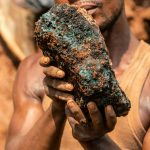
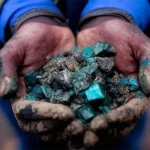
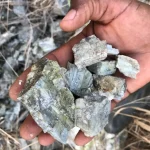
What occurred in Rubaya cannot be separated from the broader economics of unregulated extraction in conflict zones. The mine holds approximately 15 percent of global coltan supplies and half of the DRC’s total deposits – a concentration of wealth that attracts armed control rather than legitimate development. Coltan contains tantalum, essential for manufacturing high-performance capacitors in consumer electronics, aerospace components, and industrial equipment. Global demand ensures steady markets regardless of how the mineral is extracted or who controls the operation.
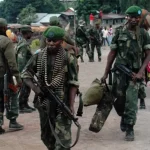
The M23’s control since 2024 has formalised what the United Nations characterises as systematic plundering to finance rebellion. Taxes imposed on the mining sector flow not to public infrastructure, worker safety, or community development, but to sustaining an armed insurgency backed by Rwanda (though Kigali denies this). The fundamental contradiction is stark: a mine producing materials for cutting-edge technology operates with methods and safety standards that wouldn’t have been acceptable in the 19th century.
The presence of women and children among the dead underscores the desperation driving people into these conditions. In a nation where over 70 percent of the population survives on less than $2.15 daily despite exceptional mineral wealth, the calculation becomes grimly straightforward: risk death in unstable mines or watch your family starve. This isn’t a choice; it’s coercion by circumstance.
The Regulatory Void as a Feature, Not a Bug
What makes the Rubaya disaster particularly instructive is how it illuminates the function of regulatory absence in extractive industries controlled by non-state actors. The lack of safety measures isn’t incidental – it’s structural. Implementing proper mine safety requires investment that reduces profit margins. It requires trained personnel, specialised equipment, ongoing monitoring, and emergency response capacity. For armed groups extracting resources to fund military operations, these expenditures represent unnecessary friction.
Media visits to the site documented miners digging manually across dangerous pits dotting the mine’s expanse. This isn’t primitive technology persisting due to ignorance; it’s the most cost-effective method when human life carries no premium. Manual extraction maximises immediate returns while externalising all risk onto the workforce. When collapse occurs, rescue operations face the same obstacles that made the site dangerous initially: no maps of tunnel systems, no structural reinforcement to prevent secondary collapses, no equipment for rapid extraction of survivors.
The former supervisor’s observation about soil fragility compounds the negligence. Any competent geological assessment would identify unstable soil as requiring enhanced safety measures – deeper foundations, systematic reinforcement, and restricted access during rainy seasons. Instead, operations continued unchecked because the fundamental calculus never changed: the value of extracted coltan exceeded the cost of preventable deaths.
The Global Supply Chain’s Convenient Blindness
The uncomfortable reality is that minerals from Rubaya likely sit in devices owned by people reading about the disaster with appropriate horror. Supply chain opacity in the electronics industry has improved marginally under pressure, with some manufacturers implementing conflict mineral protocols. But the gap between corporate commitments and ground reality remains vast, particularly when minerals pass through multiple intermediaries before reaching legitimate markets.
Tantalum’s properties make it nearly indispensable for modern electronics. This creates sustained demand regardless of extraction conditions, and armed groups controlling deposits like Rubaya understand this leverage perfectly. The rebels don’t need to market their coltan as “ethically sourced” – they simply need to get it into supply chains where origins become deliberately obscured.
The economic structure punishes transparency rather than rewarding it. Legitimate operators investing in safety, environmental protection, and fair wages face higher costs than those treating mines as open-pit operations with expendable labor. In commodity markets where price is paramount, the competitive advantage flows to whoever can extract the most cheaply. This race to the bottom has a finish line marked in body counts.
The Pattern of Preventable Death
Rubaya represents the latest in a devastating pattern across mineral-rich regions controlled by armed groups or operating beyond regulatory reach. Artisanal mining disasters in the DRC alone have killed thousands over recent decades. Each incident follows a similar trajectory: unstable conditions ignored, warnings unheeded, disaster strikes, communities mourn, and operations eventually resume unchanged.
The cycle persists because incentive structures remain unaltered. For M23, the mine represents crucial revenue. For desperate workers, it represents survival. For global markets, it represents commodity supply. The missing element is any party with sufficient power and motivation to enforce standards that would prevent mass casualty events.
Governor Erasto Bahati Musanga’s visit to survivors performs the ritual of official concern while the underlying system continues unmodified. Rebel-appointed authorities lack both the legitimacy and the incentive to transform mining operations that fund their existence. Genuine reform would require displacing armed control with governance structures accountable to affected populations – a transformation that conflicts with the basic logic of resource capture by military force.
Beyond Mourning: The Imperative for Structural Change
Communities preparing funerals while search operations continue face a dual tragedy: immediate loss and the certainty of recurrence. Without fundamental changes to how mining is controlled, regulated, and integrated into global supply chains, Rubaya will be followed by other disasters differing only in location and death toll.
Meaningful transformation requires interventions at multiple levels. Internationally, electronics manufacturers must move beyond voluntary commitments to enforceable accountability for supply chain conditions. This means rigorous auditing, suspension of purchases from conflict zones until verified reforms occur, and investment in legitimate mining operations that prioritise worker safety and community benefit.
Nationally, the DRC government’s capacity to regulate mining in rebel-held territory is currently nonexistent, making this primarily a peace and governance issue. Until state authority is restored in eastern provinces, armed groups will continue treating mines as revenue sources rather than industrial operations requiring safety oversight.
At the community level, the desperation driving people into deadly mines demands economic alternatives. Mineral wealth should fund education, healthcare, and diversified employment rather than armed conflict. The fact that the DRC remains one of the world’s poorest nations despite exceptional resource endowments represents a failure of governance and international engagement that no amount of charitable response can address.
The Bodies Keep Count
More than 200 deaths in Rubaya will generate brief international attention before the news cycle moves forward. The victims’ families will carry permanent loss. Some bodies may never be recovered from collapsed tunnels. Those who survived with serious injuries face uncertain futures in a region where comprehensive medical care is scarce.
What happened this week was entirely preventable. Not in the sense that perfect safety can be guaranteed in mining operations, but in the absolute certainty that unregulated extraction from unstable ground by untrained workers using manual methods during the rainy season would eventually produce mass casualties. The disaster was built into the system’s design, a cost of doing business when business is controlled by armed groups, maximising extraction while minimising investment.
The true obscenity is not that this disaster occurred, but that conditions ensuring its repetition remain fundamentally unchanged. As communities bury their dead and searchers work to recover those still trapped, the mines continue operating under the same absence of regulation, the same economic desperation, the same global market demand, indifferent to extraction methods.
Until unregulated mining carries consequences for all actors in the chain—from rebel controllers to intermediary traders to manufacturers sourcing materials—the pattern will persist. Rubaya’s 200 dead join countless others who have paid with their lives for an economic model that treats human beings as a cheaper input than safety equipment. Their deaths demand more than mourning; they demand recognition that this outcome was chosen, not inevitable, and that different choices remain possible for those with power to enforce them.
The ground in Rubaya gave way because no one with authority and resources invested in keeping it stable. That calculation, repeated across conflict zones and unregulated sites globally, is what turns mineral wealth into mass graves.