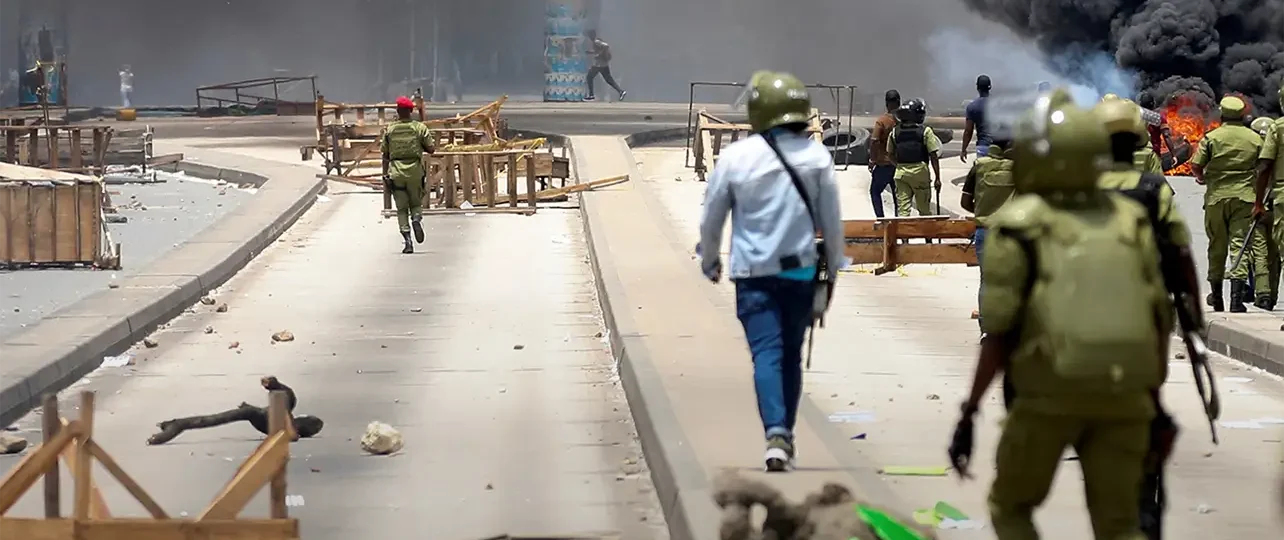

THE Kenyan Human Rights Council has levelled explosive allegations against Tanzania’s government, claiming authorities are orchestrating a systematic cover-up of what they describe as mass killings of protesters following October’s disputed election.
The allegations come as more than 100 Tanzanians remain detained on treason charges in the aftermath of an election that saw President Samia Suluhu Hassan declared winner with nearly 98% of the vote – a result the European Union condemned as “fraud unfolding for months.”
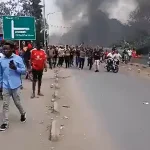
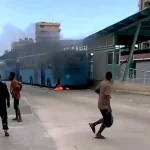
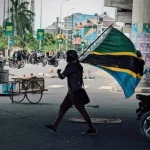
The Kenyan rights group claims security forces used live ammunition against civilian protesters across multiple cities, including Dar es Salaam, Mwanza, Shinyanga, Morogoro, and Arusha, following the October 29 election. The death toll remains fiercely contested, with opposition party CHADEMA reporting approximately 700 deaths while the UN Human Rights Office has confirmed at least 10 deaths, acknowledging the true figure may be substantially higher due to a communications blackout.
“These are credible allegations that demand international investigation,” the Kenyan Human Rights Council stated, pointing to what they characterise as a coordinated campaign to suppress evidence of state violence.
A nationwide internet shutdown, now in its third day, has prevented the flow of information about alleged atrocities, while a nationwide curfew has raised concerns that killings are occurring during curfew hours without documentation, according to human rights monitors.
The election itself was marked by extraordinary restrictions. Main opposition leader Tundu Lissu of CHADEMA was arrested and charged with treason, while ACT-Wazalendo candidate Luhaga Mpina was disqualified, and CHADEMA was banned from fielding candidates until 2030. Foreign journalists were largely barred from coverage.
UN Secretary-General António Guterres has called for “a thorough and impartial investigation into all allegations of excessive use of force” and deplored the loss of life.
The crackdown did not begin with the election. UN experts have documented over 200 enforced disappearances since 2019, with more than 100 cases between 2015 and February 2025 documented by the Legal and Human Rights Centre. In September 2024, Ali Mohammed Kibao, a senior CHADEMA strategist, was found dead near the Indian Ocean after being abducted.
The Kenyan allegations have sparked heated debate on social media, with some questioning their credibility and others demanding accountability. Tanzania’s government has characterised protesters as criminals and denied excessive force, with Army Chief Jacob Mkunda vowing military action against what he termed “criminals”.
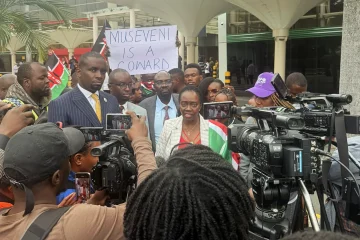
Foreign observers were not spared – Kenyan activist Boniface Mwangi was abducted and tortured, while Ugandan journalist Agather Atuhaire was also sexually assaulted, according to documented reports.
As the detained protesters face treason charges that could carry the death penalty, international pressure is mounting for an independent investigation into the allegations. The communications blackout and restricted access to Tanzania continue to impede verification of the full scale of violence.
Tanzania’s government has not responded to requests for comment on the Kenyan Human Rights Council’s allegations.