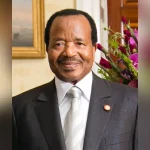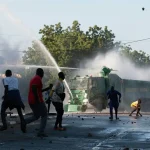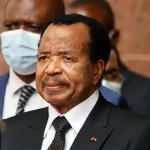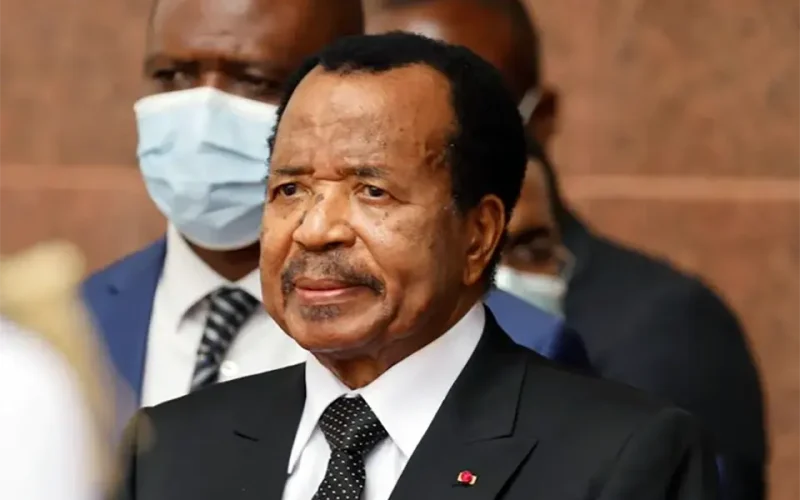
THE tear gas canisters arced through the Yaoundé sky like falling stars, their acrid smoke mixing with the fury of protesters who refused to accept what seemed inevitable: Paul Biya, at 92 years old, had done it again.
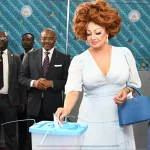
From his European sanctuary – thousands of miles from the chaos engulfing Cameroon’s streets – the world’s oldest head of state had somehow secured an eighth presidential term without breaking a sweat. He barely campaigned. He hardly appeared. Yet as partial results trickled in from the October 12 election, the impossible became reality: the absentee emperor had won the right to rule until he was nearly 100 years old.
It was political alchemy of the highest order – or the darkest sorcery, depending on whom you asked.
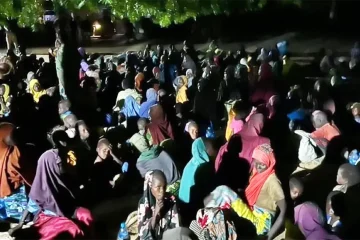
In Garoua, the northern city where opposition challenger Issa Tchiroma was born and raised, the streets erupted. Security forces met stone-throwing demonstrators with clouds of tear gas that billowed between colonial-era buildings, turning the city into a war zone of anger and disbelief. The pattern repeated itself across the nation: Bafoussam, Dschang, Kousserie, Douala – each city a spark in what threatened to become a wildfire.
The arithmetic of power was simple, brutal, and baffling. Biya had spent more time in Swiss hotels than on Cameroonian soil during the campaign. His public appearances could be counted on one hand. His engagement with voters was limited to carefully curated social media posts that felt less like campaign messages and more like royal proclamations from on high. Yet somehow, the tallying commission’s numbers told a familiar story: victory for the man who had made victory his permanent address since 1982.
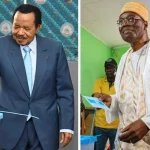
Tchiroma, Biya’s former ally-turned-challenger, had made the fatal mistake of believing that visible campaigning, ground organisation, and actual presence in the country might matter. Last week, he declared himself the winner, warning that any other outcome would plunge Cameroon into chaos. His words now seemed less like prophecy and more like an epitaph for hopes that this election might be different.
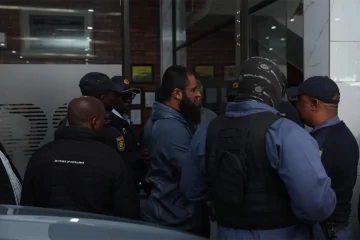
“Incitement to rebellion and insurrection,” Interior Minister Paul Atanga Nji declared on Tuesday, as security forces arrested more than 20 protesters in Garoua. The charges carried the weight of a military tribunal, a reminder that in Biya’s Cameroon, dissent was not just unwelcome—it was treason.
The government’s response to allegations of irregularities was a masterclass in authoritarian deflection: reject, dismiss, demand calm. Never mind that unverified tallies on social media had sparked nationwide protests. Never mind that citizens questioned how a man who governed by remote control from Europe could legitimately claim a democratic mandate. The machinery of state power ground forward with the inexorable logic of a system perfected over four decades.
This was the Biya paradox laid bare: a president who didn’t need to be present to win, who didn’t need to campaign to secure victory, who didn’t need to live in his country to rule it. It was governance as absence, power as phantom limb – still felt even when not seen.
The oil and cocoa that flowed from Cameroon’s soil enriched foreign markets while its people took to the streets, their frustration met with chemical clouds and the promise of military justice. The constitutional council would meet later this week to confirm what everyone already knew, transforming the provisional into the permanent, the unbelievable into the undeniable.
At 92, Biya had pulled his most audacious rabbit yet: winning an election he barely contested, in a country he barely inhabited, against an opponent who actually believed showing up might matter. It was a magic trick that would have made Houdini weep with envy – or shame.
As darkness fell on Cameroon’s cities and the tear gas dissipated into the humid night air, a question hung unanswered: Was this democracy or its elaborate funeral? The protesters nursing their burning eyes knew the answer. So did the 20-plus arrestees awaiting military tribunal. So did the election monitors who watched tally materialise from the ether like conjured spirits.
Paul Biya, ensconced in European comfort, had proven once again that in the twisted mathematics of authoritarian endurance, absence makes the vote grow fonder. He had won without fighting, triumphed without trying, secured another five years without spending five days on the campaign trail.
The rabbit was out of the hat. The trick was complete. And Cameroon, gasping through tear gas and disbelief, was left to applaud or riot – though both responses seemed equally futile against a system that had spent 42 years perfecting the art of making democratic opposition disappear.
The absentee emperor would reign again. Not because he earned it, but because in his kingdom, earning it had long ago ceased to matter.