JOVIAL RANTAO
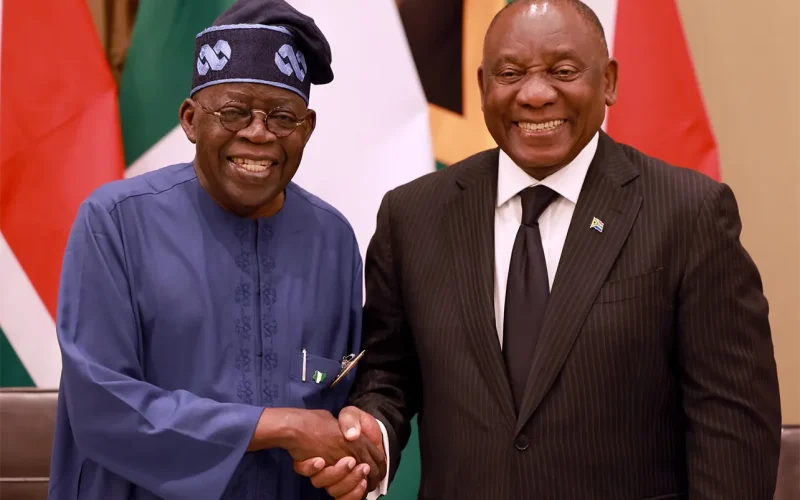
IN the vibrant heart of Cape Town, underneath Table Mountain, two giants of the African continent came together, their spirits burning with a shared vision of hope and transformation. President Cyril Ramaphosa of South Africa and President Bola Ahmed Tinubu of Nigeria stood not just as leaders of nations but as architects of a bold new African dream.
Their meeting was more than a diplomatic encounter – it was a testament to the unbreakable spirit of a continent rising. Thirty years after the fall of apartheid, these two nations clasped hands across the historical divides, their fingers intertwined with memories of solidarity and a promise of a collective future.
“This is not a matter of choice,” President Tinubu declared, his voice resonating with the passion of generations, “but of destiny. We have a historical responsibility to the African people.”
The numbers told a powerful story. Thirty-six memorandums of understanding signed. Two of Africa’s largest economies. Millions of young people waiting to be unleashed. The potential was electric.
They spoke of breaking barriers – visa restrictions melting away, business opportunities blooming like wildflowers after rain. Nigerian businesses welcomed in South African markets. South African investments finding fertile ground in Nigerian soil. The African Continental Free Trade Area became their canvas, on which they would paint a masterpiece of economic cooperation.
But their vision stretched far beyond trade. They spoke of youth – the continent’s most precious resource. Of investing in skills, in potential, in the dreams of young Africans who would write the next chapter of their nations’ stories.
“We must position Africa as the continent of the future,” President Ramaphosa proclaimed, his words a rallying cry that echoed from the Cape to the Niger.
They stood united against external forces that might seek to divide them, remembering Tinubu’s powerful metaphor: “The glory of the eagle does not please the kite.” Together, they would soar above challenges, their wings spanning the breadth of a continent awakening.
From addressing regional conflicts to demanding reform in global institutions like the UN Security Council, they were writing a new narrative. No longer would Africa be a passive recipient of global decisions. They would shape the conversation, bring the challenges of the Global South to the foreground.
As the G20 presidency rested on South Africa’s shoulders, it carried with it the hopes of an entire continent. Every discussion, every negotiation would be an opportunity to amplify African voices, to tell African stories, to claim African agency.
This was more than a meeting between two presidents. This was a promise. A promise to the millions who had struggled, who had dreamed, who had believed in the possibility of an Africa transformed. A promise of unity, of progress, of hope.
The eagles of Africa were spreading their wings. And the sky was not the limit – it was just the beginning.