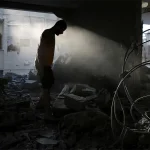
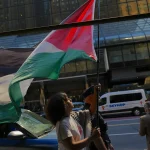
IN the corridors of power across Africa, where the echoes of liberation struggles once rang with defiant solidarity, a deafening quiet has settled over the continent’s response to an unfolding tragedy in Gaza. While European capitals from Paris to London thunder with condemnation over Israel’s deliberate starvation of Palestinians, most African governments – inheritors of movements that once stood shoulder-to-shoulder with Yasser Arafat’s Palestinian Liberation Organisation – have retreated into calculated silence.
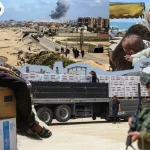
The numbers tell a story of deliberate cruelty: At least 127 Palestinians have died from starvation since October 2023, including 85 children whose small bodies could not withstand the siege. The World Health Organisation reports 74 malnutrition-related deaths in 2025 alone – 24 children under five, one child over five, and 38 adults – with most perishing in July as Israel’s stranglehold on aid tightened like a noose around Gaza’s neck.
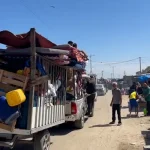
Over 20,000 children have been treated for acute malnutrition since April, their tiny frames wasting away in hospitals that themselves teeter on the brink of collapse. Nearly half a million people face “catastrophic” starvation – the highest risk category for mass death – as food deliveries are throttled to a cruel trickle, far below what human survival demands.
The Continental Contradiction
The African Union, speaking with one voice at its February 2025 summit, declared Israel’s actions “genocide” and demanded member states sever all cooperation with the occupying power. The continental body’s words blazed with moral clarity, calling for international prosecution and echoing the anti-colonial solidarity that once bound African liberation movements to Palestinian freedom fighters.
Yet this institutional fire has not ignited the individual flames it was meant to kindle.
The Lonely Voice of the South
South Africa stands as a solitary lighthouse in this moral darkness, its government’s voice cutting through the diplomatic fog with unwavering condemnation. From the halls of the International Court of Justice to the chambers of the United Nations, South African diplomats carry forward the torch lit by Mandela’s generation – those who understood that Palestinian liberation was inseparable from African freedom.
But across the rest of the continent, from Kenya’s highlands to Nigeria’s bustling cities, from Ghana’s Atlantic shores to Ethiopia’s ancient plateaus, government voices remain conspicuously absent from the global chorus demanding justice for Gaza’s starving children.
What silences the sons and daughters of liberation movements? The answer lies in a web of modern dependencies that would have horrified their revolutionary forebears. Israeli agricultural technology flows into African farms. Security cooperation agreements bind African capitals to Tel Aviv. Arms deals and development partnerships create golden chains that bind African leaders to their calculated silence.
Western aid packages and investment flows—from Washington and Brussels, Jerusalem’s steadfast allies—hang like swords of Damocles over African treasuries. To speak for Gaza’s starving might risk the wrath of those who control the purse strings of African development.
The People vs. The Palace
In markets from Accra to Addis Ababa, ordinary Africans watch in horror as Palestinian children waste away. Their hearts remember the solidarity that once flowed from African soil to Palestinian refugee camps. They recall how the PLO supported African liberation when the world looked away.
But their governments calculate differently. Domestic crises – their own hungry children, their own political upheavals, their own economic struggles – provide convenient cover for international inaction. Pragmatism, they call it. Their ancestors might have called it something else.
As July 2025 fades into memory, the starvation toll mounts while African capitals maintain their strategic silence. Conference rooms in Nairobi and Lagos buzz with talk of trade deals and security partnerships, while in Gaza, mothers watch their children’s ribs become visible through their skin.
The African Union’s statements ring hollow when not backed by the voices of its member states. Continental solidarity means little when individual nations prioritise their bilateral relationships over their historical obligations to justice.
The United Nations has called Gaza’s suffering an “epic humanitarian catastrophe.” For most of Africa’s leaders, it has become an epic test of moral courage – one they are failing with each passing day of silence.
In the shadow of statues erected to honour African liberation heroes, in the halls of parliaments won through struggle and sacrifice, the continent’s leaders have chosen comfort over conscience, prosperity over principle. They have forgotten that liberation movements succeeded not through silence in the face of oppression, but through the courage to speak truth to power, no matter the cost.
The children of Gaza continue to starve, their cries echoing unanswered across a continent that once knew the meaning of solidarity. And in that silence, something precious dies – not just in Gaza, but in the soul of Africa itself.
As the humanitarian catastrophe deepens and the death toll from starvation continues to climb, the question haunts the continent: When did the children of liberation movements learn to look away from suffering? When did the inheritors of freedom struggles choose silence over solidarity?
The answer may lie not just in Gaza’s tragedy, but in Africa’s forgotten promise to never again stand by while the powerful starve the powerless into submission.