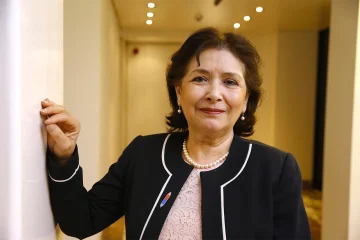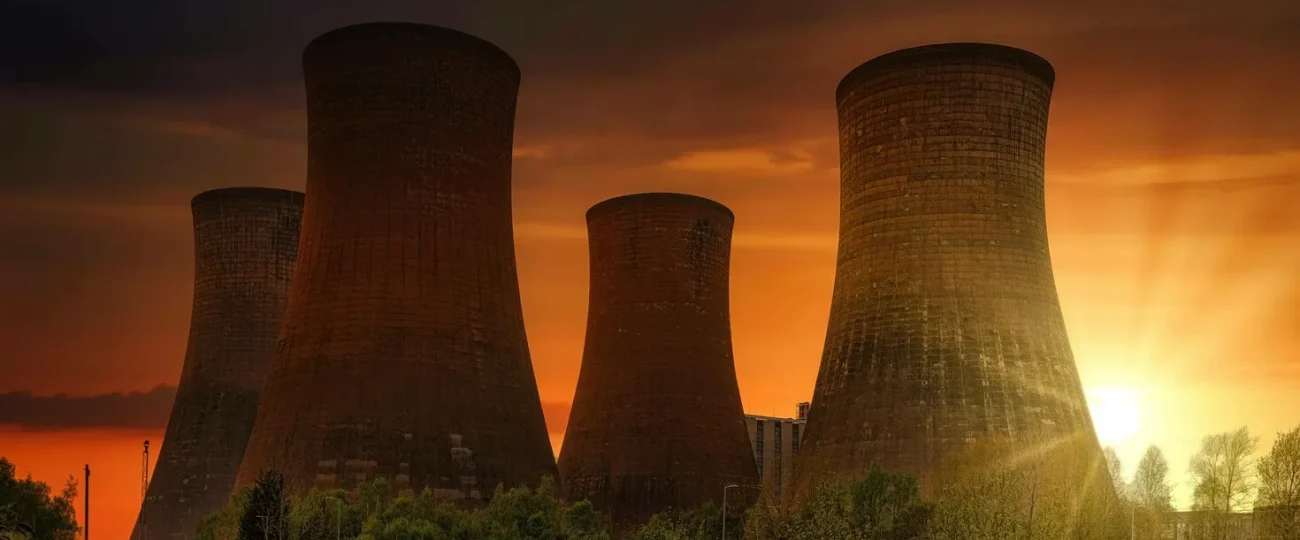

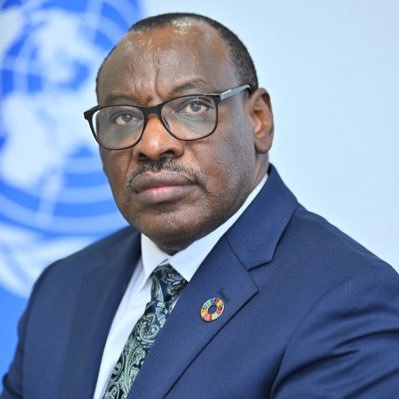
THE Executive Secretary of the UN Economic Commission for Africa is urging African nations to embrace nuclear energy as a solution to the continent’s massive electricity deficit, arguing that current renewable energy investments alone are insufficient to meet growing demand.
Claver Gatete made the case for nuclear power in a comprehensive analysis of Africa’s energy challenges, noting that “a staggering 600 million people remain without access to electricity” across the continent.
“While our continent accounts for 17% of the world’s population, we generate less than 3% of global electricity,” Gatete stated. “This ‘power poverty’ stifles industrialisation, limits healthcare outcomes, and constrains economic transformation even as Africa exports uranium and other critical minerals to power many parts of the world.”
Safety Concerns vs. Proven Track Record
Addressing widespread public concerns about nuclear safety, Gatete acknowledged that “critics are right to debate questions of safety, malice, accidents, cost and potential harmful effects on the environment,” but pointed to successful examples of nuclear power on the continent.
“South Africa’s Koeberg plant has operated safely for 40 years, proving nuclear energy works on the continent,” he said, adding that “experts note that nuclear energy has the lowest death rate per kWh of any major energy source, safer than wind and solar when accounting for manufacturing risks.”
The UN official cited international examples to support his argument, noting that “South Korea has gone from energy importer to nuclear energy exporter, and has a target of providing 30% of its electricity while cutting emissions by 2030.” He also highlighted France, which “generates 70% of its electricity from nuclear, achieving Europe’s lowest electricity prices and a clean grid.”
Growing Continental Interest
Gatete outlined significant nuclear energy developments already underway across Africa. “Egypt is constructing four 1,200 MW reactors at El Dabaa—a $30 billion bet on nuclear as an industrial catalyst,” he said, while noting that “Ghana has partnered with NuScale Power to explore Small Modular Reactors – SMRs that could power mines and cities simultaneously.”
According to Gatete, several African countries are committed to nuclear development: “Countries that fall under the Tier 1 category – Egypt, Rwanda, Ghana, Uganda, South Africa, Nigeria and Zambia – are firmly committed to starting or expanding their nuclear energy programs.”
He added that “governments in Niger, Kenya, Tunisia, Morocco, Ethiopia, Tanzania, Namibia, D.R. Congo, Senegal, Algeria and Zimbabwe are working towards the role of nuclear energy in their future electricity supply systems.”
Massive Investment Requirements
The scale of Africa’s energy challenge requires unprecedented investment, according to Gatete’s analysis. “The International Energy Agency estimates that growth in Africa’s industry, commerce and agriculture will require electricity demand to grow by 40% by 2030,” he said.
Looking ahead to continental trade integration, Gatete noted that “ECA assesses that the African Continental Free Trade Area electricity needs will account for 8% of the total continental electricity capacity by 2035, and 14% by 2040, requiring additional investment of $22.4 billion between 2025 and 2040.”
The long-term projection is even more dramatic: “By 2040, due to rapid population and economic growth in Africa, the electricity supply must expand by more than 4 times.”
Economic Case for Nuclear
Gatete argued that nuclear power offers economic advantages over other energy sources when viewed long-term. “Egypt’s El Dabaa will deliver 4,800 MW for $6.25 billion. With an over 40-year lifespan, Nuclear makes it cost-competitive,” he stated.
He emphasised nuclear power’s reliability advantage: “With a 90% capacity factor, plants enjoy up to 45 years of economic life. While large-scale reactors provide stable baseload power, low-hanging fruit should focus on deploying SMRs first (20-300 MW) to power mines and industries, before scaling up to gigawatt plants.”
Addressing Waste Concerns
On the persistent issue of nuclear waste management, Gatete pointed to technological advances: “Current innovations are proving that new reactor designs consume nuclear waste as fuel. Waste management systems have also developed to offer safer options for disposal.”
He highlighted Africa’s natural advantages in nuclear fuel supply: “Countries such as Niger with large deposits of uranium could power reactors for centuries while solving waste challenges. Namibia could achieve energy independence and power the rest of Africa for decades to come– after all, Africa controls 20% of global uranium reserves.”
Call for Continental Cooperation
Gatete proposed establishing an “African Nuclear Alliance” that would “pool resources, negotiate better technology transfer deals and training programs and reform energy financing in partnership with Africa’s financial institutions to de-risk projects.”
He called on continental leadership to drive the initiative: “The African Union and regional blocs must lead this charge to secure Africa’s energy future.”
The UN official emphasised the urgency of action: “Africa can no longer risk crawling its way out of energy insecurity. As we say in Africa, we can sing and dance at the same time. As we invest in renewable energy resources, we can also advance nuclear energy development.”
Regional Integration Opportunities
Gatete sees regional power sharing as key to making nuclear energy economically viable. “Africa’s regional power pools, such as the Southern African Power Pool and the upcoming launch of a regional electricity market in the East African Power Pool, could amplify investment by pooling demand,” he said.
He pointed to the continent’s long-term integration goals: “The African Single Electricity Market (2040 vision) aims to integrate continental grids, boosting nuclear power’s viability.”
Transformation Potential
Looking to the future impact, Gatete argued that nuclear energy could fundamentally transform Africa’s economic prospects: “The potential is enormous and could result in creating thousands of skilled jobs and transforming Africa’s energy system towards greater energy security.”
He concluded with a call for decisive action: “The time is now to move from potential to action. If done right, Africa could be a leader in this sector. Nuclear energy offers a bright future. But we must act deliberately and have the courage to embrace it.”
Claver Gatete is the Executive Secretary of the UN Economic Commission for Africa.