THE United States has made a dramatic 11th-hour reversal on its boycott of Africa’s first G20 summit, with President Cyril Ramaphosa confirming Thursday that Washington is now discussing “one shape or form or other” of participation in the gathering of the world’s leading economies.
The surprise development came as heads of state began arriving in South Africa for the November 22-23 summit, marking the start in earnest of the historic first G20 Leaders’ Summit on African soil – though the extent and nature of American participation remains unclear just days before the main sessions begin.
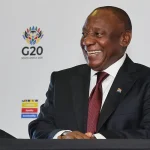
“We have received notice from the United States, a notice which we are still in discussions with them over about a change of mind, about participating in one shape or form or other in the summit,” Ramaphosa told a joint news conference with European Commission President Ursula von der Leyen and European Council President António Costa.
The South African president said Pretoria is working to determine what’s feasible regarding how U.S. officials could take part, adding: “This comes in the days before the summit. And so therefore we need to engage in those types of discussions to see how practical it is and what it finally really means.”
Trump Administration’s Controversial Boycott
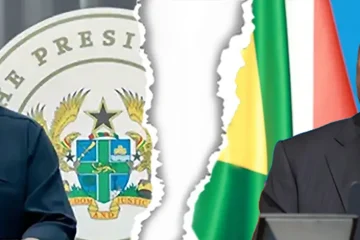
Trump’s administration had previously declared it would not attend the summit, making inflammatory and false allegations that South Africa, previously ruled by its white minority under the apartheid system until 1994, now mistreats white people.
The Trump administration also rejected South Africa’s agenda for the summit, which focuses on promoting solidarity and helping developing nations adapt to worsening climate disasters, transition to clean energy, and reduce excessive debt burdens.
The potential U.S. participation may be tied to the transfer of the G20 presidency, as the United States is scheduled to assume the hosting role after South Africa’s tenure.
Ramaphosa’s Call for Global Reform
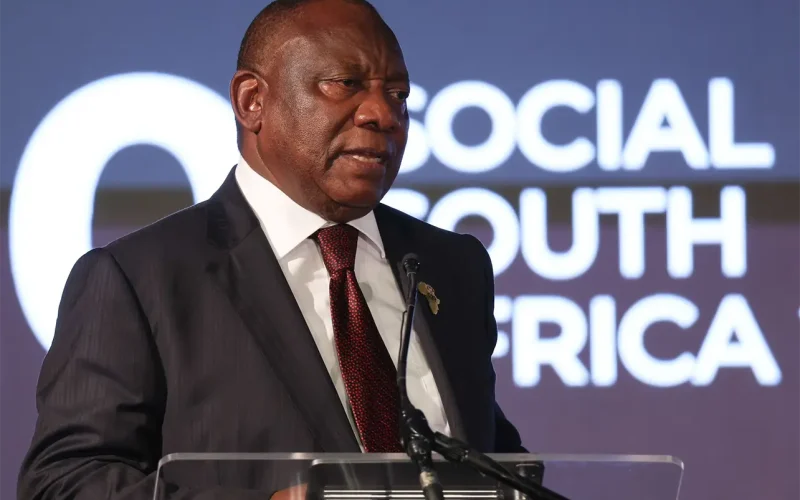
Speaking at the G20 Social Summit at Birchwood Conference Centre, Ramaphosa had declared that the world’s leading economies can no longer operate by “unwritten rules about those who feast and those who must settle for scraps” as he laid out a sweeping vision to reshape global economic governance.
“It cannot be that a country’s geographical location or income or army determines who has a voice and who is spoken down to,” Ramaphosa told delegates from across the G20’s member states, which collectively represent 85 percent of global GDP and two-thirds of the world’s population.
The summit represents a watershed moment for the continent, elevating African priorities onto the agenda of the world’s premier economic forum.
Confronting Global Crises
Ramaphosa painted a stark picture of mounting global challenges threatening development worldwide – from political polarisation and armed conflicts to climate change and widening inequality. He warned that imbalances in international financing and disparities in access to resources are undermining efforts to achieve the UN’s 2030 Sustainable Development Goals and the African Union’s Agenda 2063.
South Africa has used its G20 presidency to push for reform of the international financial architecture, democratisation of global governance systems, and recognition of all nations’ rights to development and dignity – priorities that have put Pretoria at odds with the Trump administration.
The president emphasised that his administration has sought to ensure that developing economies’ interests are no longer afterthoughts in global economic discussions.
Civil Society at the Table
Breaking with traditional summit formats, South Africa’s approach has centred meaningful participation from civil society organisations, youth groups, labour unions, business coalitions, and academic institutions throughout the year-long process.
The Social Summit – only the second since Brazil inaugurated the concept last year—brought together representatives from Women20, Youth20, Business20, Civil20, Labour20, and other grassroots formations to shape the agenda before world leaders gather.
Ramaphosa argued that for G20 decisions to have “credibility and legitimacy,” they must be “nourished by strong roots” in communities and civil society rather than determined solely by government elites.
Delegates have pushed for concrete action on digital inclusion, climate justice, sustainable finance, media freedom, and building resilient value chains to protect vulnerable countries from trade volatility.
Focus on the Vulnerable
Marking his address on World Children’s Day, Ramaphosa highlighted calls from the Social Summit to prioritise resources for eliminating child poverty and hunger, advancing youth opportunities, and ensuring women’s health and representation across society.
He delivered a forceful message on gender-based violence, declaring it a crisis that “erodes the social fabric of nations” and imposes burdens that constrain development. South Africa has declared gender-based violence and femicide a national crisis requiring extraordinary action from all social partners.
Quoting African revolutionary Thomas Sankara, Ramaphosa said no true social revolution can occur without women’s liberation, adding: “No society can thrive for as long as gender-based violence and femicide continue and the agency of women is denied.”
A Historic Moment
As world leaders began touching down in South Africa, Ramaphosa framed the gathering as a potential watershed moment comparable to the 1955 Bandung Conference for the Global South and South Africa’s own 1955 Congress of the People, which produced the Freedom Charter that became the foundation for the country’s democratic constitution.
“History will record this year as a milestone for global cooperation,” he declared, calling on the Social Summit to serve as “the reliable, trustworthy compass” that ensures the G20 agenda accounts for the needs of all countries and peoples.
With geopolitical tensions running high—underscored by the uncertainty around U.S. participation—and the global economic outlook uncertain, Ramaphosa pledged that South Africa and its partners would maintain focus on “the horizon of progress and shared prosperity.”
“We will set a new course for the world, and we will create a new future for its people,” he concluded.
The question now is whether Washington’s last-minute reversal signals genuine engagement with the summit’s agenda or merely a procedural appearance to accept the G20 presidency baton.