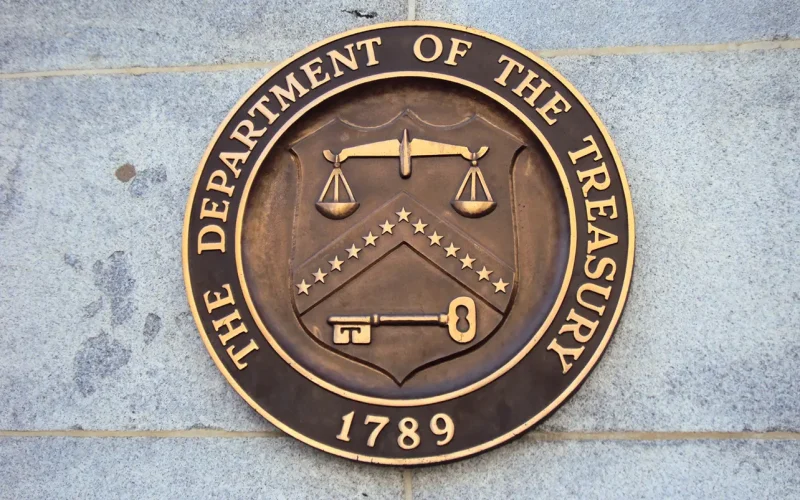
THE United States Treasury Department and its Gulf allies delivered a coordinated blow to ISIS operations across Africa this week, targeting a sophisticated financial network that has funnelled millions of dollars to the terrorist organisation while orchestrating deadly attacks from Somalia to South Africa.
The Terrorist Financing Targeting Centre announced the designation of three key ISIS facilitators whose operations span the Democratic Republic of Congo, Somalia, and South Africa – underscoring the terror group’s expanding footprint across the African continent despite territorial losses in Iraq and Syria.
A Continental Terror Economy
The designations reveal the scope of ISIS’s African operations, where the group has established what amounts to a continental terror economy. In Somalia alone, ISIS affiliates have generated hundreds of thousands of dollars monthly through extortion and criminal enterprises, collecting $2.5 million in 2021 and $2 million in the first half of 2022, according to Treasury documents.
“Today’s joint action underscores our shared commitment to disrupting the ability of ISIS and other terrorist groups to access the international financial system wherever they seek to operate,” said Acting Under Secretary of the Treasury for Terrorism and Financial Intelligence Bradley T. Smith.
The financial network targeted includes Abdiweli Mohamed Yusuf, who has led ISIS-Somalia since 2019 and transformed the affiliate into what Treasury officials describe as a “hub for disbursing funds and guidance to ISIS branches and networks across the continent.” Under his leadership, the group has coordinated the delivery of foreign fighters, weapons, and supplies while maintaining financial pipelines to ISIS cells throughout Africa.
From Johannesburg to Kampala
The terror financing web extends deep into civilian populations across multiple countries. In South Africa, ISIS operatives have employed robbery, extortion, and kidnapping for ransom to generate funds, while in the Democratic Republic of Congo, facilitators have served as intermediaries for financial flows throughout central Africa.
The network’s deadly reach became apparent in October 2021 when a bombing in Kampala, Uganda, killed one person and wounded at least three others. Treasury officials directly link the attack’s funding to Hamidah Nabagala, a DRC-based ISIS facilitator who has served as a financial intermediary for the group’s central African operations.
Nabagala’s activities extended beyond financing terror attacks. Treasury documents reveal she attempted to smuggle her three children out of Uganda to send them to ISIS-affiliated training camps in the Democratic Republic of Congo, illustrating how the group’s recruitment and indoctrination efforts have penetrated family structures across the region.
Financial Warfare Against Terror
The Treasury designations represent more than symbolic action – they constitute financial warfare designed to cripple ISIS operations across Africa. The measures freeze any U.S.-based assets belonging to the designated individuals and prohibit American citizens and entities from conducting transactions with them.
More significantly, the designations create a global financial quarantine around these operatives. International banks and financial institutions now face severe penalties for processing transactions involving the designated individuals, effectively cutting them off from the global financial system.
This financial isolation strategy has proven effective against other terrorist networks, forcing operatives to rely on more cumbersome and traceable methods of moving money. For ISIS, which has increasingly relied on criminal enterprises and business fronts to fund operations, the loss of access to legitimate financial channels represents a significant operational constraint.
Africa’s Growing Terror Challenge
The designations highlight Africa’s emergence as a critical battleground in the global fight against ISIS. While the group lost its territorial caliphate in Iraq and Syria, it has established increasingly sophisticated operations across the African continent, exploiting weak governance, porous borders, and economic instability.
ISIS affiliates now operate across multiple African countries, from the Sahel region in the west to the Horn of Africa in the east. The group has demonstrated particular success in establishing financial networks that span multiple countries, allowing it to move money and resources across borders while maintaining operational flexibility.
The terror group’s African operations have evolved beyond simple criminal enterprises to include complex financial structures that mirror legitimate business operations. This sophistication has made ISIS-Africa increasingly self-sufficient, reducing its dependence on external funding while expanding its operational capabilities.
International Coordination
The latest designations represent the eighth round of joint actions by the Terrorist Financing Targeting Centre, a coalition established in 2017 to enhance coordination between the United States and Gulf Cooperation Council nations. The centre focuses on coordinating sanctions, sharing intelligence on terrorist financing networks, and providing capacity-building support to strengthen institutional defences against terror financing.
This coordinated approach reflects a growing recognition that ISIS’s financial networks operate across multiple jurisdictions and require international cooperation to disrupt effectively. The group’s ability to establish operations spanning multiple African countries has made traditional single-nation approaches inadequate.
The designations also coincide with broader international efforts to combat ISIS financing, including the Counter ISIS Finance Group, which held its 20th meeting in conjunction with some of the Treasury actions.
Looking Forward
As ISIS continues to adapt and evolve its operations across Africa, the financial designations represent both a tactical victory and a strategic challenge. While the measures will disrupt current operations, they also underscore the group’s ability to establish sophisticated financial networks across multiple countries with limited resources.
The effectiveness of these financial measures will ultimately depend on sustained international cooperation and the ability of African nations to strengthen their own financial oversight and enforcement capabilities. For ISIS, the loss of these financial facilitators represents a significant operational setback, but the group’s demonstrated adaptability suggests it will seek new methods to fund its deadly operations across the continent.
The Treasury’s action sends a clear message that ISIS’s expansion into Africa will face determined international resistance, even as the group continues to exploit the continent’s security and governance challenges to establish new operational footholds.