WHAT began as President Yoweri Museveni’s bold defiance of Uganda’s Supreme Court has now escalated into a full-scale constitutional crisis. In a calculated move that strikes at the heart of judicial authority, Museveni has signed into law the Uganda Peoples’ Defence Forces (Amendment) Act, 2025, effectively circumventing the Supreme Court’s earlier ruling that banned military prosecutions of civilians as unconstitutional. This legislative manoeuvre transforms what was once executive defiance into a legally sanctioned override of judicial authority.
The signing of the amended legislation represents a sophisticated assault on democratic institutions. Rather than continuing to openly defy the courts, Museveni’s government has chosen to use legislative power to effectively nullify judicial authority. This strategy reveals a calculated understanding of how to dismantle constitutional checks and balances while maintaining a veneer of legality.
Parliament’s passage of the bill last month, followed by presidential assent, demonstrates how a ruling party’s legislative majority can be weaponised against judicial independence. The army spokesperson’s praise for the new law, claiming it will “deter the formation of militant political groups that seek to subvert democratic processes,” adds a chilling layer of irony – using anti-democratic means to allegedly protect democracy.
The Supreme Court’s majority decision to ban the prosecution of civilians in military courts struck at the heart of a system that has long served as a powerful tool of executive control. This ruling wasn’t just a technical legal decision; it was an assertion of civilian judicial authority and constitutional principles over military jurisdiction. The Court’s order to transfer all ongoing cases to civil courts represented a direct challenge to the executive’s grip on the judicial process.
However, the legislative override has transformed this judicial victory into a pyrrhic one, demonstrating the fragility of constitutional protections when faced with concentrated political power.
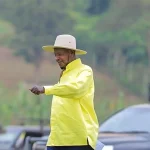
Museveni’s response – “The country is not governed by the judges” – reveals a deeply troubling view of constitutional democracy. By declaring his intention to continue military prosecutions despite the court’s ruling, he’s not just disagreeing with a judicial decision; he’s challenging the very foundation of constitutional governance. His justification, citing the pacification of the Karamoja region, demonstrates a concerning prioritisation of perceived stability over constitutional rights.
The Deeper Democratic Implications
This confrontation exposes several critical issues:
- The vulnerability of judicial independence in Uganda’s political system
- The militarisation of civilian justice as a tool of political control
- The systematic weakening of democratic institutions under long-term rule
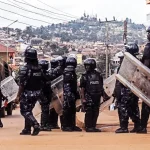
The stark contrast between civilian courts, where judges maintain independence, and military tribunals, where officials answer directly to the president, highlights how these parallel systems serve different masters – one to justice, the other to executive power.
Political Prosecution as Institutionalised Strategy
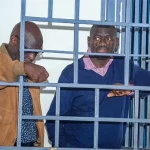
The cases of opposition figures like Kizza Besigye and Bobi Wine illustrate how military courts have been systematically weaponised against political opposition. Besigye’s transfer to civilian court following the Supreme Court ruling offered a brief glimpse of judicial independence – a victory now undermined by the new legislation. Wine’s previous military tribunal prosecution over weapons charges, though later dropped, demonstrates the intimidation value of these parallel courts.
The government’s claim that only civilians who “use guns for political violence” face military prosecution rings hollow when viewed against the pattern of opposition targeting. The broad nature of charges like treason and security offences provides ample room for political manipulation under the guise of national security.
The Path Forward: A Democracy Compromised
With Bobi Wine preparing to challenge Museveni in the upcoming elections, the timing of this legislative override appears strategically calculated. The restoration of military tribunals creates a powerful tool for managing political opposition, just as electoral competition intensifies. Museveni’s nearly four decades in power have provided him with extensive experience in neutralising challenges to his authority.
The opposition’s assertion that the new law violates the Supreme Court verdict sets up a potential constitutional showdown. While Ugandan courts could potentially intervene again through citizen petitions, the legislative override demonstrates how quickly judicial victories can be reversed when executive and legislative power align.
This crisis has revealed the fundamental weakness of constitutional protections in systems where checks and balances exist more in theory than in practice. The ease with which a Supreme Court ruling was circumvented through legislative action exposes the fragility of judicial independence when faced with concentrated political power.
The Hollowing Out of Democratic Institutions
This constitutional crisis has evolved from a moment of executive defiance into a systematic dismantling of judicial authority through legislative override. Museveni’s government has demonstrated that in Uganda, the separation of powers exists at the pleasure of the ruling party. The signing of the amended legislation represents not just a policy choice but a fundamental rejection of constitutional limits on executive power.
The crisis exposes how democratic institutions can be gradually hollowed out through seemingly legal means. By using parliamentary majorities to override judicial decisions, the government has created a template for future constitutional violations. This precedent threatens not just current opposition figures but the very foundation of constitutional governance in Uganda.
As Uganda approaches another electoral period, the restoration of military tribunals serves as both a warning to opposition forces and a demonstration of the government’s willingness to use all available tools to maintain power. The international community watches as a country’s constitutional framework is systematically dismantled through the very democratic processes it was designed to protect.