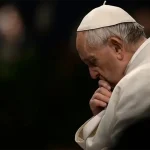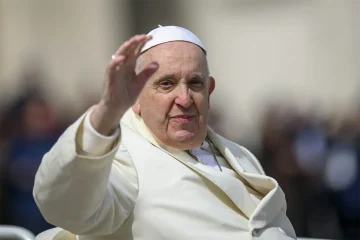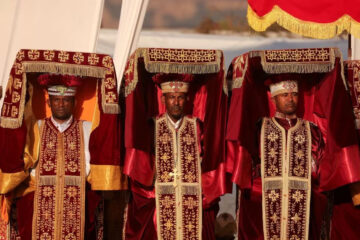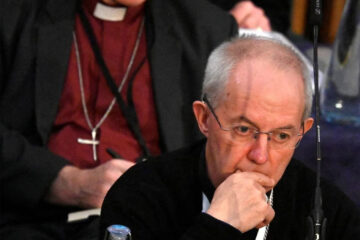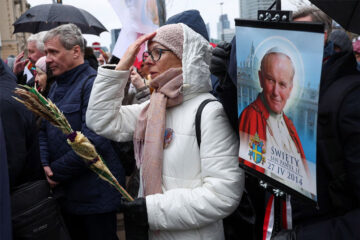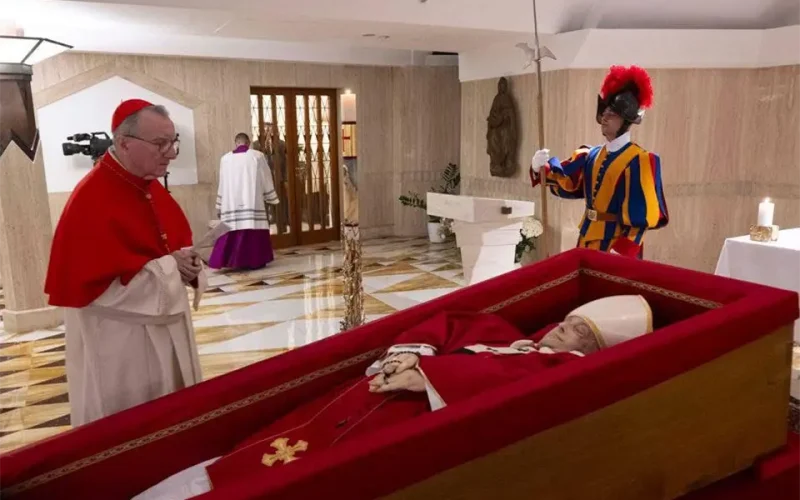
AS dawn broke over the African continent on Easter Monday, a solemn silence descended upon churches, villages, and bustling cities alike. Pope Francis, the humble shepherd who had walked among the poorest of the poor and spoken truth to power, had drawn his final breath at 88 after battling a prolonged respiratory illness. While bells tolled in Rome, across Africa, where Catholicism has seen its greatest growth, a chorus of reverent tributes began to rise.
From the Union Building in Pretoria, South African President Cyril Ramaphosa spoke of “an extraordinary life story” that had reached its final chapter. “Pope Francis did not merely speak of inclusivity and justice – he embodied these virtues. His care for those pushed to society’s margins wasn’t policy; it was purpose.”
Meanwhile, as the sun climbed higher over Addis Ababa, Mahmoud Ali Youssouf, Chairman of the African Union Commission, wrote about Francis’s “courageous engagement with the African continent,” recalling how the pontiff had visited war-torn regions that other world leaders avoided.
“He amplified voices that power had silenced,” Youssouf declared, his words echoing through the AU headquarters. “When conflict raged, when poverty gripped communities, Pope Francis did not offer distant prayers – he stood in solidarity with those who suffered.”
In Nigeria, Africa’s most populous nation with a substantial Catholic community, President Bola Tinubu said: “Today, we have lost the most trenchant voice against the climate catastrophe that threatens our continent,” Tinubu announced, recalling Francis’s encyclical Laudato Si’ that had electrified environmental activists across Africa.
“When Pope Francis spoke of economic justice,” Tinubu continued, “he was not speaking in abstract terms. He was speaking of the reality faced by millions of Africans. He was not merely a spiritual leader—he was an instrument of peace in our troubled regions.”
As evening fell in Nairobi, Kenya’s President William Ruto said Pope Francis’s impact was beyond the Catholic Church. “This loss reaches beyond the Catholic faithful,” Ruto said. “Pope Francis’s servant leadership, his profound humility, and deep compassion for the vulnerable have been a guiding light for all leaders.”
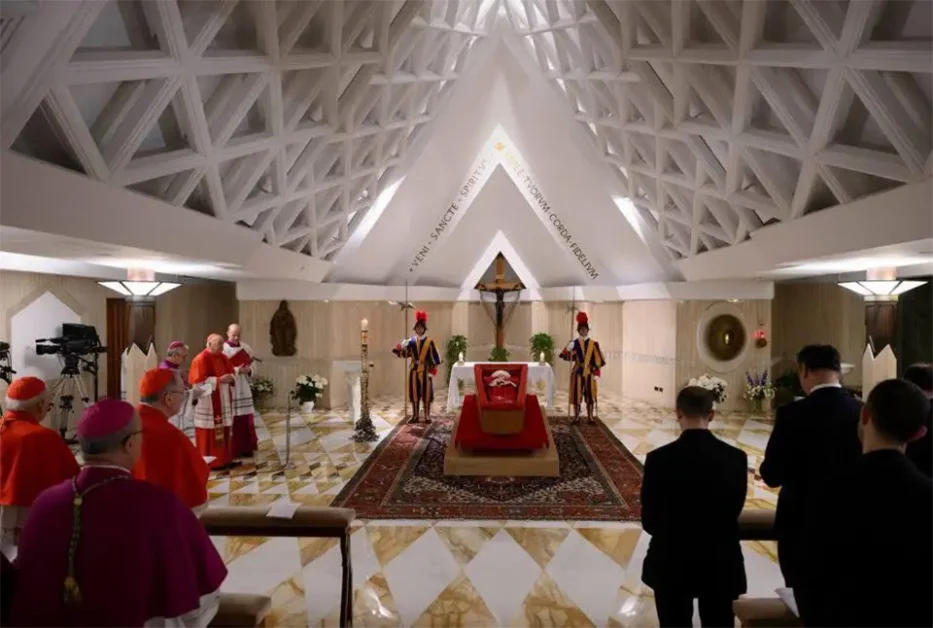
In the Democratic Republic of Congo, a nation scarred by decades of conflict, President Felix Tshisekedi declared three days of national mourning. “Pope Francis was not just a great servant of God,” Tshisekedi proclaimed to a nation still remembering the pontiff’s 2023 visit. “His repeated appeals for peace in eastern Congo showed that he carried Africa in his heart. His life was a vibrant testimony to faith, justice, and human dignity.”
Across the continent in Ethiopia, where Christians and Muslims have lived side by side for centuries, Prime Minister Abiy Ahmed stood before an interfaith gathering. “Pope Francis’s legacy transcends religious boundaries,” Ahmed reflected. “His compassion, humility, and service to humanity will continue to inspire generations, not just Catholics, but all who aspire to build a more just world.”
As Africa’s voices led the mourning, they were joined by a global chorus of tribute. From the marble halls of European power to the villages of the Philippines, from the Kremlin to Kyiv, and from Downing Street to Delhi, world leaders painted a portrait of a pontiff who had transformed the papacy.
European Commission President Ursula von der Leyen praised Francis’s inspiration that reached “millions beyond the Catholic Church.” Indian Prime Minister Narendra Modi recalled personal meetings with a man who had “ignited hope among those in distress.” Even Russian President Vladimir Putin acknowledged Francis’s persistent efforts to foster dialogue between the Russian Orthodox and Catholic Churches.
But it was in Africa where Francis’s passing seemed to touch the deepest chord. Across a continent where approximately 236 million Catholics practice their faith – a number that has grown by 116% since 1980 – Francis had been more than a distant figure in white. He had been a champion for a continent often marginalised in global discourse.
As night fell across Africa on that Easter Monday, millions of candles flickered in informal memorial services. In remote villages without electricity, in sprawling urban parishes, and in modest homes, Africans remembered a pope who had elevated their concerns to the global stage.
“He did not see Africa as a problem to be solved,” an elderly woman in Madagascar told a local reporter, tears streaming down her face. “He saw us as part of the solution.”
As cardinals prepared to gather in Rome for the conclave that would choose Francis’s successor, the voices of Africa had already declared their verdict on his papacy: He had been, in the words of Nigeria’s Tinubu, “a tireless champion of the poor” who had transformed the Church not through doctrine but through example.
In death, as in life, Pope Francis had united a diverse continent in a shared vision of compassion, justice, and hope – a fitting final chapter for a man who had sought to build bridges across the chasms that divide humanity.