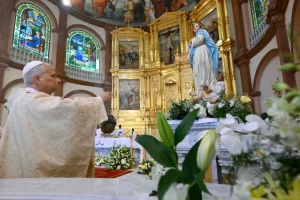
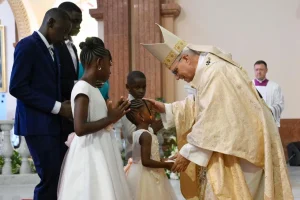
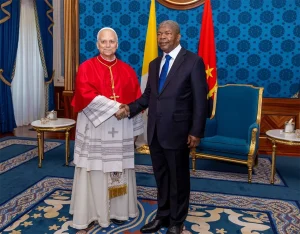
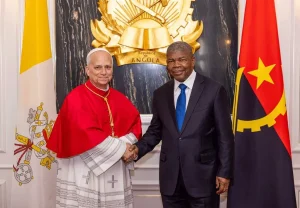
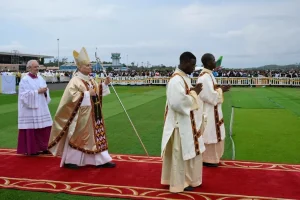
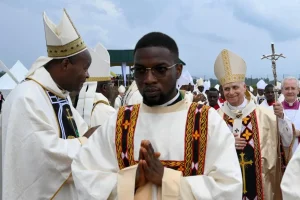
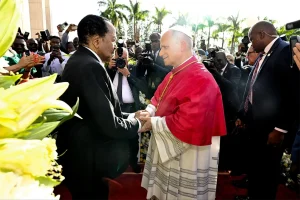
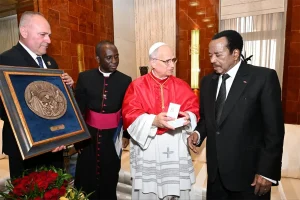
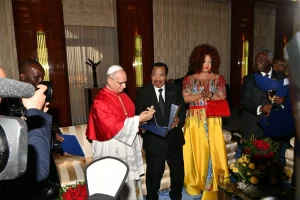
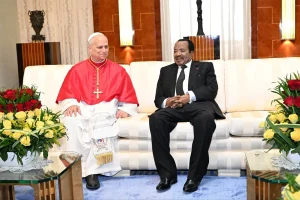
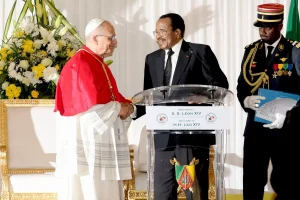
HE came as a pilgrim. He spoke as a prosecutor. On the last full day of what the Vatican has called one of the most logistically ambitious papal tours ever mounted, Pope Leo XIV stood inside the largest church in Central Africa and delivered a verdict that the government hosting him would have preferred he did not utter.
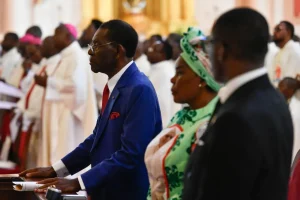
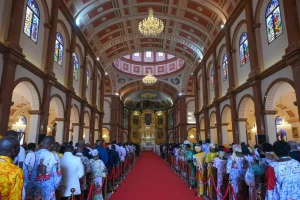
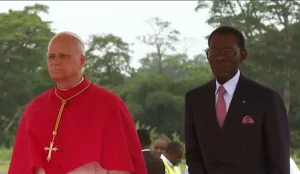
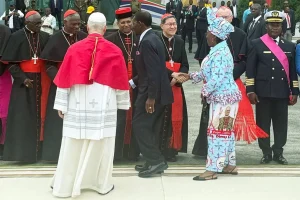
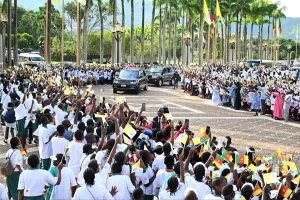
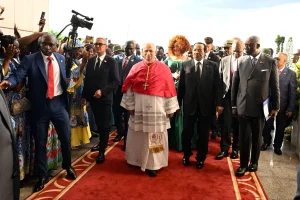
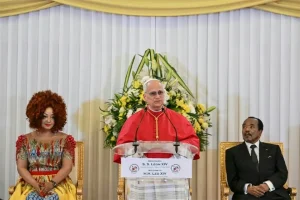
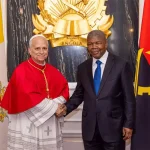
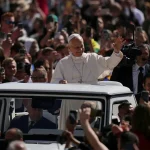
The Basilica of the Immaculate Conception in Mongomo – a grandiose structure modelled on St. Peter’s Square in Rome, built in a country where most citizens live in poverty – became, for a few charged hours on Wednesday, a pulpit of accountability. Speaking before an estimated 100,000 faithful who had pressed into and around the colonnade, and with President Teodoro Obiang Nguema Mbasogo and his son Vice President Teodorin Obiang seated in the front rows, Leo urged Equatorial Guineans to serve the common good rather than private interests, bridging the gap between the privileged and the disadvantaged.’
The optics were nothing short of extraordinary. Teodorin Obiang – convicted in absentia by a French court in 2017 for embezzlement, with more than 100 million euros in assets confiscated – sat in the pews as the pope decried the abuses of the powerful. The elder Obiang, who has ruled this small oil-rich nation since 1979 and is the world’s longest-serving head of state, listened as Leo denounced conditions in which ‘prisoners are often forced to live in troubling hygienic and sanitary conditions.’
THE WEIGHT OF THE FINAL STOP
Equatorial Guinea is not a typical papal destination. The country of 1.8 million people, more than 70 percent of whom identify as Catholic, sits atop substantial offshore oil reserves that transformed it into one of Sub-Saharan Africa’s highest per capita income economies – while producing little of that wealth for ordinary citizens. Human rights organisations have consistently flagged it as one of the most repressive states in Central Africa.
That Leo chose it as the concluding leg of his Africa tour – following stops across the continent – signals something deliberate about his pontificate’s emerging posture. This is not a pope who contents himself with ceremonial solidarity. His tour has been marked by a forceful new speaking style that has taken audiences, governments, and, reportedly, the White House by surprise.
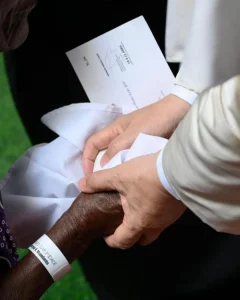
The 70-year-old pontiff, who has already drawn the ire of United States President Donald Trump for his outspoken condemnation of war and despotism, was scheduled on Wednesday afternoon to visit a detention facility in Bata that Amnesty International says regularly holds detainees for years without access to legal counsel. More than 70 non-governmental organisations had published an open letter ahead of that visit, calling on Leo to advocate for the ‘fair, humane and lawful treatment’ of deportees sent to Equatorial Guinea under an agreement the Obiang government struck with the Trump administration – an arrangement that allows Washington to use Equatorial Guinea as a receiving country for deportees from third nations.
A CONFRONTATION WITH QUIET THUNDER
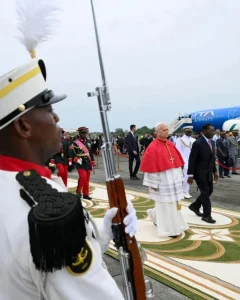
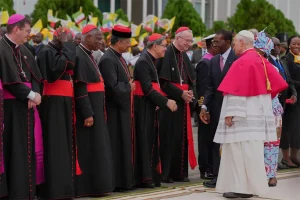
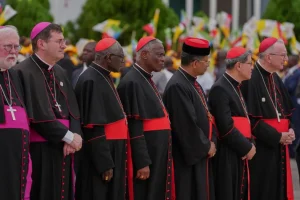
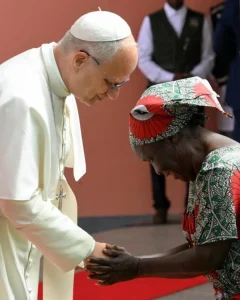
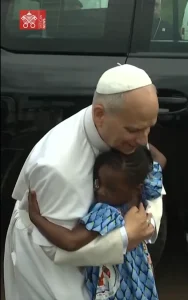
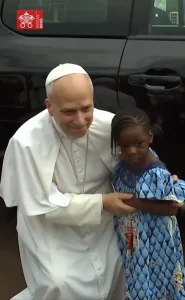
There was nothing subdued about the scene in Mongomo. Organisers released plumes of gold, white, green, and red smoke – the colours of the Vatican and Equatorial Guinea flags – as Leo’s white popemobile arrived. The crowd danced. Among them was Mairano Nve, 70, who expressed pure joy at the pontiff’s presence: ‘It is a huge joy to have the pope visiting us. He just wants to see us and give us a blessing in the name of Jesus.’
But the blessing carried an edge. Experts in papal diplomacy note that Leo’s choice to address inequality and prisoner treatment directly – in the presence of the ruling family – represents a significant departure from the more circumspect approach of his predecessors. The last pope to visit Equatorial Guinea did so in 1982, when Obiang’s authoritarian consolidation was still in its early years.
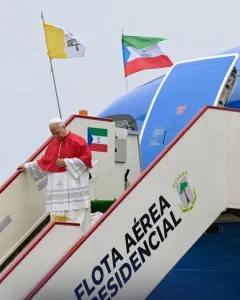
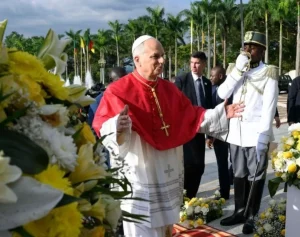
After Mongomo, Leo flew roughly 700 kilometres westward to Bata on the country’s Atlantic coast, where he was also expected to pray at the site of a catastrophic 2021 explosion at a military barracks that killed more than 100 people. The government attributed the disaster to improper ammunition storage; human rights activists have called, without success, for an independent inquiry.
THE LARGER RECKONING
Equatorial Guinea’s relationship with the West – particularly the United States – has long been defined by the pragmatic calculus of oil. American energy companies have been among the most significant players in its offshore sector for decades, and Obiang has enjoyed a degree of diplomatic insulation that few leaders with his human rights record receive. The Trump administration’s deportee arrangement has extended that protection in a new and troubling direction, according to immigration lawyers and civil society organisations.
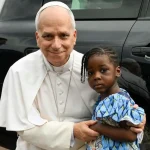
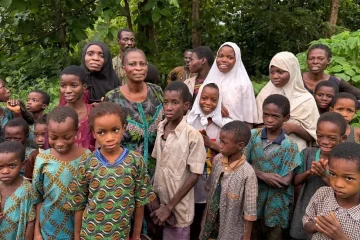
Into this arrangement walked Leo XIV – an American-born pope, standing on African soil, speaking the language of the Global South. His presence in Equatorial Guinea was, at one level, pastoral. At another, it was a geopolitical statement: that the universal church does not trade its moral voice for access, and that the poor of Mongomo and the prisoners of Bata are not footnotes to be managed but human beings whose dignity demands witness.
Whether the Obiang government hears that witness as more than a ceremony remains to be seen. Governments accustomed to performative tolerance of criticism rarely change course after a single homily. But the record now exists – spoken aloud, in the largest church in Central Africa, by a pope whose Africa tour covered nearly 18,000 kilometres across 11 cities in four countries, and who chose to end it not with pleasantries, but with a demand.
The gold smoke had barely cleared over Mongomo when the popemobile moved on. The words, however, will linger.