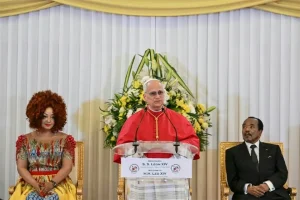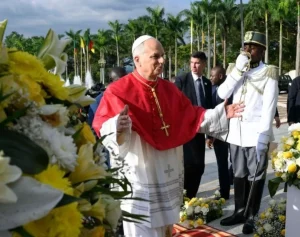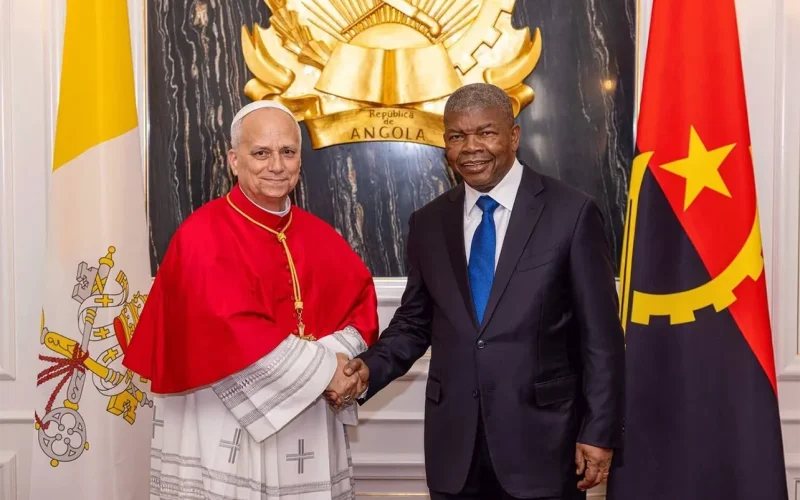
WHEN Pope Leo XIV stood before Angola’s government authorities and said the word “extractivism,” he was not offering a diplomatic pleasantry. He was indicting a system.
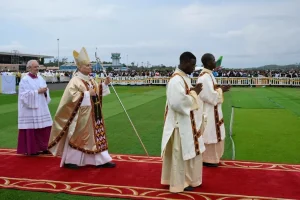
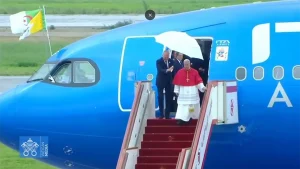
“How much suffering, how many deaths, how many social and environmental disasters are brought about by this logic of extractivism?” the pontiff declared in Luanda, as he completed the third leg of a historic four-nation African voyage that has already taken him through Algeria and Cameroon.
The word itself – extractivism – carries enormous analytical weight in African political economy. It describes the colonial and post-colonial logic by which Africa’s vast natural endowments are drawn out of the continent to enrich interests elsewhere, leaving behind broken ecosystems, stunted economies, and populations living in poverty amid plenty. That a sitting Pope, in the presence of a sitting African head of state, chose to deploy it so deliberately was not accidental. It was a homily and an indictment in the same breath.
“How much suffering, how many deaths, how many social and environmental disasters are brought about by this logic of extractivism.”
Pope Leo XIV, Luanda
Angola is, in many ways, the perfect stage for this message. The oil-and-mineral-rich former Portuguese colony gained independence in 1975, only to be plunged immediately into a civil war that burned for 27 years and is estimated to have killed more than half a million people. That war was not merely a domestic tragedy – it was a Cold War proxy conflict, fought with American and apartheid South African guns on one side and Soviet and Cuban support on the other. Africa’s body, again, as a site of others’ ambitions.
Today, Angola ranks as the fourth-largest oil producer in Africa and among the top 20 globally, according to the International Energy Agency. It is the world’s third-largest diamond producer, with significant deposits of gold and critical minerals that the global green transition has made newly coveted. Yet according to World Bank data from 2023, more than 30 percent of Angola’s 38 million people live on less than $2.15 a day.
That chasm – between what lies beneath Angola’s soil and what lands on Angolan tables – is precisely what Leo named. “You know well that all too often people have looked – and continue to look – to your lands in order to give, or, more commonly, in order to take,” he told Angolan authorities, in a formulation that collapsed five centuries of history into a single sentence.
“Your people possess treasures that cannot be bought or stolen. There dwells within you a joy that not even the most adverse circumstances have been able to extinguish.”
Pope Leo XIV
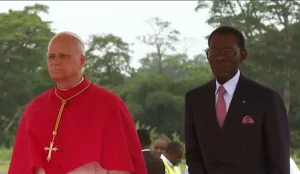
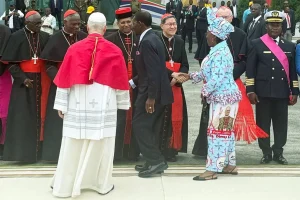
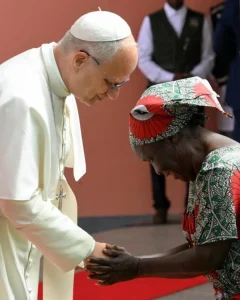
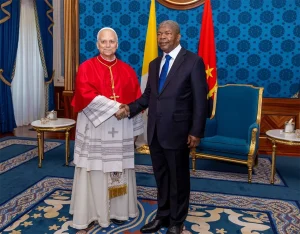
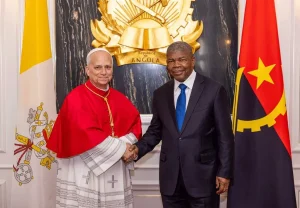
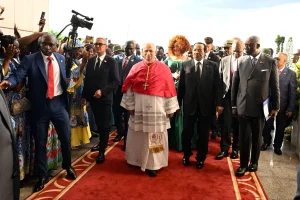
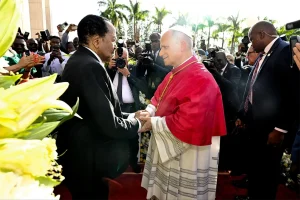
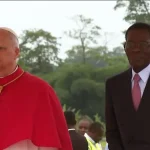
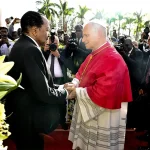
Angola’s President João Lourenço received the pontiff and sat with him as Leo also spoke of the dignity Angolans had preserved through their suffering. “I desire to meet you in the spirit born of peace and to affirm that your people possess treasures that cannot be bought or stolen,” Leo said. “There dwells within you a joy that not even the most adverse circumstances have been able to extinguish.”
The Angola address is consistent with – and deepens — a running thematic thread across the entire African tour. In Algeria, Leo engaged with the question of African sovereignty and the right of nations to chart their own development paths. In Cameroon, he addressed the corrosive effects of corruption and the structural conditions that keep African economies dependent. The cumulative effect is a papal critique that refuses to treat Africa’s poverty as a natural condition or a consequence of African failings, locating it instead in systems of extraction that long predate independence and that, as Leo’s word choice makes clear, have not ended.
The Vatican’s choice of nations – Algeria, Cameroon, Angola, and a fourth stop to follow – is itself an editorial statement. These are not the Africa of safari tourism or international charity appeals. They are resource-rich, geopolitically complex nations whose relationships with former colonial powers, global financial institutions, and great-power rivals remain live and contested. Leo is not visiting a postcard. He is visiting a wound.
Leo and Trump: Peace as Counter-Narrative
En route from Cameroon to Angola, Leo spoke again about the ongoing exchange between himself and United States President Donald Trump over the Iran war. As history’s first American-born pontiff, Leo occupies an unusual position: a moral authority who shares a nationality with the most powerful actor in a conflict that has roiled global energy markets and imposed severe downstream costs on African economies and citizens.
Leo said that it was “not in my interest at all” to engage in a debate with Trump, but that he would continue preaching — in Africa and elsewhere — the Gospel message of peace, justice, and brotherhood. The formulation was precise: not silence, not submission, but a counter-witness conducted through presence and proclamation rather than through Twitter battles or press conferences. It is a model of moral authority that speaks to the audience in front of it rather than the one at home.
For African audiences, the symbolism of a Pope arriving from a continent convulsed by an American-driven war — to speak about extraction, suffering, and dignity — is unlikely to be lost.
The Weight of a Word
Popes have visited Africa before. They have prayed, consoled, and encouraged. They have spoken of poverty and dignity. But the word extractivism crosses a line that most papal language carefully avoids — from pastoral comfort into structural critique.
It is a word that African economists, liberation theologians, post-colonial scholars, and activist movements have used for decades. Hearing it from a pontiff in Luanda, in the presence of a head of state, with cameras rolling and the world watching — that is a different kind of event.
Whether Leo’s African interlocutors — governments, civil society, the faithful in the pews — will hold him to the implications of that word is the question that will outlast the visit. Extractivism, after all, requires extractors. And some of them attend Mass.