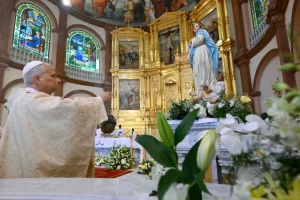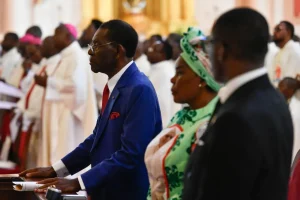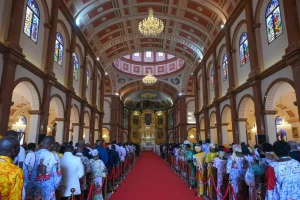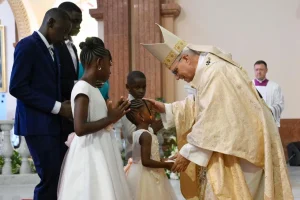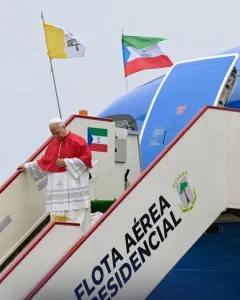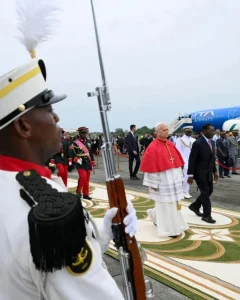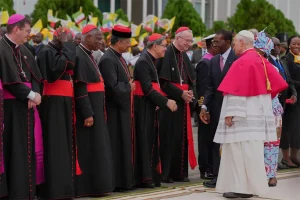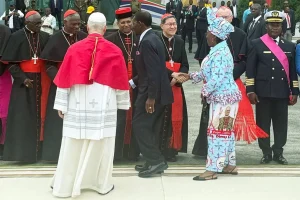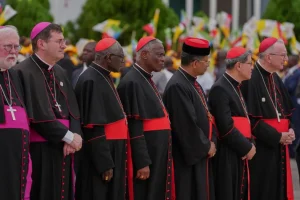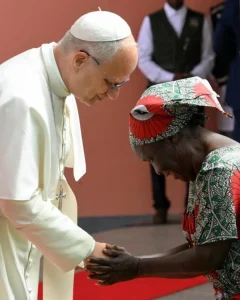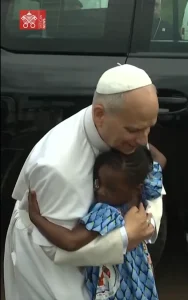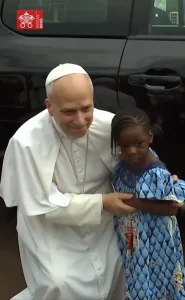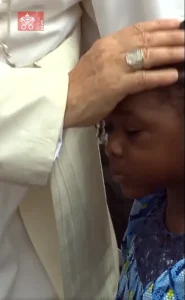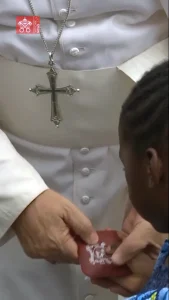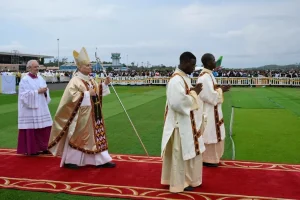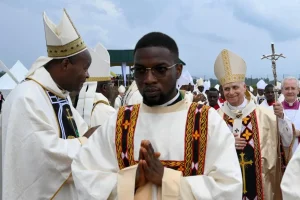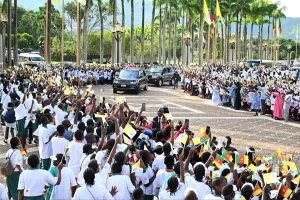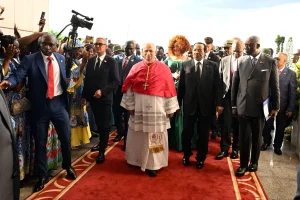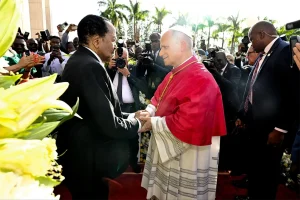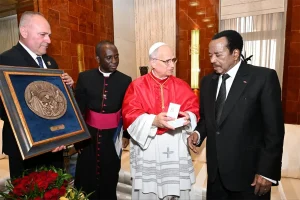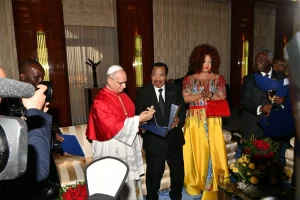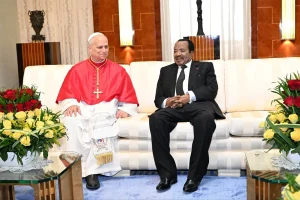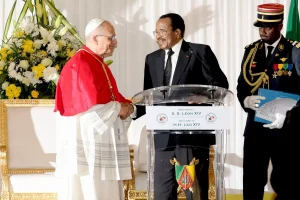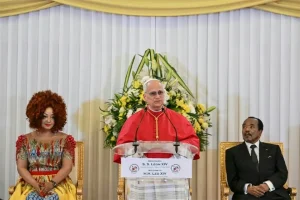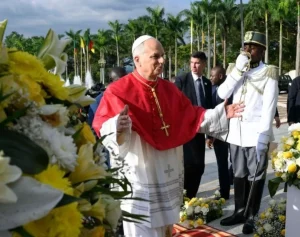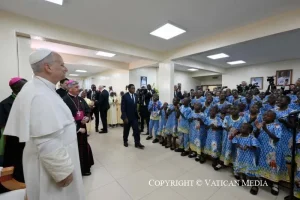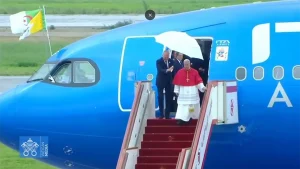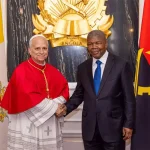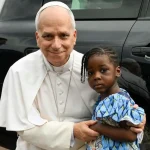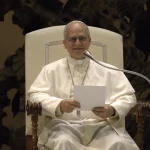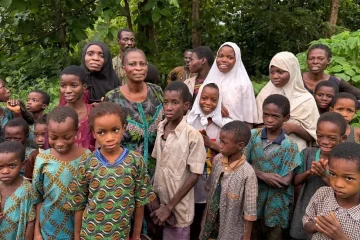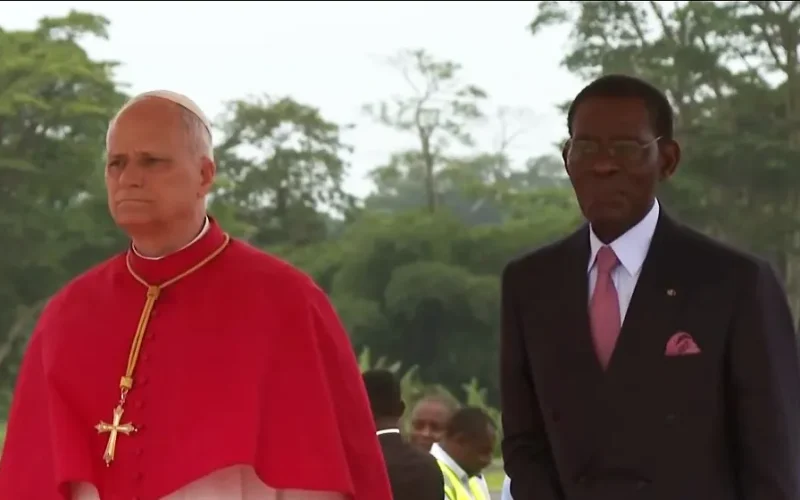
WHEN Pope Leo XIV touched down in Malabo on Tuesday for the final stop of his four-nation Africa tour, the choreography was familiar: motorcade, dignitaries, cathedral. But the words that followed belonged to a different kind of papal visit – one shaped less by pastoral comfort than by an increasingly urgent moral reckoning with the state of the world.
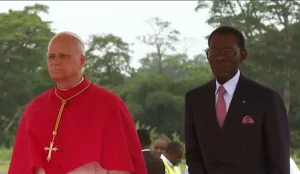
Standing before Equatorial Guinea President Teodoro Obiang Nguema Mbasogo – one of Africa’s longest-serving and most widely criticised leaders – the head of the 1.4-billion-member Catholic Church delivered a blunt verdict on the direction of global affairs. Humanity’s future, he warned, risked being “tragically compromised” without a fundamental change in how political responsibility is exercised and international law upheld.
It was a message addressed, in the first instance, to a Saharan statehouse. But no attentive listener could mistake its reach. In the context of an ongoing war in the Middle East, fracturing multilateral institutions, and a global south increasingly impatient with the double standards of great-power politics, Leo’s words landed like a political tract dressed in homily.
A Tour That Found Its Voice
Leo’s ten-day Africa visit was always going to be historic. The first American pope – who spent formative decades as a missionary in Peru before ascending to the papacy – had chosen Africa as the destination for one of his earliest and most ambitious international tours, a pointed statement about where the Church sees its gravitational centre shifting.
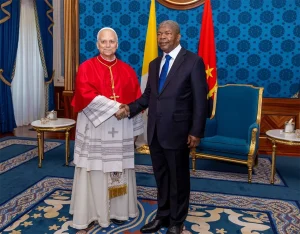
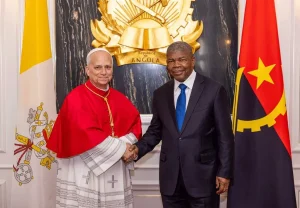
What observers did not fully anticipate was the tone that would emerge. From his opening engagements, Leo adopted what Vatican correspondents have described as a new and distinctly forceful register – part moral philosopher, part geopolitical critic. In Angola on Monday, he declared that millions across the world were being “exploited by authoritarians and defrauded by the rich” – a formulation that seemed, to many who heard it, to reach well beyond his immediate African hosts.
In Malabo, he sharpened that critique further, decrying what he called the “colonisation” of the Earth’s oil and mineral resources – language with particular resonance on a continent whose modern history has been shaped, in substantial measure, by precisely that dynamic. Equatorial Guinea, ironically, is itself a small oil-producing state whose offshore wealth has done little to lift the majority of its 1.8 million people.
Religion, War, and the Question of Whose God
Perhaps the most striking thread running through Leo’s Africa tour has been his repeated insistence that religious language cannot be conscripted into the service of violence. In Malabo, he stated that God’s name must never be invoked “to justify choices and actions of death” – echoing remarks he made in March, when he said God rejects prayers from leaders with “hands full of blood.”
Those earlier comments generated significant controversy in conservative Catholic circles in the United States, where they were widely interpreted as directed at Defence Secretary Pete Hegseth, who has invoked explicitly Christian language to frame America’s war against Iran. Leo has, in recent weeks, emerged as a growing and increasingly direct critic of that conflict.
The political subtext was sharpened by timing. On the same day Leo delivered his Malabo address, President Donald Trump – who has made no secret of his irritation with the pope’s outspokenness – was scheduled to host a livestreamed Bible reading at the White House. The juxtaposition was not lost on analysts watching both men claim the moral authority of scripture for starkly different ends.
Speaking Truth in a Repressive State
There is a certain audacity in delivering these messages in Equatorial Guinea. Obiang has governed since 1979, making him one of the longest-serving heads of state on earth. His government has faced persistent allegations of human rights abuses and corruption – all of which it denies.
Leo’s itinerary for Wednesday in Bata signals he is under no illusions about the country he is visiting. He is scheduled to tour a high-security detention centre that Amnesty International has identified as one of three notorious facilities where detainees – including political prisoners – are routinely held for years without access to lawyers or family. He will also pray at the site of the 2021 Bata barracks explosions that killed more than 100 people; human rights groups have long called, without success, for an independent investigation.
Human rights lawyer Tutu Alicante, originally from Equatorial Guinea, put the stakes plainly: the pope’s presence created an opportunity to affirm that human dignity, justice, and accountability were not optional features of governance, but essential ones.
Africa as Platform, Not Afterthought
The broader significance of this tour may ultimately lie not in any single speech, but in what Leo’s choice of venue signals about the papacy’s emerging posture. Africa is home to the fastest-growing Catholic communities on earth – and a continent that bears, with disproportionate severity, the consequences of the wars, resource extraction, and institutional decay Leo has been railing against.
By choosing to make Africa the theatre for these arguments – speaking about resource colonisation from the Gulf of Guinea, about authoritarianism from Luanda, about the corruption of religious language from a continent that has seen holy war weaponised from the Sahel to the Horn – Leo has done something his recent predecessors rarely attempted. He has allowed the context to sharpen the content.
As he prepares to leave Africa and return to Rome, the world he addressed from Malabo will be watching to see whether the momentum holds. The words were powerful. Whether they translate into the kind of sustained moral pressure that reshapes political behaviour is a different question entirely – one that history, on this continent more than most, has given every reason to ask.