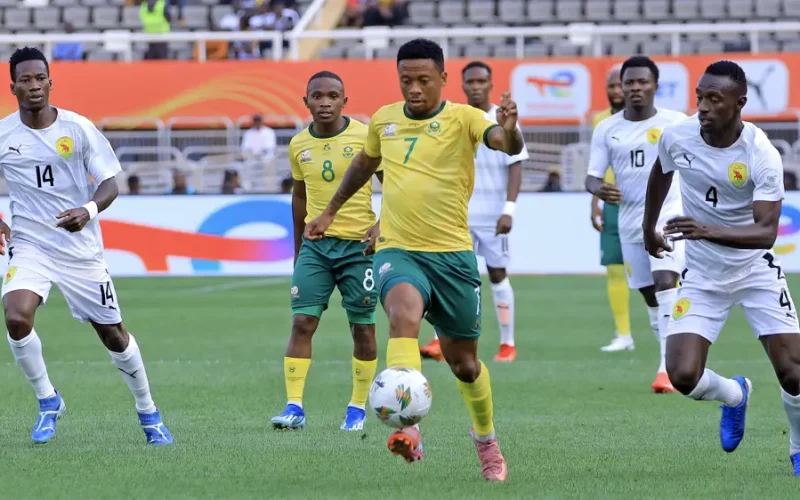
THE afternoon sun blazed down on Kampala as South Africa stepped onto the Mandela National Stadium pitch carrying the weight of a nation’s expectations and the burden of sitting rock-bottom in Group C. What followed was a masterclass in resilience that breathed new life into their tournament dreams.
From the first whistle, Molefi Ntseki’s warriors hunted in packs, pressing high and refusing to let Guinea settle into any rhythm. The early aggression paid dividends in spectacular fashion. Just ten minutes in, the dynamic duo of Thabiso Kutumela and Neo Maema combined with telepathic understanding – Kutumela’s clever link-up play releasing Maema, who buried a composed left-footed strike into the bottom corner with surgical precision.
The stadium erupted as Bafana Bafana fans finally had something to celebrate, but Guinea had other plans. The Syli Nationale showed exactly why they earned their place at these finals, weathering the South African storm before striking back with venom. Mohamed Bangoura I sliced through the defense like a hot knife through butter in the 37th minute, his incisive pass finding Moussa Camara, who drove a thunderous shot into the far corner past the helpless Samukelo Xulu.
The equalizer shifted the momentum dramatically, with Guinea finishing the first half on the front foot, their attacking verve threatening to overwhelm the South African backline. But championship teams are forged in moments of adversity, and Bafana Bafana emerged from the tunnel with fire in their bellies.
Nine minutes into the second half, Wayde Jooste delivered a cross that was pure poetry in motion. Finding Kutumela unmarked in the box, the striker coolly slotted home his second CHAN goal with the composure of a seasoned marksman. It was a moment of pure class that underlined his growing influence in Ntseki’s tactical setup.
What followed was a heart-stopping finale that had spectators on the edge of their seats. Guinea threw caution to the wind, introducing fresh legs in Mohamed Diabate, Cheick Camara, and Yakhouba Barry. The pressure was relentless – Diabate’s close-range header in the 88th minute and Mohamed Bangoura II’s fierce drive moments later forcing spectacular interventions from Xulu, who stood like a colossus between the posts.
In the dying moments, Cheick Camara’s towering header drifted agonizingly over the crossbar, and as the final whistle pierced the Kampala air, the Bafana Bafana bench erupted in jubilant celebration. Four points now separated them from elimination – a remarkable turnaround from their tournament nadir.
Uganda’s Ascension: The Cranes Soar Past Niger 2-0
As the floodlights illuminated the Mandela National Stadium for the evening encounter, Uganda stepped onto their home turf carrying the hopes of a nation and the momentum of their stunning opening victory against Algeria. What unfolded was a masterpiece of tactical discipline and clinical execution that sent the Cranes soaring to the summit of Group C.
From the opening minutes, Morley Byekwaso’s charges played with the swagger of a team that had found their identity. The 4-3-3 formation stretched Niger’s defense to breaking point, with Jude Ssemugabi causing havoc across the front line and Enock Ssebagala orchestrating proceedings from the midfield engine room.
The pivotal moment arrived on the 20-minute mark when Reagan Mpande was bundled over in the penalty area. After a VAR review confirmed the offense, Allan Okello stepped up with the weight of 40,000 expectant fans on his shoulders, only for Mahamadou Tanja to produce a stunning save, diving low to keep out the left-footed penalty.
But champions are defined by how they respond to adversity, and Okello’s reaction was nothing short of magnificent. Two minutes later, displaying the predatory instincts that mark out elite strikers, he ghosted into the six-yard box to head home from close range, restoring the stadium’s thunderous atmosphere and Uganda’s momentum in one fell swoop.
Niger, to their credit, refused to fold. Joel Mutakubwa was called into action to push away Mohamed Abdouramane’s firm header, but the Cranes’ defensive unit, marshaled superbly by center-backs Gavin Kizito and Hilary Mukundane, stood firm under pressure.
The killer blow came in the 56th minute, a move that showcased Uganda’s devastating counter-attacking prowess. Winning possession in midfield, Okello carried the ball forward with purpose before threading a precision pass into Joel Sserunjogi. The winger’s first touch was sublime, his finish even better – a thunderous strike into the top-left corner that gave Tanja no chance and sent the home crowd into delirium.
The final half-hour saw Uganda display the tactical maturity that has transformed them from tournament outsiders into genuine contenders. Byekwaso’s substitutions were perfectly timed – Elvis Ngonde shoring up the left flank, Patrick Kakande adding fresh legs in midfield, and late introductions of Arafat Usama and Ivan Ahimbisibwe expertly running down the clock.
Niger’s late surge, energized by the introduction of Salifou Danja and Théodore Jules, created moments of anxiety, but Uganda’s defensive shape rarely cracked. Mutakubwa’s late saves preserved a second consecutive clean sheet, capping a performance that announced the Cranes as genuine title contenders.
The New Group C Landscape
As the Kampala night air filled with celebration, the implications of Monday’s double-header became crystal clear. Uganda now sit majestically atop Group C with six points from three matches, their destiny firmly in their own hands. Behind them, Algeria and South Africa battle for second place on four points each, while Guinea’s dreams hang by the finest of threads on three points. Niger, still searching for their first goal of the tournament, remain bottom but far from eliminated.
The transformation has been remarkable – Uganda’s evolution from opening-day disappointment against Algeria to commanding group leaders, and South Africa’s resurrection from bottom-dwellers to genuine qualification contenders. In the pressure cooker of tournament football, both teams have discovered reserves of character that could carry them deep into the knockout stages.
With one round of group matches remaining, Group C has evolved into a fascinating tactical chess match where every pass, every tackle, and every decision could determine which dreams survive and which are shattered on the unforgiving stage of African football’s most prestigious championship.
The stage is set for a thrilling climax.