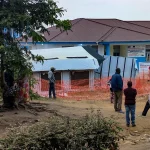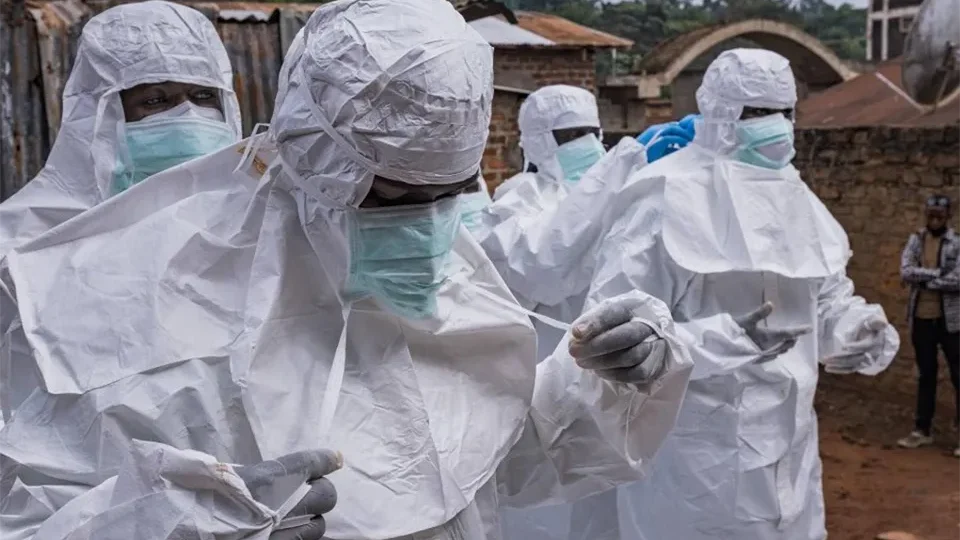

ON a dirt track outside Bunia, a health worker’s boots track the same footprints left by family members who rushed to help a sick relative – then watched them die. Two weeks into a rare Ebola flare‑up of the Bundibugyo strain, the Democratic Republic of Congo (DRC) and neighbouring Uganda are confronting not only a lethal virus but the social fault lines that allow it to spread.
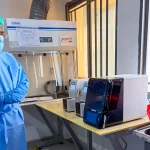
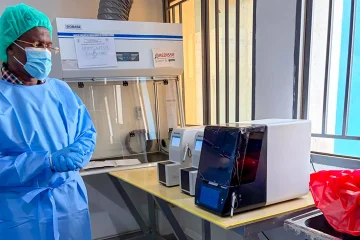
WHO figures show 125 confirmed cases and 17 confirmed deaths so far, with 906 suspected cases and more than 223 suspected deaths under investigation as laboratories scale up testing. That gap between confirmed and suspected cases is not only technical; it is the difference between an isolated patient getting care and an entire community being left in the dark.
“It’s a disease that you get when you care for someone, for your husband or your partner or your child or your mother,” Anaïs Legand, a WHO technical officer, told reporters in Geneva. Her words capture the grim dilemma facing families: the instinct to touch and comfort is the same action that transmits the virus. For a disease whose lethality from past outbreaks ranges between roughly 30 and 50 percent, the cost of caregiving can be fatal.
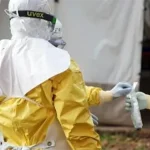
WHO teams are racing on two fronts: urgently scaling up clinical care and mobilizing communities to recognize symptoms early. “Five out of 10 people are likely to die,” Legand said. “But we can do more: optimized intensive supportive care, earlier diagnostics, and community awareness can save lives.” She cited a recent recovery and discharge in the DRC as evidence that timely treatment and community cooperation can change outcomes.
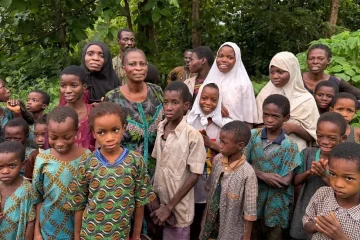
Behind those clinical tools lies a shortage of access. The outbreak sits inside a humanitarian emergency. In Ituri province alone, 1.2 million people need assistance. Ongoing conflict, food insecurity and constrained logistics make moving staff, fuel and medical supplies a daily battle. Bunia’s airport has been closed to commercial traffic; humanitarian flights are permitted but field teams still face delays and dangerous conditions. “One day I got a call from my team telling me there is no fuel,” Legand said — a small detail that can mean the difference between a functioning treatment centre and patients turned away.
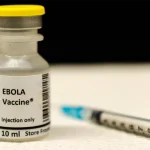
WHO’s scientific response is moving in parallel. Experts have identified three therapeutics for prioritised clinical trials in confirmed cases: the monoclonal antibodies MBP134 and maftivimab, and the antiviral remdesivir. For post‑exposure prevention, the oral antiviral obeldesivir is being evaluated in a clinical study for people who had contact with confirmed cases. Two vaccine candidates have also been earmarked for evaluation once doses are available. But these options are still under review and will be effective only if they reach people quickly — a challenge in conflict‑affected zones.
Cross‑border risk has already appeared. Uganda has reported seven confirmed cases, including one death; three were imported from the DRC, while others are linked to contacts. WHO says there is currently no evidence of sustained community transmission in Uganda, but the cases underline how porous borders and family networks can carry infection from one household to the next, and from one country to another.
WHO Director‑General Tedros Adhanom Ghebreyesus urged armed groups to declare a ceasefire so health workers can access communities. The plea highlights a bitter reality in outbreaks that are both biological and political: medical supplies and tests are meaningless if health teams cannot reach the sick.
The agency has not recommended travel or trade restrictions with the DRC or Uganda, noting that people who may have been exposed should avoid travel. But in towns where water, food and health services are already scarce, the indirect effects of an outbreak can be swift and cruel: markets shutter, clinics divert resources to isolation, and caregivers face the moral agony of forced distance from loved ones.
For families on the frontlines, the calculus is heartbreakingly simple. To touch is to comfort; to comfort can mean contagion. Public‑health measures—rapid diagnostics, access to supportive care, clinical trials of therapeutics and vaccines, and intensive community engagement—are the only realistic way to break that deadly paradox. Yet without secured access, fuel, and the cooperation of local communities and armed factions, those measures may remain words on a briefing note rather than life‑saving interventions.
As WHO and UN partners step up support to the DRC and Uganda, the coming weeks will test whether medical advances can be delivered where they are needed most — and whether communities, already strained by conflict and hunger, can be persuaded that helping their sick sometimes means stepping back. The human cost of delay is already visible in the funeral pyres, in the empty chair at a family table, and in the weary voices of health workers who cannot get a truckbed full of fuel to a clinic in time.