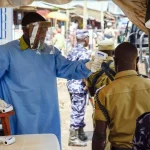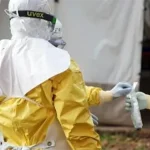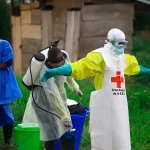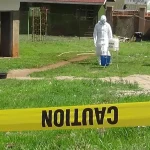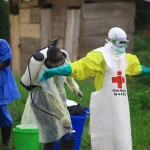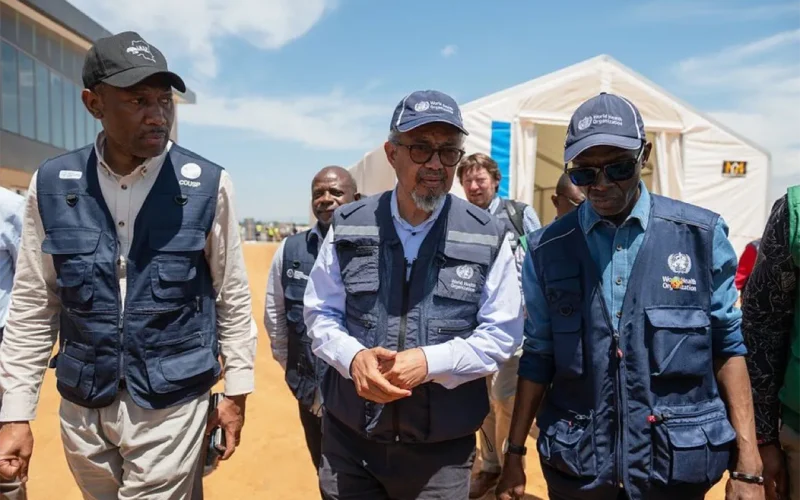
WHEN Dr Tedros Adhanom Ghebreyesus, the Director-General of the World Health Organization, stepped off his plane in Bunia on Saturday – the dust-choked capital of Ituri Province in the eastern Democratic Republic of Congo – he was entering the eye of a gathering storm. The city is the administrative hub of what has become the most dangerous Ebola hotspot on earth: the epicentre of the DRC’s 17th declared Ebola outbreak, and the first anywhere in the world caused by the rare and particularly lethal Bundibugyo virus strain.
His three-day mission – beginning in Kinshasa on Thursday, before pushing forward to the front line – was as much symbolic as operational. In a crisis where confidence is collapsing, funding is haemorrhaging, and the disease itself is outpacing the response, the presence of the world’s top health official in a conflict zone carries weight that no press release can replicate.
In Bunia, Tedros met with Lieutenant-General Johnny Luboya Nkashama, the Governor of Ituri Province, whose territory is currently reporting the highest concentration of cases in the ongoing outbreak. In a statement shared on social media on Saturday, Dr Tedros set out the full scope of what was discussed — and what it revealed about the terrifying complexity of this crisis.
“I had the opportunity to meet with Lieutenant-General Johnny Luboya Nkashama, the Governor of Ituri, which is currently the province in the DRC reporting the highest number of cases in the ongoing Ebola outbreak caused by the Bundibugyo virus. I want to express my appreciation for his strong leadership during this complex crisis, which is further complicated by internal conflict and significant population displacement. During our discussions, we agreed that a key priority for responding to the outbreak is to enhance the coordination among all health and humanitarian actors, ensuring their operations align with the government’s overall leadership in managing this response. I emphasized to WHO and our partners in Ituri the importance of actively listening to and supporting the community. The local population is best equipped to articulate their needs and to identify effective solutions for containing the outbreak.”
Dr Tedros Adhanom Ghebreyesus, WHO Director-General, Bunia, 30 May 2026
Tedros’s words reveal a crisis within a crisis. The Bundibugyo virus does not spread through the air. It requires direct contact with the bodily fluids of the infected — a biological reality that, under normal circumstances, makes containment theoretically achievable. But eastern DRC is not a normal circumstance. Ituri Province sits at the intersection of armed group insurgency, humanitarian catastrophe, and chronic institutional weakness. The province has seen waves of militia violence for years, with hundreds of thousands of civilians displaced. Health workers cannot reach those they need to reach; sick people cannot reach care they cannot trust.
A Virus Without a Vaccine
The Bundibugyo strain makes this outbreak particularly alarming in ways that distinguish it sharply from better-known Ebola outbreaks. Unlike Ebola virus disease — which devastated West Africa in 2014-2016 and eastern DRC in 2018-2020 — the Bundibugyo strain has no licensed vaccine and no approved therapeutic. The rVSV-ZEBOV vaccine that successfully suppressed the Kivu outbreak does not work against this strain.
Case fatality rates in previous Bundibugyo outbreaks have ranged from 30 to 50 percent. Among the confirmed cases in this outbreak, the figure currently stands at approximately 14 percent — but authorities warn this number is deeply unreliable given the scale of suspected cases that have not been laboratory-confirmed. Only seven percent of identified contacts are currently being traced, according to outbreak trackers. The true mortality burden almost certainly lies far higher.
The WHO itself acknowledged early in the outbreak that the virus had likely been circulating for some time before detection. On 5 May 2026, the organisation was first alerted to a high-mortality illness of unknown origin in Mongbwalu Health Zone. Confirmation of the Bundibugyo virus came ten days later. By that point, the disease had already seeded itself across at least three health zones in Ituri — Mongbwalu, Rwampara, and Bunia — and had exported cases to Kampala, Uganda.
Scale of the Outbreak: The Numbers Behind the Crisis
As of 30 May 2026, the picture across both DRC and Uganda is severe and worsening:
• DRC: 1,077 suspected cases; 246 suspected deaths; 125 confirmed cases; 17 confirmed deaths — spread across Ituri, North Kivu, and South Kivu provinces.
• Uganda: 9 confirmed cases; 1 confirmed death — at least three linked to travel from DRC, with healthcare workers among those infected in Kampala.
• International cases: An American national working in DRC tested positive and was evacuated to Germany for care.
The WHO has declared a Public Health Emergency of International Concern (PHEIC) — its highest alert level — while the Africa Centres for Disease Control and Prevention declared a Public Health Emergency of Continental Security. The risk is assessed as “very high” at the national level in DRC, “high” regionally, and “low” globally — though experts warn that the global assessment could rapidly shift if containment fails.
The outbreak’s first confirmed recovery was recorded this week, offering a rare moment of cautious hope. The WHO is working with DRC and Uganda to assess experimental drugs and a candidate vaccine — but clinical pathways for either remain at an early stage.
A Funding Crisis That Could Prove Fatal
Tedros arrived in Bunia having already sounded the alarm over money. Speaking earlier in the week, he revealed that the WHO had received only one-third of its funding requirements for the response. The numbers behind that warning are stark.
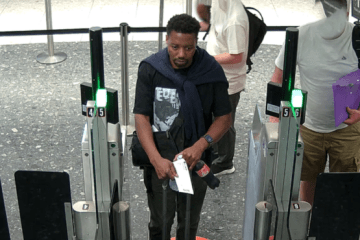
Africa CDC reports that global funding for the response has more than halved — from $498 million to $219 million. The United States, meanwhile, has committed $112 million — including an additional $80 million announced this week — making Washington one of the largest single donors. But the US commitment has come alongside some of the most restrictive travel measures imposed by any government, including a ban on green card holders who have recently visited DRC, Uganda, or South Sudan — measures the WHO has explicitly advised against.
Tedros has consistently opposed border closures, warning they undermine the transparent early reporting that is essential to outbreak containment. “We have stopped every Ebola outbreak,” he has said, but the implicit message is that a starved and stigmatised response may struggle to maintain that record.
The Kenya Quarantine Controversy and a Divided World
The geopolitical dimensions of the outbreak spilled into public view this week when a Kenyan court temporarily blocked US plans to establish an Ebola quarantine facility on Kenyan soil. A lawsuit filed by Kenyan health advocates argued the site posed unacceptable public health risks. The plan had received written approval from the Kenyan government, but faced intense domestic backlash. The US has stated it will not repatriate American Ebola patients — those confirmed positive will instead be directed to the Kenya facility or transferred to partner facilities in Europe.
The controversy reflects the broader geopolitics of the outbreak: a Global South country carrying disproportionate disease burden, navigating sovereignty concerns while wealthy nations design containment infrastructure on African soil, largely on their own terms.
On a separate but related diplomatic front, North America’s response to the approaching FIFA World Cup — set to begin in the United States in under three weeks — is drawing attention. Health officials have flagged the absence of an adequate preparedness plan specific to Ebola, even as the US, Canada, and Mexico align their travel screening measures. DRC’s football team has been based in Belgium for months, posing no epidemiological risk, but the convergence of a global sporting event with a PHEIC has injected additional urgency into the coordination discussions.
Conflict, Displacement, and the Battle for Community Trust
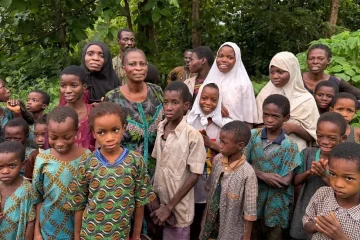
At the centre of Tedros’s message from Bunia — and arguably the most important insight from his visit — is the question of community ownership. Eastern DRC has been shaped for decades by cycles of militia violence, state fragility, and humanitarian crisis. The very conditions that make Ebola so dangerous here — insecurity, displacement, distrust of authority — also make community engagement the only viable path to containment.
The WHO Director-General’s call for enhanced coordination among health and humanitarian actors, aligned to Kinshasa’s national leadership, reflects lessons painfully learned during the 2018-2020 Kivu outbreak, when fragmented response operations and community resistance were identified as critical factors in that outbreak’s prolonged duration.
There are five schoolchildren among the dead. DRC authorities have refused to close schools in Ituri, with Health Minister Kamba citing the priority of preventive measures over closures. Only seven percent of identified contacts are currently being traced — a figure that speaks to the operational gulf between the scale of the crisis and the resources deployed to fight it.
Armed groups in the region have been called upon by Tedros to observe a ceasefire to allow health workers access to affected communities. “People are dying from Ebola who do not have to die,” he said. It is a statement of humanitarian urgency but also of institutional frustration — the tools to stop this outbreak exist; what is lacking is the space, the access, and the sustained financial commitment to deploy them.
The African Mirror Analysis: What This Outbreak Tells the World
The 2026 Bundibugyo Ebola outbreak in the DRC is not, at its heart, a story about a virus. It is a story about the intersection of governance failure, chronic underfunding of African public health infrastructure, the consequences of armed conflict on civilian populations, and the persistently unequal architecture of global health response.
The DRC has now declared 17 Ebola outbreaks since the disease was first identified in 1976 — more than any other country on earth. Each one has revealed the same underlying vulnerabilities: an overstretched health system, insufficient community trust, inadequate international solidarity, and the compounding horror of insecurity in affected zones. Each one has also, eventually, been stopped.
Dr Tedros’s presence in Bunia is significant precisely because it is unusual. The personal diplomacy of the WHO chief — meeting a provincial governor who is simultaneously a military commander, navigating the politics of Kinshasa and the realities of Ituri, pressing for a ceasefire while making the case for community ownership — reflects the full complexity of what it takes to stop a haemorrhagic fever in a conflict zone.
The question now is whether the world’s attention, and its money, will match its rhetoric. A response that has received less than half its required funding, in which barely one in fourteen contacts is being traced, against a virus without a vaccine, in a province where armed groups control the terrain — this is a response under severe stress. The first confirmed recovery is a moment to hold. But with 1,077 suspected cases and a true extent that the WHO itself warns may be “much wider,” the margin for complacency is zero.
Africa has stopped every Ebola outbreak it has faced. The continent’s health workers, community mobilisers, and epidemiologists carry that record with justifiable pride. The Bundibugyo strain of 2026 is testing that record in the harshest possible terms.