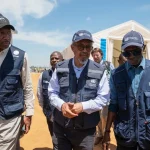
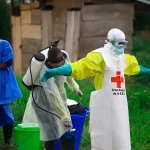
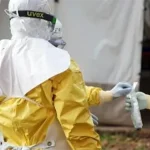
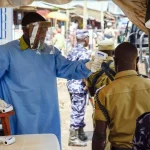
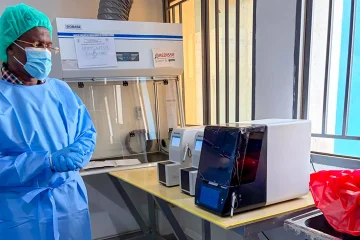
HEALTH workers are scrambling to contain a rapidly expanding Ebola outbreak in the eastern Democratic Republic of the Congo, even as scientists race to fast-track a potential vaccine that remains at least two months away – an eternity in an epidemic already crossing international borders.
The World Health Organisation declared the outbreak a public health emergency of international concern on Sunday, its highest alert level, citing what WHO Director-General Dr Tedros Adhanom Ghebreyesus called the “scale and speed of the epidemic.” The declaration unlocks international resources and coordination, but it cannot conjure what the outbreak most urgently needs: an approved therapeutic.
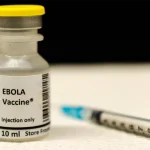
The pathogen at the centre of the crisis is the Bundibugyo virus, a species of Ebola for which no vaccine or treatment currently exists. That distinction is critical. It separates this outbreak from the better-known Zaire strain, against which the Ervebo vaccine provides proven protection. Health authorities are now examining whether Ervebo might offer cross-protection – but even under the most optimistic scenario, it could not be deployed for two months.
“It is not two months before the outbreak will be done,” Dr Anne Ancia, WHO’s representative in the DRC, told reporters in Geneva on Tuesday, in a pointed reminder of what two months can mean. “Remember the previous one, it took two years.”
The numbers and the uncertainty
More than 500 suspected cases have been recorded, including 130 suspected deaths. Yet only 30 cases have been confirmed – a gap that underscores how much remains unknown about the true scale of the outbreak.
“We have significant uncertainty about the number of infections and how far the virus has spread,” Dr Ancia said.
That uncertainty was itself partly caused by a diagnostic failure at the outbreak’s origin. Early tests conducted locally in Bunia, the capital of Ituri province, where the first cases were detected, returned negative results – because they were calibrated for the Zaire strain of Ebola. It was only after samples were sent to Kinshasa that the Bundibugyo virus was identified.
Complicating early detection further, the virus presents with a wide range of symptoms — fever, fatigue, diarrhoea, and vomiting — that overlap with numerous other diseases common in the region. The nosebleeds, also associated with the disease, do not appear until the fifth day of infection, robbing health workers of an early clinical indicator.
The outbreak has now spread well beyond its initial epicentre. Confirmed cases have been recorded in Butembo and Goma in North Kivu province, and Uganda has confirmed two imported cases – a development that elevates the outbreak from a national emergency to a regional threat.
The vaccine question
A WHO technical advisory group convened on Tuesday afternoon specifically to assess which candidate vaccines or treatments should be prioritised in response to the Bundibugyo strain. The primary candidate under consideration, Ervebo, targets a different Ebola species. It may offer some degree of cross-protection, but this remains scientifically unverified in this context – and the logistical timeline of two months to deployment assumes decisions are made immediately, and supply chains move without friction.
Until a vaccine is available, the burden of containment falls entirely on community-level public health work: contact tracing, awareness campaigns, combating misinformation, and critically, managing funeral practices. The outbreak’s origin traces directly to a funeral in Mongbwalu, where the body of a person who died in Bunia on 5 May was handled without adequate protection after a coffin was changed.
Dr Ancia was unambiguous about the risks of a coercive containment approach in communities that have reason to be wary of outside intervention. “If we use coercive measures and the population does not agree, we will see bodies disappear. We will see suspected cases refusing to come to the hospitals and health facilities.”
A perfect storm of vulnerability
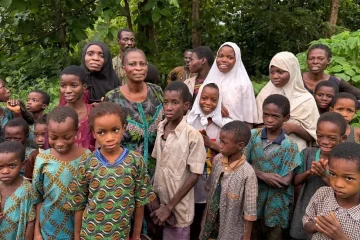
The affected provinces of Ituri and North Kivu represent one of the most complex humanitarian environments on the continent. More than two million internally displaced persons and returnees live across these provinces, according to the UNHCR, in a region whose healthcare system has been hollowed out by years of armed conflict.
The WHO has deployed more than 40 health professionals to support the government-led response, alongside testing kits and additional diagnostic capacity. But the organisation itself describes the environment as “highly complex epidemiological, operational and humanitarian” – bureaucratic language that translates, on the ground, to a response operating under fire, sometimes literally.
Among the most exposed populations are refugees. In Ituri, approximately 11,000 South Sudanese refugees require preventive support. In Goma – a rebel-held city that is itself a symbol of the region’s chronic instability – more than 2,000 Rwandan and Burundian refugees need basic sanitary supplies.
The DRC’s last major Ebola Zaire outbreak concluded only in December 2025. The trauma of the 2018–19 epidemic, which lasted nearly two years and killed more than 2,200 people in North Kivu and Ituri, remains raw in these communities. It shapes how people respond to health workers, to treatment centres, and to the prospect of yet another outbreak.
What the next weeks will determine
The immediate priority is expanding testing capacity to close the gap between suspected and confirmed cases – a gap that currently prevents authorities from understanding how far the virus has already travelled. Simultaneously, the advisory group’s recommendations on vaccine candidates could determine whether a preventive tool reaches the field within weeks rather than months.
What the WHO’s experience in the region has consistently shown is that neither science nor logistics alone will contain the outbreak. Community trust, painstakingly built through schools, churches, and local leaders, is the variable that most determines whether an Ebola epidemic burns out quickly or burns for years.
The science is in a race. The question is whether the diplomacy of public health can keep pace with the virus.