IT is, by any measure, a continent under siege. The Bundibugyo strain of Ebola – for which no approved vaccine or therapeutic exists – is burning through communities in the Democratic Republic of Congo and Uganda, spilling towards borders drawn on maps that mean little to a virus. More than 200 people are dead. Africa CDC has confirmed this is the second-largest Ebola outbreak since the catastrophic West Africa crisis of 2014, which killed more than 11,000. The numbers are grim. The terrain is treacherous. And yet, on the evidence of a high-level ministerial meeting convened this Monday by Africa CDC, Africa is not simply waiting for the world to come and save it.
That, at least, is the signal sent from Johannesburg to Kampala and beyond as African health ministers, heads of state, international agencies, and a roster of African business titans aligned behind a six-month continental response plan worth approximately $319 million — and began to fund it themselves.
‘It Will Likely Get Worse Before It Gets Better’
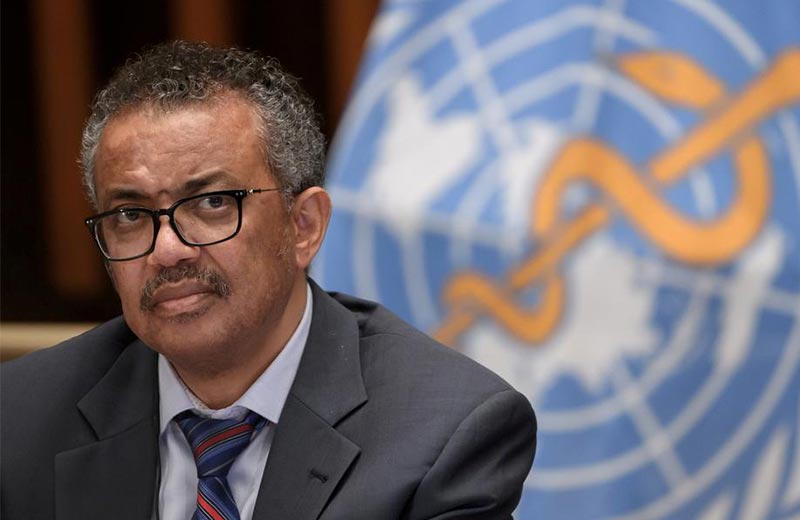
The WHO’s Director General, Dr Tedros Adhanom Ghebreyesus, set the register of alarm. In remarks posted to his verified social media account as the ministerial meeting convened, Tedros said Africa is dealing with “an extremely serious and complex Ebola outbreak in the DRC” and warned bluntly that the situation “will likely get worse before it gets better.”
He identified three structural obstacles that make this outbreak distinctly treacherous. The first is timing: detection came late, meaning health authorities are “playing catch-up with a fast-moving epidemic.” The second is geography and politics: “intensified fighting in Ituri and North Kivu, and significant distrust of outside authorities among some local communities” — a toxic cocktail of war, displacement, and institutional mistrust that has bedevilled DRC outbreak responses for a generation. The third is biological: the complete absence of approved vaccines or therapeutics for the Bundibugyo strain.
“We have contained every previous Ebola outbreak, and we will contain this one too. The question is how quickly we can do it and how many more lives may be lost before then.”
Dr Tedros Adhanom Ghebreyesus, Director General, WHO
Tedros did not retreat into diplomatic ambiguity. He offered a cold-eyed commitment: “We know this virus, and we know how to stop it. We have contained every previous Ebola outbreak, and we will contain this one, too. The question is how quickly we can do it and how many more lives may be lost before then.”
It is a sentence that concentrates every anxiety of public health diplomacy into a single, morally weighted clause — competence and urgency in the same breath.
Ramaphosa Steps Forward — and Opens the Chequebook
Into this grim landscape stepped President Cyril Ramaphosa, delivering what may prove to be the meeting’s most concrete political signal. South Africa, he announced, is contributing an initial $5 million to Africa CDC in direct support of the continental Ebola response — framed not as charity but as a declaration of confidence in the institution itself.
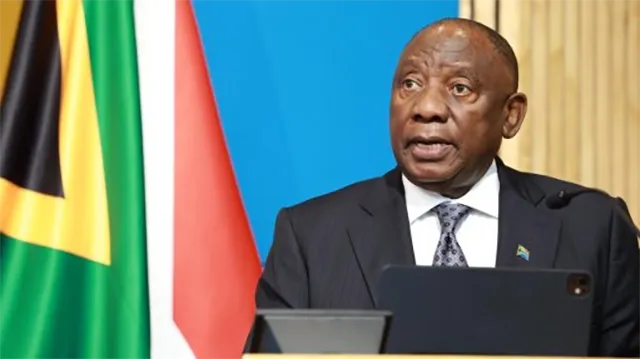
“This contribution is a demonstration of our confidence in Africa CDC as the Public Health Agency of Africa and in the importance of collective continental action,” Ramaphosa said. He called on other member states, African financial institutions, philanthropy, and the African private sector to “join this effort urgently.”
Speaking in his capacity as the African Union’s champion on pandemic prevention, preparedness, and response, Ramaphosa drew a deliberate connection between strategic self-reliance and the moral meaning of this moment. “Africa is no longer waiting passively for others to act,” he said. The ten percent domestic contribution already committed by African countries ahead of the full $319 million plan — approximately $31.9 million — was held up as evidence of that shift.
“The world is safer when Africa is safer. Delayed support today will result in much higher human, social and economic costs tomorrow.”
President Cyril Ramaphosa
Ramaphosa was also direct about what the international community owes this response: partnership without paternalism. “The world is safer when Africa is safer. Delayed support today will result in much higher human, social, and economic costs tomorrow,” he said — a formulation that inverts the usual logic of global health aid and positions Africa’s security as a global public good, not a beggar’s appeal.
The Bundibugyo Problem: Fighting Blind Without a Vaccine
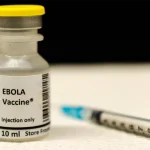
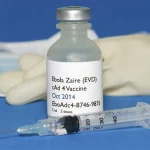
The specific virological challenge of the Bundibugyo strain deserves emphasis. Unlike the Zaire strain that produced the 2014 West Africa emergency and subsequent vaccine development — notably the rVSV-ZEBOV vaccine — the Bundibugyo species has no approved medical countermeasure. This is not a gap created by negligence; it is the product of the same structural inequity that has left Africa-prevalent diseases chronically underfunded by global pharmaceutical R&D.
Ramaphosa acknowledged the problem and demanded a solution. “Africa cannot continue to face deadly epidemics without equitable access to diagnostics, vaccines, and treatments,” he said, calling on manufacturers and partners to “accelerate research and development, strengthen genomic surveillance, expand laboratory systems, and fast-track the equitable delivery of safe and effective vaccines and therapeutics.”
There is emerging — if tentative — cause for optimism. Through what the AU chair described as an interim medical countermeasures network, organisations including GAVI, CEPI, and UNITAID are reportedly working at speed on both vaccine and therapeutic candidates aimed at initiating clinical trials. The word “speed” is doing heavy lifting here; in a fast-moving outbreak, the window between promising candidate and deployable product is measured in months that communities in Ituri and North Kivu do not have to spare.
The $319 Million Plan: Architecture of a Continental Response
The six-month continental preparedness and response plan — covering the period June to November 2026 — was aligned at the Kampala High-Level Ministerial Meeting, which preceded Monday’s session. Its architecture extends beyond the immediate outbreak: alongside outbreak control in the DRC and Uganda, the plan commits to strengthening preparedness in at least ten high-risk member states.
This is, by design, a response that thinks past the current fire. The Kampala meeting — at which Ramaphosa noted, the governments of the DRC, Uganda, and South Sudan “chose cooperation over isolation and unity over fragmentation” — established the political framework. The Johannesburg ministerial is now expected to fund it.
Africa CDC, under the leadership of Dr Jean Kaseya, has drawn consistent praise for the speed and coherence of the institutional response: mobilising affected countries, coordinating regional preparedness, convening the ministerial platform, and running a joint incident management team in collaboration with WHO. For an institution still finding its operational footing as the continent’s premier public health agency, this response is, in some respects, a defining stress test.
Business at the Table: Dangote, Oramah, and the Securitisation of Health
One of the more striking features of Monday’s response architecture was the explicit mobilisation of African private sector heavyweights. Ramaphosa singled out industrialist Aliko Dangote, Afreximbank president Professor Benedict Oramah, Dr George Elombi, and investor Simon Tiemtoré as leaders stepping forward. “Their engagement reflects a growing understanding that health security is also economic security, development security, and continental security,” Ramaphosa said.
The securitisation of public health — not in the militarised Western counterterrorism sense, but in the broader sense of recognising disease risk as systemic continental risk — is a conceptual shift with real institutional consequences. If African business capital understands outbreak response as protecting supply chains, productivity, and market access, the funding architecture for future responses changes materially.
“Africa has the institutions, expertise and leadership to respond effectively. What is required now is speed, unity, solidarity and trust in our collective capacity.”
President Cyril Ramaphosa
The Reckoning With Preparedness
Both Ramaphosa and Tedros circled back to the same structural truth: crises of this kind are partially the product of chronic underinvestment in preparedness. “This outbreak reminds us that preparedness cannot begin when a crisis is already expanding,” Ramaphosa said, calling for sustained investment in resilient health systems, national public health institutes, emergency operations centres, local manufacturing, community health workers, genomic surveillance, and sustainable domestic financing.
It is a list that reads like an indictment of decades of neglect — and a blueprint for what comes after the outbreak is contained. Whether African governments, donors, and development finance institutions act on it is the question that will determine whether this particular crisis becomes the last time Africa faces it quite so unprepared.
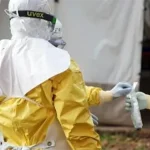
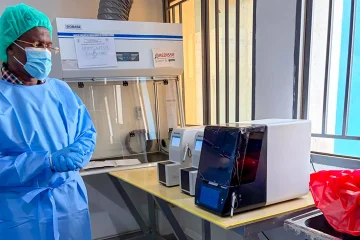
For now, the immediate fight is at the borders of DRC and Uganda, in the communities of Ituri and North Kivu, in the clinics where frontline health workers — whom Ramaphosa described as having “shouldered a succession of epidemics” with “unwavering commitment” — are working in full PPE against a virus with no approved countermeasure.
The African Mirror will continue monitoring all developments as this outbreak evolves. As Tedros framed it with unsparing clarity: we will contain this. The question is only how much time — and how many lives — it costs.