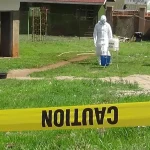
EASTERN Democratic Republic of Congo (DRC) is facing what the head of the World Health Organization has described as a catastrophic collision of disease and conflict – a convergence of forces that has transformed a dangerous outbreak into a near-uncontainable public health emergency.
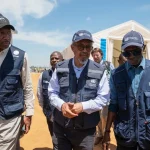
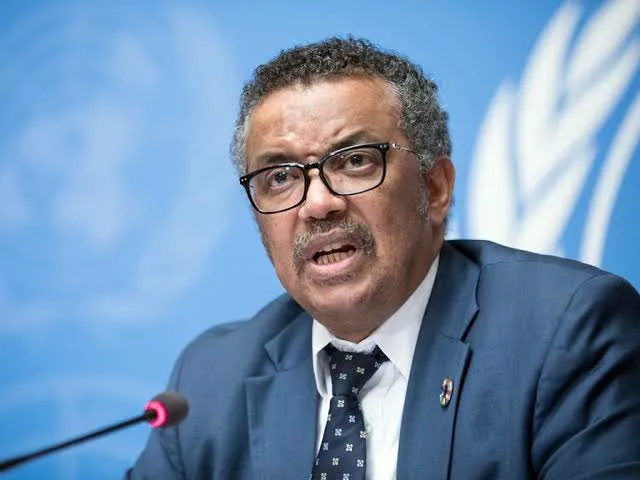
In an extraordinary public appeal issued this week, WHO Director-General Dr. Tedros Adhanom Ghebreyesus warned that the Ebola Bundibugyo virus is now spreading through Ituri province faster than the international response can track it – and that the ongoing armed conflict in eastern DRC is the single greatest obstacle standing between outbreak and catastrophe.
The warning carries a weight that goes beyond the standard alarm-raising of international health officials. Ebola Bundibugyo is among the most dangerous variants of an already deadly family of viruses. Unlike other strains, it has no approved vaccine and no approved treatment. Every contact who cannot be traced is a potential new chain of transmission. Every health facility that is attacked is a node of the response network permanently knocked offline.
“You cannot build community trust while bombs are falling. You cannot isolate the sick when they are fleeing for their lives.”
Dr. Tedros Adhanom Ghebreyesus, WHO Director-General
THE GEOMETRY OF A DOUBLE CRISIS
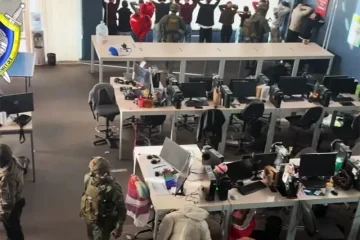
What is unfolding in Ituri is a textbook case of what epidemiologists call a complex humanitarian emergency – an outbreak occurring within a conflict zone, where the standard tools of disease containment are systematically denied or destroyed.
The mechanism is straightforward and brutal: armed clashes generate mass displacement. Displaced populations, which may include people already exposed to the virus, move into overcrowded camps where physical distancing is impossible, and sanitation infrastructure is overwhelmed. The networks of contact tracers and community health workers that form the backbone of any Ebola response cannot follow – either because the roads are impassable, the security situation is prohibitive, or the workers themselves have become targets.
Attacks on health facilities – a grotesque feature of the eastern DRC conflict that predates the current outbreak by years – further hollow out the response architecture. Without functioning clinics and treatment centres, case detection collapses. Without case detection, the true scale of the outbreak remains unknown. And without that knowledge, containment becomes educated guesswork.
The result, as Tedros described it, is an outbreak that is “outpacing the response” – a phrase that, in the controlled vocabulary of international public health diplomacy, is about as close to a distress signal as the system allows.
WHY BUNDIBUGYO CHANGES THE STAKES
The specific variant driving the Ituri outbreak adds a layer of medical urgency that distinguishes this crisis from more recent Ebola episodes. The 2018–2020 outbreak in North Kivu and Ituri – the second-deadliest in history – unfolded in a similarly conflict-affected environment but had the significant advantage of the rVSV-ZEBOV vaccine, which, while not universally accessible, allowed ring vaccination strategies to offer some measure of protection.
Bundibugyo carries no such tool. First identified in Uganda’s Bundibugyo district in 2007, the variant has a case fatality rate of approximately 25 to 36 percent in historical outbreaks — lower than the Zaire strain’s peak mortality, but lethal by any measure, and now circulating in a population that cannot be vaccinated and cannot be treated through approved pharmaceutical means.
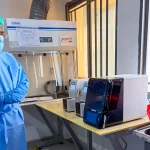
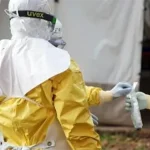
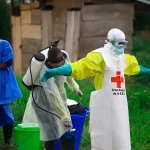
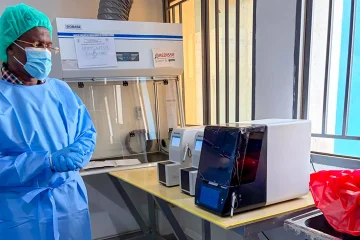
That leaves a single viable containment strategy: the classic epidemiological approach of isolating the sick, tracing contacts, and maintaining strict infection prevention protocols. Each of these steps requires physical access. Each is being denied by the conflict.
The Ebola virus recognises no front line. It does not wait for a peace process. It is moving — and without access, responders cannot move with it.
A SYSTEM UNDER SIEGE
The broader picture of the eastern DRC health system – or what remains of it – provides essential context. Decades of conflict have left Ituri and the wider Kivu region among the most underserved in terms of health infrastructure anywhere on the continent. Outbreaks of Ebola, mpox, cholera, and measles have recurred with grim regularity, each one testing a system that was never adequately rebuilt between emergencies.
Frontline health workers in this environment are not simply employees doing a difficult job. They are often the last institutional presence of any kind in communities that have been abandoned by the state, preyed upon by armed groups, and overlooked by the international community. When Tedros spoke of workers “risking everything”, he was not reaching for rhetorical effect. The WHO has documented repeated attacks on health facilities and personnel in eastern DRC. The calculus facing a contact tracer attempting to follow an Ebola exposure chain into an area of active fighting is not merely professional — it is existential.
Africa’s total financial commitment to the Ebola response — with a $19 million plan and a five-million-dollar initial pledge from continental partners — reflects genuine political will. But money alone cannot purchase access. It cannot open roads that are blocked by armed factions. It cannot protect a health worker entering a contested zone. And it cannot substitute for the one thing the outbreak response most desperately needs: a cessation of hostilities.
THE CEASEFIRE IMPERATIVE
Tedros’s call for an immediate ceasefire by all warring parties in eastern DRC is not, in the first instance, a political intervention. It is a medical necessity stated in the bluntest possible terms by the world’s foremost multilateral health authority.
Whether that call will be heeded is another matter. The conflict in eastern DRC — involving the M23 rebel movement, the Armed Forces of the DRC (FARDC), the Rwanda Defence Force, and a constellation of other armed actors — has defied years of diplomatic effort, multiple ceasefire agreements, and repeated interventions by regional bodies including the African Union, SADC, and the East African Community. The Luanda and Nairobi processes have produced frameworks. They have not produced silence.
The Ebola outbreak now introduces a new variable into a calculus that has already proven intractable. Whether it generates the political will to compel an interruption in fighting — or whether it becomes another casualty of the conflict, another entry in the long ledger of preventable deaths — will depend on decisions made in the coming days by actors who have shown little interest in the humanitarian consequences of their operations.
The African Union, the United Nations Security Council, and bilateral partners with leverage over the parties to the conflict carry a specific responsibility in this moment. The WHO has stated plainly what is needed. The question is whether anyone with the power to deliver it will act.
WHAT CONTAINMENT NOW REQUIRES
For outbreak responders, the immediate priorities are unambiguous. Safe and sustained access for medical and humanitarian teams to affected areas in Ituri must be guaranteed and enforced. Health facilities must be designated protected zones and respected as such by all armed actors. Community engagement — the trust-building work that is inseparable from any effective Ebola response — must be allowed to proceed without interruption.
In parallel, the global research community faces a renewed obligation to accelerate work on Bundibugyo-specific countermeasures. The absence of a vaccine or approved treatment for this variant is not inevitable — it is the product of years of underfunding and deprioritisation. That gap must be closed.
The African Mirror’s own reporting on the continental response suggests that the political will to resource the response exists. What remains absent is the security environment that would allow those resources to be deployed. Without a ceasefire, the most generously funded outbreak response in history cannot function.