A lethal strain of Ebola with no approved treatment or vaccine has forced the World Health Organisation to declare a global public health emergency, as communities in the Democratic Republic of the Congo and Uganda count their dead and brace for what health authorities fear could be a far wider catastrophe than current figures reveal.
The WHO Director-General on Sunday formally declared the Bundibugyo virus disease (BVD) outbreak a Public Health Emergency of International Concern (PHEIC) – the organisation’s highest alert level – after the disease crossed an international border, appearing simultaneously in Kampala and Kinshasa, signalling that a localised crisis in the DRC’s Ituri Province has become a continental and global threat.
As of Saturday, eight laboratory-confirmed cases, 246 suspected cases, and 80 suspected deaths had been recorded across at least three health zones in Ituri Province – Bunia, Rwampara, and Mongbwalu – the restive eastern DRC region long battered by armed conflict and humanitarian despair. On Friday and Saturday, two confirmed cases, including one fatality, were reported in Uganda’s capital, Kampala, among individuals who had travelled from the DRC. A further confirmed case emerged in Kinshasa – the DRC’s sprawling capital of over 17 million – among someone returning from Ituri. The disease is now moving through some of Africa’s most densely connected urban corridors.
What makes the WHO’s alarm particularly grave is not what is known, but what is not. Health officials acknowledged ‘significant uncertainties’ about the true number of infected persons and the geographic reach of the outbreak. Of 13 samples collected across various areas, eight returned positive – a positivity rate that, if representative, points to a far larger and more dispersed outbreak silently burning through communities.
Healthcare Workers Among the Dead
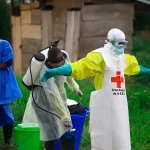
The virus has already breached the walls of health facilities. At least four healthcare workers have died in circumstances consistent with viral haemorrhagic fever, raising stark fears of nosocomial – hospital-acquired – transmission, compromised infection control, and the catastrophic potential of amplification within health facilities that serve as the only recourse for millions of people across eastern DRC.
In a region where informal clinics, traditional healers, and underfunded hospitals form the fragile web of healthcare, the death of health workers does not only represent personal tragedy. It dismantles the very infrastructure needed to fight the outbreak. Communities that have already lost fathers, mothers, and children to the disease now risk losing the people they turn to for care.
The WHO warned that ongoing insecurity, the chronic humanitarian crisis, high population mobility, and the urban and semi-urban nature of the current hotspots compound the risk dramatically. The spectre of the 2018-2019 Ebola epidemic in North Kivu and Ituri – which killed more than 2,200 people and became the second-largest Ebola outbreak in history – looms over every assessment. That outbreak, fought in active conflict zones where armed groups attacked response teams and burned treatment centres, lasted nearly two years. The conditions that allowed it to persist have not fundamentally changed.
No Vaccine. No Cure. A Race Against Time.
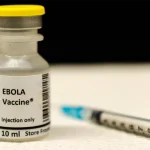
Unlike the Zaire strain of Ebola – against which two vaccines, including the widely deployed rVSV-ZEBOV (Ervebo), have been approved – Bundibugyo virus has no licensed vaccine and no approved therapeutic. Scientists and clinicians will be working essentially without a safety net, relying on intensive supportive care, strict isolation, rigorous contact tracing, and community cooperation to arrest the outbreak’s spread.
The WHO has called on the DRC and Uganda to immediately launch clinical trials for candidate therapeutics and vaccines, warning that the absence of medical countermeasures makes rapid research an imperative, not an option.
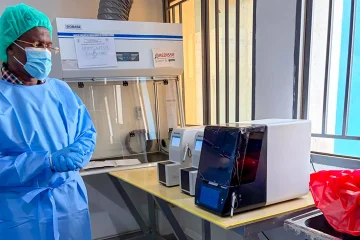
The organisation also issued blunt instructions to both governments: activate national disaster management mechanisms under direct head-of-state authority; establish emergency operations centres; ensure healthcare workers have adequate PPE, training, timely salaries and hazard pay; and create specialised treatment centres near outbreak epicentres staffed and equipped for optimised intensive care.
Travel Restrictions and Border Measures
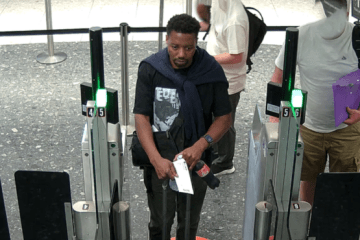
Confirmed BVD cases must be immediately isolated and must not travel – nationally or internationally – until two negative tests conducted at least 48 hours apart are obtained. Contacts must be monitored daily and barred from international travel for 21 days after exposure. Exit screening – including questionnaires, temperature checks, and risk assessments – must be implemented at all international airports, seaports, and major land crossings in both countries.
Mass gatherings should be postponed until transmission is interrupted. Cross-border movement of human remains of suspected, probable, or confirmed BVD cases is prohibited unless explicitly authorised under international biosafety protocols.
However, the WHO delivered an unambiguous message to the rest of the world: no country should close its borders or restrict trade and travel. ‘Such measures are usually implemented out of fear and have no basis in science,’ the organisation stated, warning that border closures push movement to unmonitored informal crossings, increasing — not decreasing — the risk of spread, while also devastating local economies and undermining response logistics.
Africa’s Neighbours on High Alert
Countries sharing land borders with the DRC have been placed on high alert and ordered to urgently enhance preparedness: establishing active surveillance across health facilities with mandatory zero-reporting, strengthening community surveillance for unexplained deaths, securing access to qualified diagnostic laboratories, and activating rapid response teams capable of investigating and managing BVD cases and their contacts.
Any country newly detecting a suspected or confirmed case has been instructed to treat the development as a health emergency and take immediate steps within the first 24 hours: case isolation, case management, definitive laboratory diagnosis, and contact tracing. Confirmation must be immediately reported to the WHO.
Neighbouring countries have also been urged to fast-track regulatory approvals for investigational therapeutics as a matter of immediate preparedness — acknowledging that if the outbreak spreads further, treatment options must be legally accessible before they are urgently needed.
A Community in Crisis
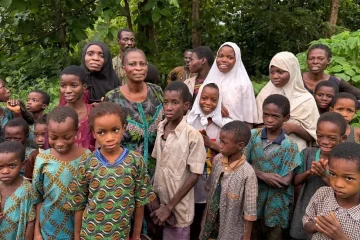
Behind the numbers and the protocols are communities that have been living with violence, displacement and disease for years — communities in Ituri Province where the Bundibugyo virus is not a news headline but a knock at a neighbour’s door, a funeral conducted in haste and fear, a child sick with fever that no one can explain.
Unusual clusters of community deaths have been reported across several health zones in Ituri. Suspected cases have spread beyond the epicentre into North Kivu. The disease is moving through populations that are already exhausted, already grieving, already stretched beyond endurance.
The WHO has acknowledged the need to work with local, religious and traditional leaders, to ensure communities are at the centre of case identification, contact tracing and education — and to address the cultural norms and beliefs that, in contexts of historic state failure and mistrust, sometimes lead communities to hide their sick rather than seek help. The failure to do so effectively during the 2018-2019 epidemic contributed to its catastrophic duration.
Communities that have already lost everything are now asked to trust a system that has too often failed them. That trust must be earned, not assumed.
Livelihoods, too, are at stake. The informal economy of eastern DRC – cross-border traders, market sellers, artisanal miners, transport workers – operates at the intersection of the very populations and movements that disease thrives on. An outbreak that drags on does not merely kill people. It empties markets, collapses households and deepens a poverty that was already among the most acute on the continent.
The WHO has not yet convened its Emergency Committee to issue formal temporary recommendations to states – that meeting is expected imminently. What happens in the next days and weeks, in Bunia’s clinics and Kampala’s ICUs, in community meetings in Ituri and laboratories scrambling to characterise the outbreak’s true scope, will determine whether Bundibugyo virus remains a contained regional emergency or writes the next dark chapter in Africa’s long confrontation with Ebola.