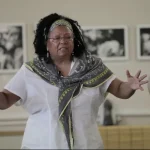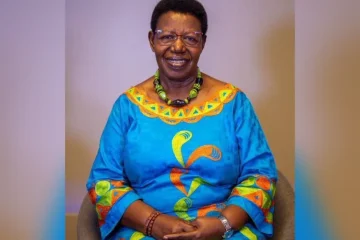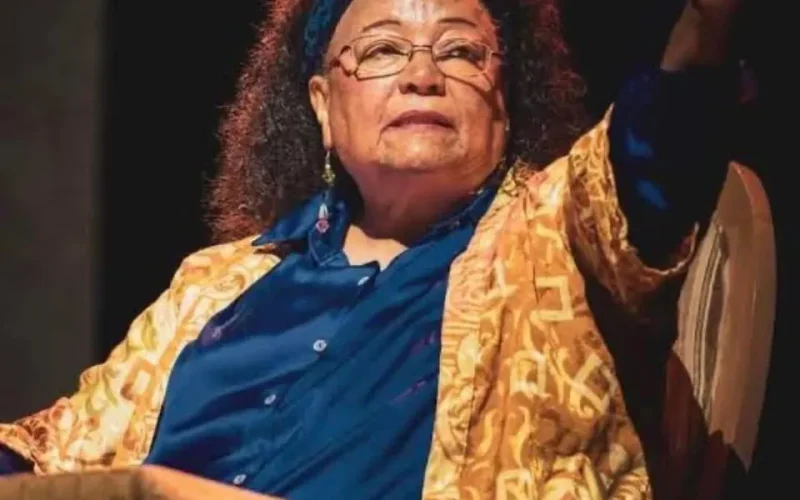
WHO speaks for the poet when they pass on? Who finds the words to eloquently paint their time on earth and aptly put together a portrait of their lives – the legacy of their time? Dr Diana Ferrus had a gift, an amazing gift. She had a way with words and used words as a weapon in the decades-long war against apartheid. She was born at the height of the evil system and watched it collapse. Her words powerfully and colourfully captured the demise of a system designed to discriminate against South Africans who are not white.
On Friday, 30 January 2026, South Africa lost one of its most treasured voices. Ferrus, internationally renowned poet, writer, and cultural activist, passed away at the age of 72 after suffering a stroke. Her death leaves a profound void in the literary and cultural landscape of South Africa and beyond. Yet, as she herself knew so well, true voices never fade – they echo through generations, carried forward by those who were touched by their power.
Born on 29 August 1953 in Worcester, Cape Province (now Western Cape), Ferrus entered the world during the darkest period of apartheid’s reign. As the third of six children born to Ann and Jacobus Ferrus, she was of mixed Khoisan and Irish heritage – a living testament to South Africa’s complex and beautiful tapestry of cultures that apartheid sought to tear apart.
From age 14, Diana began writing poetry, giving voice to her personal experiences and the collective struggles of her people. Through the Dutch Reformed Mission School and later Esselen Park High School, where she matriculated in 1972, she honed the gift that would become her greatest weapon and contribution to humanity.
Her journey to education was marked by the very oppression she would later chronicle. Enrolling at the University of the Western Cape in 1973, her studies were interrupted when the university closed due to student protests. Financial constraints prevented her immediate return, but Diana’s determination could not be extinguished. She worked, persevered, and resumed her studies part-time in 1988, eventually completing her BA in Industrial Psychology and Sociology in 1993, followed by her Honours in Women’s and Gender Studies in 1999. Her master’s thesis, “Black Afrikaans women writers: the joy and frustration of the writing process,” would illuminate a path for those who followed.
The Poem That Changed History
In 1998, while studying at Utrecht University in the Netherlands, Ferrus experienced profound homesickness. Far from her beloved South Africa, she began to contemplate another woman who had been taken from African soil under false pretences more than a century before – Sarah Baartman, the Khoi woman who was displayed as a freak show attraction in 19th-century Europe and whose remains were kept in French museums even after her death in 1816.
From this empathy and longing emerged “I’ve Come to Take You Home,” a poem that would transcend literature to become an instrument of historical justice. The poem was more than words on a page – it was a cry for dignity, a demand for repatriation, a testament to the power of art to move hearts and change laws.
“I have come to take you home
where the ancient mountains shout your name.
I have made your bed at the foot of the hill,
your blankets are covered in buchu and mint,
the proteas stand in yellow and white
I have come to take you home
where I will sing for you
for you have brought me peace.”
When this poem was read aloud in the French Senate in 2002, it moved legislators to tears and conscience. They voted unanimously to repatriate Sarah Baartman’s remains to South Africa after 192 years. The poem was included in the bill and published in the French law – a first in French history. Ferrus accompanied the delegation that brought Baartman home, and on 9 August 2002, at long last, Baartman was laid to rest in her homeland.
South Africa’s Arts and Culture Minister Gayton McKenzie captured the significance of this achievement: “The writing helped focus international attention on the injustice of Baartman’s treatment and is credited as a contribution to the repatriation of her remains in 2002. Dr Ferrus’s poetry helped restore dignity to untold stories.”
Ferrus’s literary prowess extended far beyond a single poem. Her work encompassed themes of memory, womanhood, dispossession, justice, healing, race, gender, class, and reconciliation. She wrote in both Afrikaans and English, bridging linguistic divides to reach the hearts of all South Africans.
Her published works include “Convergences” (2005, co-authored with Sipho Mathathi and Wendy Woodward), “Kyk, dis my pa” (Look, this is my father, 2005), “Ons Komvandaan” (We come from there, 2006), “I’ve come to take you home” (2011), and “Die vrede kom later” (The peace comes later, 2019). Each collection bore witness to South Africa’s journey through pain toward healing.
In 2015, she honoured the memory of enslaved Mozambicans who perished aboard the Portuguese slave ship São José, which ran aground off the Cape coast in 1794, writing “My naam is Februarie” (My name is February) as a tribute to those lost souls. Her words consistently served as memorial and testimony, ensuring that the forgotten would be remembered.
As a colleague at UWC noted, Dr Ferrus was “a cultural treasure” who believed deeply in sharing the power of literature. Fellow alumna Belinda Jackson called her the “Angel of the Word,” saying she “tirelessly empowers young people and adults in many marginalised communities to use the word to express themselves more effectively, countrywide, helping to restore and heal countless painful memories and evoke happy memories.”
Ferrus was not content to simply create art – she built institutions to nurture and amplify other voices. She was a founding member of Bush Poets (an all-women poet group from UWC, named after the derogatory term used for the university in the 1960s), the Afrikaans Writers Association (Afrikaanse Skrywersvereniging), and Women in X-chains, a collective supporting grassroots women writers.
She was also a member of WEAVE (Women’s Education and Artistic Voice Expression), and through her publishing company, Diana Ferrus Publishers, she promoted local creatives working in multiple languages. Her mission was clear: to give voice to writers from previously disadvantaged communities, to preserve and share the stories of Black Afrikaans women, and to ensure that literature reflected the full diversity of South African experience.
She led writing workshops throughout Cape Town and beyond, travelling to communities across the country to teach, inspire, and empower. In April 2012, the Diana Ferrus Writing Project was launched by the Metro East unit of the Western Cape Education Department – a lasting testament to her commitment to nurturing the next generation of writers.
Ferrus’s contributions did not go unrecognised. In 2007, she received the Minister’s Award for Women from the Western Cape Provincial Department of Arts and Culture for her contribution to the empowerment of women. In 2008, the Klein Karoo Kunstefees honoured her for her contribution to the development of Afrikaans. In 2012, she received the inaugural Mbokodo Award for poetry.
In 2020, she received the Freedom of the Town award from the Breede Valley Municipality. In 2022, Stellenbosch University bestowed upon her an honorary doctorate – Doctor of Philosophy, honoris causa – in recognition of her profound contribution to literature and heritage. In her acceptance speech, Ferrus spoke of the power of stories: “The storyteller connects the past to the present, provides food for thought for the future. It’s only by telling our stories that we can free ourselves from inner bondage.”
She also received the Legends Award from Kyknet, a lifetime achievement award from SBA (Stigting vir Bemagtiging deur Afrikaans), and a Prestige Award from the ATKV. Each honour acknowledged not just her literary excellence, but her unwavering commitment to justice, dignity, and the empowerment of marginalized communities.
The Echo That Never Fades
Ferrus witnessed the dawn of South African democracy and lived through successive administrations, her words consistently bearing witness, encouraging progress, and challenging injustice. Her voice echoed through South Africa, across the continent, and around the world as democracy dawned and Nelson Mandela became the first democratically elected president. Those words witnessed, encouraged, and critiqued successive presidents and administrations with unflinching honesty and enduring hope.
Western Cape Minister of Cultural Affairs Ricardo McKenzie spoke of plans for an official funeral befitting someone who “has given humanity so much. We’ve given the ability to think cognitive thinking with a new world heritage site, and we’ve given good leaders in poetry writing. She’s certainly one of the top-tier ones. We need to honour her, and we need to do something special for her.”
Artscape Theatre CEO Marlene le Roux described Dr Ferrus as “a trailblazer in literature and culture” and “a courageous storyteller who advocated for the repatriation of the remains of Sarah Baartman from Europe.” She added, “This is, was and will always be our beloved Dr Diana Ferris, who was a community person that always served the communities, that always, through her work, highlighted the plight of the people on the ground.”
In a statement, her family, through spokesperson Laniëlle Hartzenberg, her niece, expressed their profound sadness: “Dr Ferrus was more than a public figure; she was a beloved family member, mentor, and guiding light. Her legacy will continue to live on through her work, her voice, and the countless people she inspired across generations and borders.”
Words That Live Forever
Ferrus understood that poetry is not merely art – it is memory, resistance, healing, and prophecy. Her words brought Baartman home. Her words gave voice to the enslaved. Her words empowered women, celebrated heritage, challenged injustice, and built bridges across the chasms of South Africa’s divided past.
Now, as we bid farewell to the poet herself, her words remain. They echo in the classrooms where students study her work. They resonate in the hearts of the women she mentored. They live in the communities she served. They endure in the institutions she built. They speak from the pages of her books and the memories of those who heard her perform.
As she wrote in one of her poems, storytellers must “resurrect names, must imagine names, must always try to tell the complete story. It’s only by telling our stories that we can free ourselves from inner bondage.” Diana Ferrus told the complete story. She freed countless souls from bondage – including her own.
Poets and writers never die.
Poets and writers are never silent.
Their words speak forever.
Their words echo until the end of time.
Rest in power, Dr Diana Ferrus.
Your voice echoes on.
___
“We meet each other in our stories
and it is here where we will find the truth and reconciliation.”
— Dr Diana Ferrus