WHEN states and societies fail to foster strong, independent media, we do not just lose the capacity to inform—we open the doors to false information, disinformation, and manipulation to take centre stage. A weakened media does more than just starve democracy; it erodes the very structures that hold society together.
The struggles of media businesses today are not just a concern for those of us in the profession—these struggles are a societal problem. When we as media professionals falter, people’s lives are impacted, trust is eroded, and the cohesion of our communities begins to unravel.
At The Africa Editors Forum (TAEF), we are acutely aware of the challenges that come with running news businesses in this era. The disruptions we face are deep and unprecedented, but we also know that standing still is not an option. We must plot an innovative path forward. And today, I want to present four key suggestions that we believe will help pave the way.
First, we need to recalibrate how media is regulated. Regulation must move beyond the traditional rights-based framework and also take into account economic perspectives. It is not enough to defend the freedom of the press – we must also ensure the sustainability of the press. Regulators must become attuned to the business pain-points of news publishers.
In an environment where advertising no longer guarantees revenue, media businesses are struggling to stay afloat, and that should be a matter of policy concern, not just an industry issue.
Second, we must confront the elephant in the room: media sustainability. The question is stark – how shall we continue to pay for journalism, especially when society needs it more than ever? Advertising alone can no longer be relied on to sustain the industry. TAEF proposes a bold, home-grown solution: Africa should reinvest its anti-corruption recoveries into building a resilient media ecosystem. Why? Because corruption thrives where there is opacity and where journalists are silenced. Just last week, Kenya’s Ethics and Anti-Corruption Commission handed President William Ruto Ksh5.5 billion—roughly $43 million—recovered from corrupt entities. Imagine if this kind of recovered wealth was invested in investigative journalism.
The media would have the resources to expose corruption at its roots, hold power to account, and create transparency that strengthens governance. This is not charity; this is investing in the foundation of a democratic and ethical society.
Third, we must stop the theft of our intellectual property. Our content is being exploited by others – used to train AI models and generate ad revenue on social media and search platforms – without any return to the creators.
African editors and publishers are beginning to unite, forming a collective bargaining front to reclaim what is rightfully ours. Beyond that, the Africa Data Alliance, led by the esteemed Professor Guy Berger, is exploring how we can harness the enormous amounts of data generated across the continent to benefit our media. Data is not just a commodity; it is a tool for enhancing the quality of our reporting – especially during critical moments like elections. It is also essential for ensuring business resilience by helping us understand audience behaviours and preferences, ensuring that we meet their needs more effectively.
Finally, news organizations must invest in research and development (R&D). We need to find new ways to tell our stories – ways that are engaging, relevant, and aligned with how technology is shaping the consumption of information. But beyond storytelling, R&D is key to understanding our audiences, building stronger relationships with them, and adapting as the news process continues to evolve. Without this investment, we risk becoming irrelevant in a world where attention spans are short, and competition for engagement is fierce.
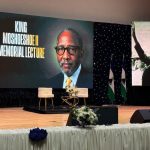
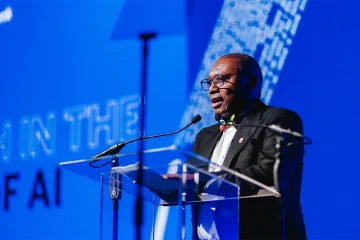
*This is an edited version of a keynote address by Churchill Otieno, the Chairperson of The African Editors Forum, at the opening of the WAN-IFRA DIGITAL MEDIA AFRICA CONFERENCE 2024 at the AGA KHAN University in Nairobi, Kenya.