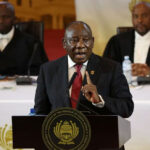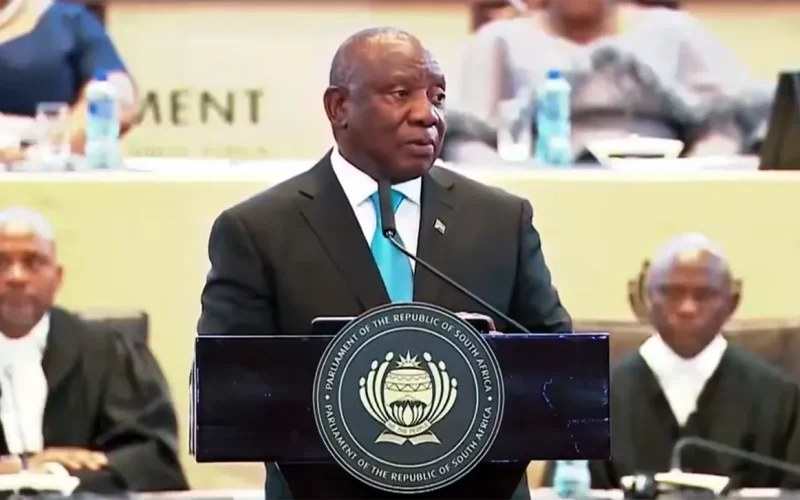
SOUTH AFRICA’S Cyril Ramaphosa’s State of the Nation Address on Thursday demonstrated a leader acutely aware of South Africa’s pain points, deploying the full presidential toolkit to convince a weary nation that better days lie ahead. Whether he succeeds may depend less on his diagnosis than on his government’s ability to execute.
On the critical test of understanding the national mood, Ramaphosa scored highly. He opened not with statistics but with the emotional resonance of the 1956 Women’s March, immediately signalling he grasps that South Africans need inspiration alongside intervention.
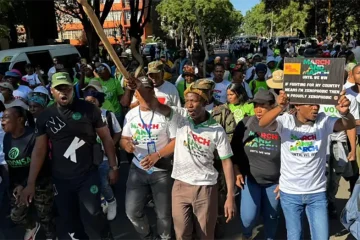
More tellingly, he confronted the nation’s most visceral frustrations head-on. Water shortages that have driven Johannesburg residents to the streets. Addressed in the first quarter of the speech with a dedicated National Water Crisis Committee. Gang violence terrorising Cape Town communities met with army deployment. Corruption fatigue tackled with re-vetting of police leadership and a new criminal justice reform unit.
“For too many people, life remains hard. Jobs are scarce and opportunity is out of reach,” Ramaphosa acknowledged, rejecting what he called “easy victories” despite citing economic improvements. This rhetorical humility – unusual for a SONA – suggested a president who has listened to the criticism that his optimism sometimes feels disconnected from lived reality.
The Report Card: Mixed Results
On accountability for previous promises, the address offered a carefully curated success story. Ramaphosa could legitimately claim victory on his signature commitment: ending load shedding. Four consecutive quarters of GDP growth, improved credit ratings, and a 20-year low inflation provided economic vindication for Operation Vulindlela reforms.
The 88 percent matric pass rate – the highest in history – and removal from the Financial Action Task Force grey list on money laundering offered additional wins to tout.
Yet the president was notably selective about what he measured. The Presidential Employment Stimulus created 2.5 million “opportunities” – a carefully chosen word that obscures how many translated into sustained employment. Previous promises on rural infrastructure, prosecuting state capture culprits, and professionalising municipalities received passing mentions but little concrete progress reporting.
The water crisis itself represents a report card failure: this emergency didn’t emerge overnight but reflects years of acknowledged municipal dysfunction that previous SONAs promised to address. That Ramaphosa must now deploy the same crisis-management approach used for electricity suggests the earlier interventions failed.
Did the speech inspire confidence? Ramaphosa employed three strategic approaches to project competence and momentum.
First, he leaned heavily on the load-shedding victory as proof that seemingly insurmountable challenges can be overcome with “a clear plan and delivering on it.” By explicitly modelling the water response on the energy crisis playbook, he offered a familiar template rather than an untested theory.
Second, he surrounded himself with credible implementation mechanisms. The Government of National Unity provided political cover for difficult reforms. Operation Vulindlela’s success justified its replication for criminal justice. Presidential working groups, task teams, and dedicated committees signalled hands-on management rather than passive delegation.
Third, he deployed specificity strategically. Not just “more police” but 5,500 officers. Not vague agricultural support but 10,000 extension officers and 28 million vaccines for 14 million cattle. Not general infrastructure spending but R1 trillion over three years. These numbers – whether ultimately achievable – conveyed seriousness.
Perhaps most impressive was Ramaphosa’s tacit acknowledgement of topics he’s previously downplayed or avoided.
On illegal immigration – a politically fraught issue he’s handled gingerly before – he committed to 10,000 new labour inspectors and promised employers hiring undocumented workers would “face the full might of the law.” Yet he balanced enforcement with firm warnings against xenophobic violence, threading a delicate needle on South Africa’s most divisive domestic issue.
On local government, he didn’t offer bureaucratic tinkering but admitted the system is “too complex and fragmented,” promising fundamental restructuring through a revised White Paper that recognises “some municipalities can take on more functions than others.”
On child stunting – affecting more than a quarter of children under five – he elevated a crisis that rarely features in political discourse, calling it “a massive crisis that demands attention and resources.”
Even his foreign policy remarks reflected domestic sentiment, declaring “we will not be bullied by any other country” while maintaining South Africa won’t abandon its multilateral principles – arguably calibrated for a population increasingly sceptical of international entanglements that don’t serve national interests.
Where the address stumbled was on the persistent gap between presidential ambition and state capacity.
Ramaphosa promised specialised commercial courts, 10,000 extension officers, massive infrastructure rollouts, a fundamental skills system overhaul, new universities and TVET colleges, and wholesale local government transformation – all while acknowledging the Auditor-General has found local government characterised by “insufficient accountability, failing service delivery, poor financial management and governance, weak institutional capability and widespread instability.”
The criminal charges against 56 municipalities for water failures and pending charges against municipal managers personally sound decisive. But they also raise uncomfortable questions: if municipal dysfunction is this pervasive, who will implement the president’s ambitious plans at the local level?
The R1 trillion infrastructure commitment is historic – but South Africa has struggled to spend allocated infrastructure budgets efficiently. The Social Relief of Distress Grant will continue – but how it will be “redesigned to support livelihoods” when the state struggles to verify beneficiaries remains unclear.
Crucially, this SONA carried a different weight than previous addresses. The Government of National Unity provides Ramaphosa political capital his ANC majority never did – coalition partners share both credit for successes and blame for failures.
His repeated invocations of working “together” and building “consensus” weren’t just rhetorical flourishes but an acknowledgement that he now governs with formal partners who can claim ownership of achievements. This distributes risk but may also accelerate implementation if coalition politics forces the accountability that party discipline didn’t.
The Verdict
Did Ramaphosa inspire? Moderately. The address offered competent crisis management rather than soaring vision, which may suit the national mood better than grand promises.
Did he report back? Selectively, highlighting genuine wins while glossing over persistent failures.
Does he have his finger on the pulse? Demonstrably. From water and crime to child nutrition and immigration, he identified the issues keeping South Africans awake at night.
The real test, as Ramaphosa himself acknowledged, is execution. South Africans have heard ambitious SONAs before. They’ve seen task teams and working groups proliferate. They’ve watched deadlines pass and reforms stall.
“Now is not the time to rest,” the president concluded. “Now is the time for all South Africans to be part of taking our country forward.”
The sentiment is right. But South Africans aren’t looking for more work – they’re looking for the state to finally do its job. Whether this SONA marks the turning point Ramaphosa claims or another chapter in unfulfilled promises will be determined not in Cape Town City Hall but in the gang-plagued streets of the Cape Flats, the water-starved neighborhoods of Johannesburg, and the unemployment queues stretching across the nation.
The president has correctly diagnosed the illness. The medicine he’s prescribed sounds promising. Whether the patient recovers depends on implementation – and on that, South Africa’s experience counsels cautious optimism at best.